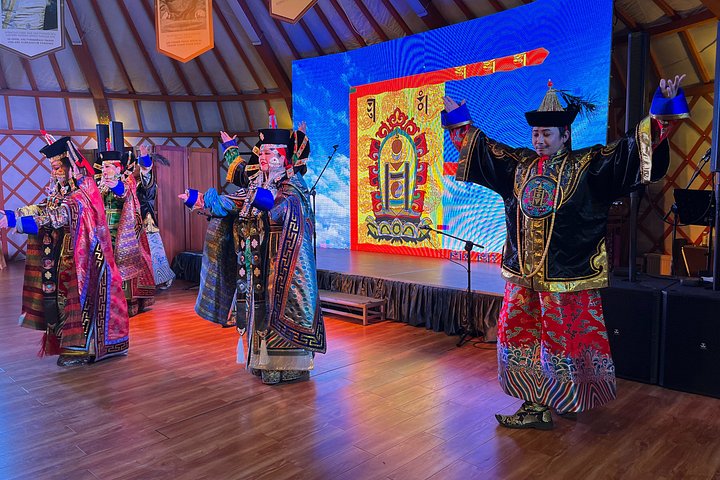
A traditional music and dance show is the standard evening activity in Ulaanbaatar, and the best-known company is the Tumen Ekh National Song and Dance Ensemble, founded in 1989. A typical programme lasts about an hour and presents khöömei, the overtone throat singing that allows one singer to produce two notes at once, long songs, folk melodies on the morin khuur, the horsehead fiddle, dances in costume and a contortionist who bends into astonishing shapes. The performances are aimed at visitors, are easy to follow without any Mongolian and are usually held in a theatre or cultural hall in the centre. This entry covers the Tumen Ekh style of show in general. It is not a long cultural lecture, but a lively sampler that gives a good first taste of nomadic music and costume, and it fills a dark winter evening when sightseeing outdoors is unattractive.
Plan this show with winter honestly in mind. Tumen Ekh's schedule is fullest in summer, with several performances a day, and it shortens through autumn, so a performance in winter cannot be taken for granted. Venues have also changed over the years, so ask your hotel to confirm the day, time and place before you set out.
Other theatres in the city present similar programmes, and we link sells an hour-long show of throat singing, dance and heritage music. That page does not name Tumen Ekh, so treat it as an alternative of the same kind rather than the same company, and check the venue and date there.
What you see is a compact, polished programme. The throat singing is the highlight, a strange, resonant sound that seems to come from nowhere, and the morin khuur, with its carved horse head and low voice, is the national instrument you will hear most. Dancers wear brightly coloured deels, and some pieces mimic galloping horses or herding scenes. The contortion act is spectacular and is the part children remember most. English or simple explanations are often provided between numbers, but the performance is mostly visual and musical.
Practical points
Arrive fifteen to twenty minutes early to get a good seat, bring cash if tickets are sold at the door, and dress warmly because theatres can be draughty and the walk or taxi ride to and from the venue is cold. Photography rules vary, with some theatres allowing it and others asking you to refrain, so check on arrival.
The show works well after dinner or in the late afternoon after a day of sightseeing. Pair it with Gandan in the morning and the museum at midday for a full cultural day in the capital.
What to expect
The experience
An hour-long theatre show of throat singing, horsehead fiddle music, costumed dance and contortion.
Best time
Late afternoon or evening, and summer has the fullest schedule while winter is shorter.
How long
About one hour.
Tips
Confirm the date, time and venue in advance, arrive early for a good seat and dress warmly for the trip.
Quick picks
- Best for
- Visitors who want an easy, visual introduction to Mongolian music and dance.
- Families
- Short, colourful and fun for children, especially the contortion act.
- Couples
- A relaxed evening activity after dinner.
- Pair with
- Gandan Monastery, the Chinggis Khaan National Museum and the Naadam page.
- Time needed
- One hour plus travel.
Good questions
What is throat singing?+
Throat singing, or khöömei, is a technique in which one singer produces two or more notes at once. It is a signature sound of Mongolian music.
Who are Tumen Ekh?+
The Tumen Ekh National Song and Dance Ensemble was founded in 1989 and presents folk music, dance and contortion for visitors. Its public schedule is fullest in summer.
Does the show run in winter?+
Schedules shorten after summer, and venues can change, so confirm the date, time and place before you go. Other theatres run comparable shows.
How long is the show?+
A typical programme lasts about one hour. It needs no Mongolian to enjoy.
What instruments will I hear?+
Expect the morin khuur, or horsehead fiddle, plus other folk instruments and singing. Dancers perform in colourful deels.