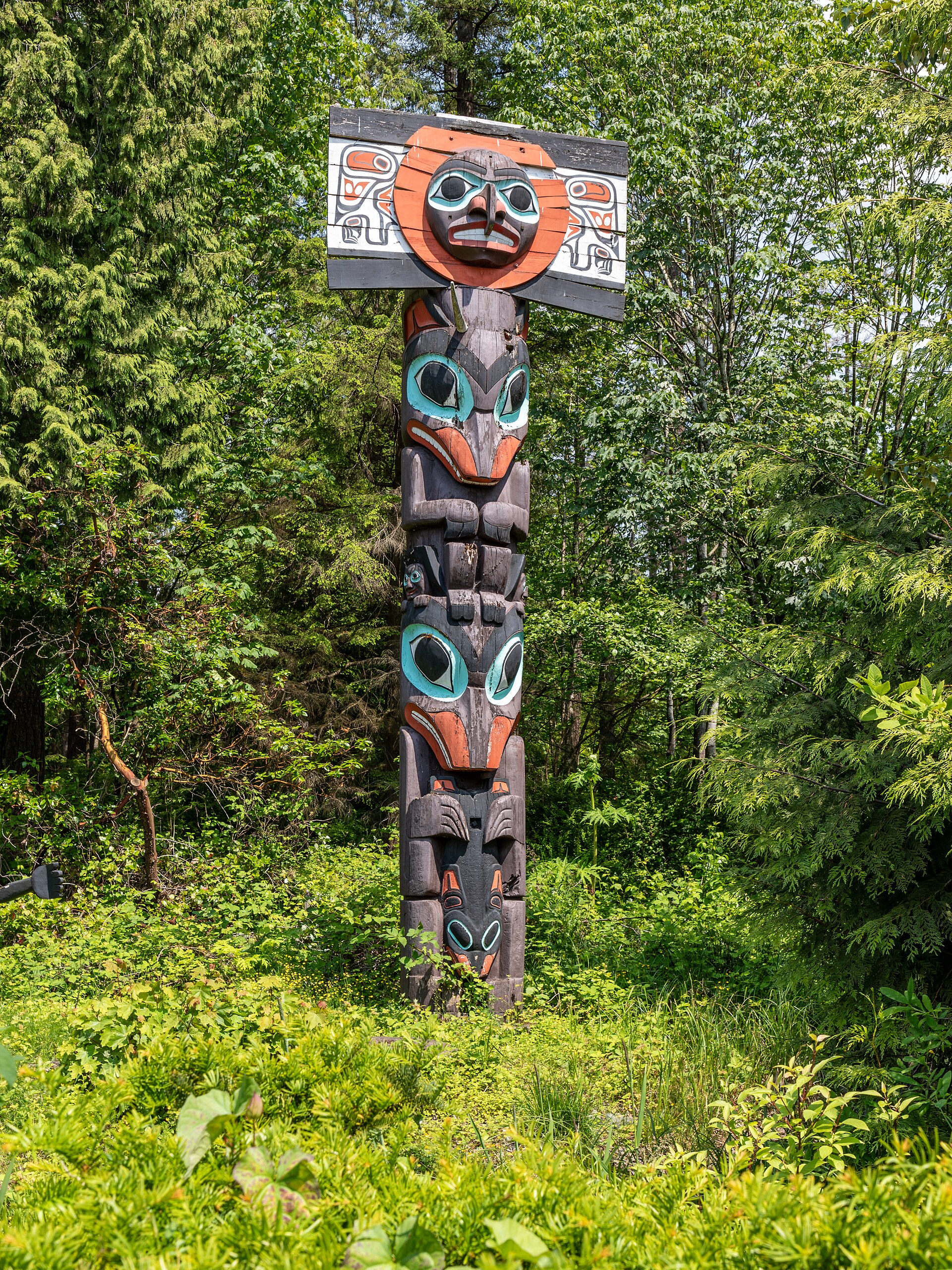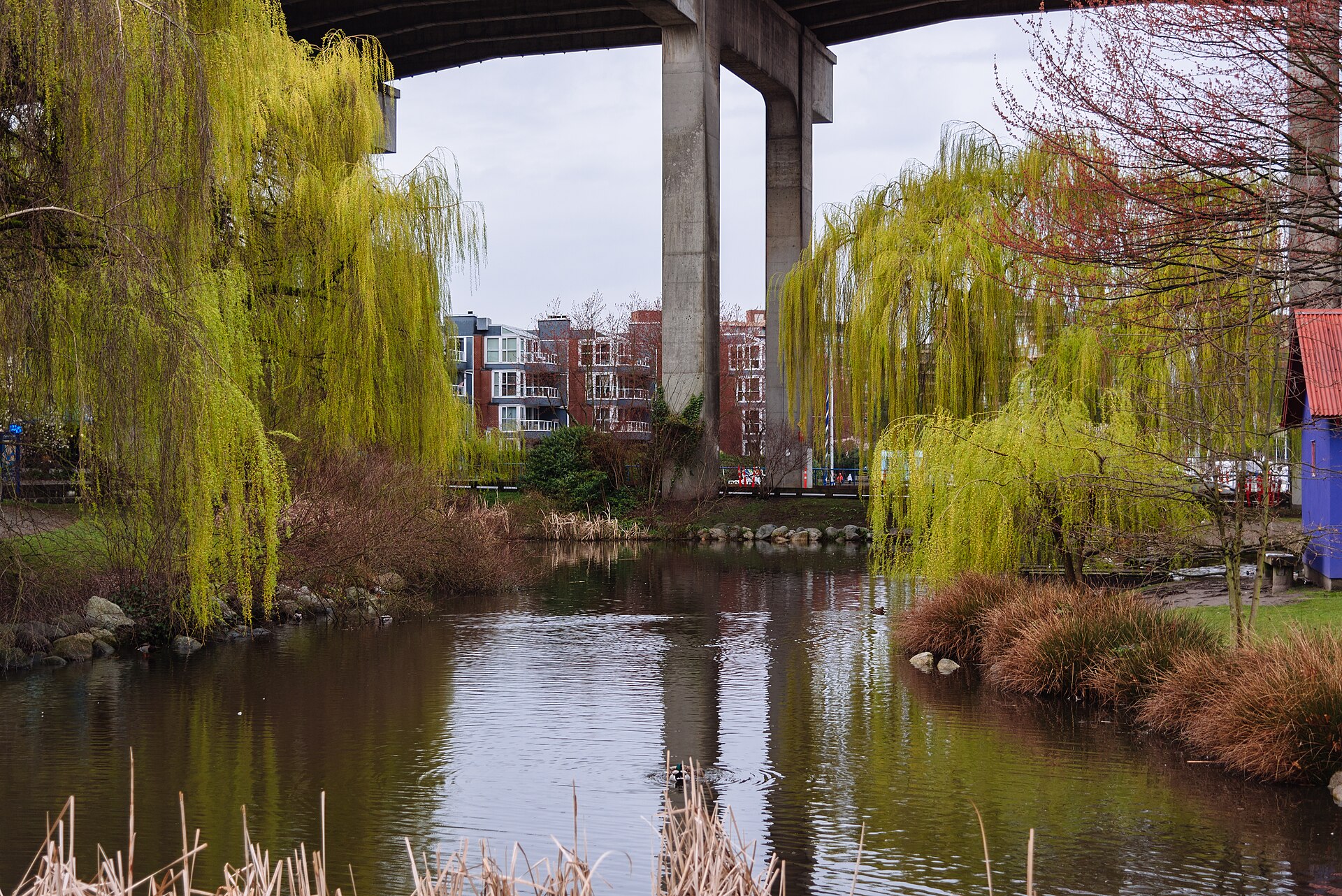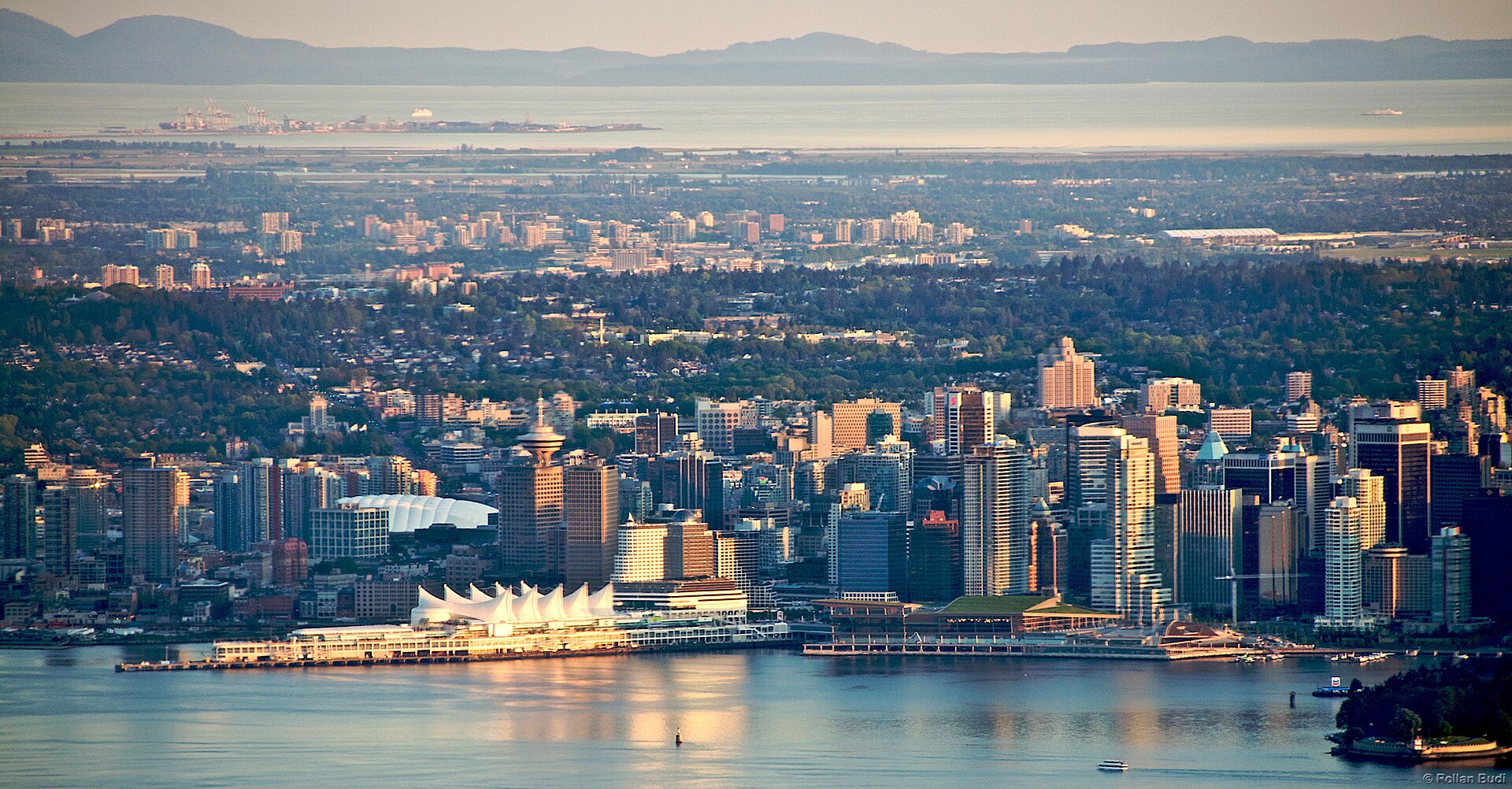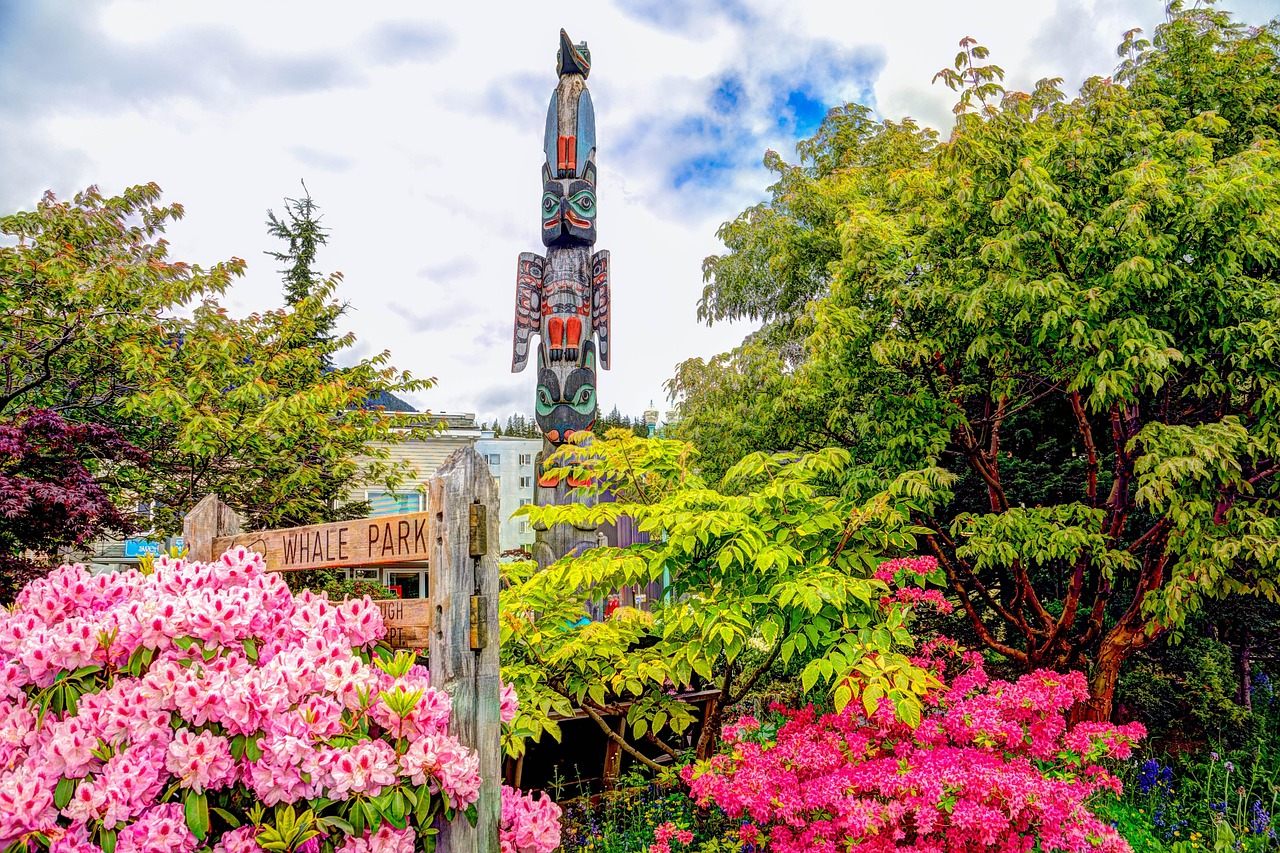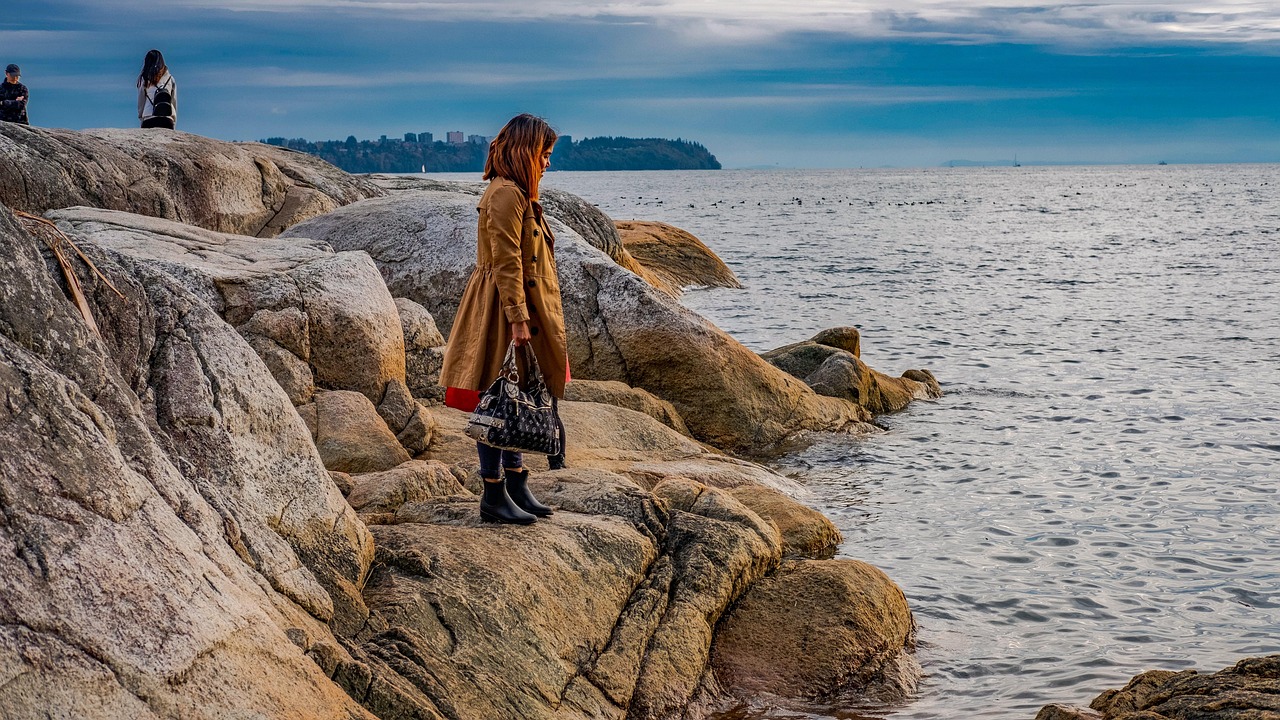
The Seawall is Vancouver's masterpiece of public space and the single best thing to DO in the city: the world's longest uninterrupted waterfront path — 28 kilometers hugging the water from the convention centre's orca sculpture around the whole of Stanley Park, along False Creek's seawalls past Granville Island to Kitsilano Beach — with the Stanley Park loop (the 9-kilometer crown jewel) as the essential version: rent bikes at the Denman Street cluster (the rental row prices competitively; e-bikes flatten the afternoon) and ride counterclockwise (the mandated direction) past the full highlight reel — Coal Harbour's floatplanes, the Nine O'Clock Gun and Brockton Point's totem poles (the park's most-visited landmark — the pole collection with the harbor behind), the Lions Gate Bridge passing overhead at the park's tip, Siwash Rock's sea-stack legend (the Squamish story the plaque tells), Third Beach's sunset logs, and Second Beach's pool before English Bay's finish — 60-90 unhurried cycling minutes that explain the entire city: mountains over harbor, forest against towers, the Pacific arriving. The extensions reward appetite: eastward the path runs Coal Harbour to Canada Place's convention-centre lookouts; westward past English Bay it rounds False Creek — the Burrard and Granville bridges overhead, the mini-ferry docks, Granville Island's market stop (lock the bikes, eat, continue), Olympic Village's plaza-and-brewery stretch and the Science World dome closing the creek — before Kitsilano's beaches end the full run. The practical craft: walkers own the inner lane and cyclists the outer (the split is signed and enforced by glare), counterclockwise is law on the Stanley loop, early mornings run empty and golden (the sunrise ride is the local religion), summer afternoons crowd the narrow park sections (patience or timing), and winter storms close segments the city reopens fast (the storm-watching from safe distance is its own season). Free forever, flat throughout, and the answer to the first-timer's "what should we actually do" — this, first. Fit: every chip at once — outdoors and first-time definitionally, couples (sunset legs), families (the pool-and-beach stops), nature (herons, seals and eagles work the route).
The wall's history is a century of stubborn building: started 1917 to stop Stanley Park's erosion, built across six decades (master mason James Cunningham laid stone for 32 years — his memorial plaque sits near Siwash Rock, and the park board still runs his apprenticeship lineage), completed around the park in 1980 and extended ever since into the 28-kilometer system — the city's democratic masterpiece: every demographic on one path, no ticket anywhere. The route's deep cuts: the totem poles' nations and stories (Brockton's collection spans Haida to Kwakwaka'wakw carving — the interpretive panels earn the stop), the Girl in a Wetsuit's mermaid-answer lore, the Empress of Japan figurehead, Siwash Rock's transformation story (the Squamish telling: a man turned to stone as a monument to fatherhood — the park's most moving plaque when actually read), and False Creek's post-industrial arc (sawmill shore to Expo lands to the Olympic Village's seaside plaza — the city's whole modern history in one shoreline).
The logistics craft
Bike rentals cluster at Denman-and-Georgia (hourly rates, helmets included by law, tandems and e-bikes for the ambitious), the loop runs counterclockwise only for cyclists (walkers go both ways), rollerblades and scooters live in the bike lane, the full-system ride (convention centre to Kits, 25-ish kilometers one way) suits a half day with the Granville Island lunch as the hinge, and the mini-ferries solve any bail-out (the rainbow boats take bikes across False Creek). Season notes: summer's long dusks make the evening loop the day's best two hours, autumn storms bring the king-tide spectacles (respect closures), and the winter ride — cold, clear, empty — is the connoisseur's version. The one warning is the only one: summer weekend afternoons jam the park's narrow stretches — ride early or accept the parade.
Practicals and fit
Start anywhere (Denman rentals for the classic loop; Canada Place or Kits for the extensions), free always, flat throughout, 90 minutes to a half day. Fit: the first-time chip's number-one answer, outdoors by definition, couples at sunset, families with the beach stops — the city, explained at handlebar height.
What to expect
The experience
Twenty-eight kilometers of uninterrupted waterfront — the 9km Stanley Park bike loop as the essential version, extending past Granville Island and False Creek to Kitsilano — flat, free and counterclockwise.
Best time
Early mornings run empty and golden (the sunrise ride is local religion); summer evenings for the long-dusk loop; weekend afternoons jam the narrow park stretches.
How long
Ninety minutes for the Stanley loop, half a day for the full system.
Tips
Rent at the Denman Street cluster and ride counterclockwise — it is the law of the loop. Stop at Brockton's totem poles and actually read Siwash Rock's plaque. The rainbow mini-ferries take bikes across False Creek for any bail-out.
Quick picks
- Best for
- The first-timer's number-one answer — the city explained in one 9-kilometer loop.
- Families
- Flat forever, with Second Beach's pool, sunset logs and ice-cream stops built in.
- Couples
- The English Bay-to-Third Beach sunset leg — the city's most reliable golden hour.
- Pair with
- Granville Island as the lunch hinge on the full run; Stanley Park's inner trails off the loop.
- Time needed
- One golden-hour loop minimum.
Good questions
How long is the ride?+
The essential Stanley Park loop runs 9 kilometers — 60-90 unhurried cycling minutes — while the full system stretches 28 kilometers from the convention centre to Kitsilano: the world's longest uninterrupted waterfront path.
Where do we rent bikes?+
The Denman-and-Georgia rental cluster by the park entrance — hourly rates, helmets included by law, e-bikes to flatten the afternoon — then counterclockwise, which is mandatory for cyclists on the loop.
What are the must-stops?+
Brockton Point's totem poles with the harbor behind, the Lions Gate underpass, Siwash Rock's transformation story, and Third Beach's sunset logs — the loop's highlight reel spaces itself perfectly.
Is it walkable instead?+
Fully — walkers own the inner lane in both directions; the full park loop walks in two-plus hours, and any segment (English Bay to Second Beach, say) makes a perfect hour.
When is it too crowded?+
Summer weekend afternoons jam the park's narrow stretches — ride early morning or the long evening dusk instead, when the wall runs empty and golden.