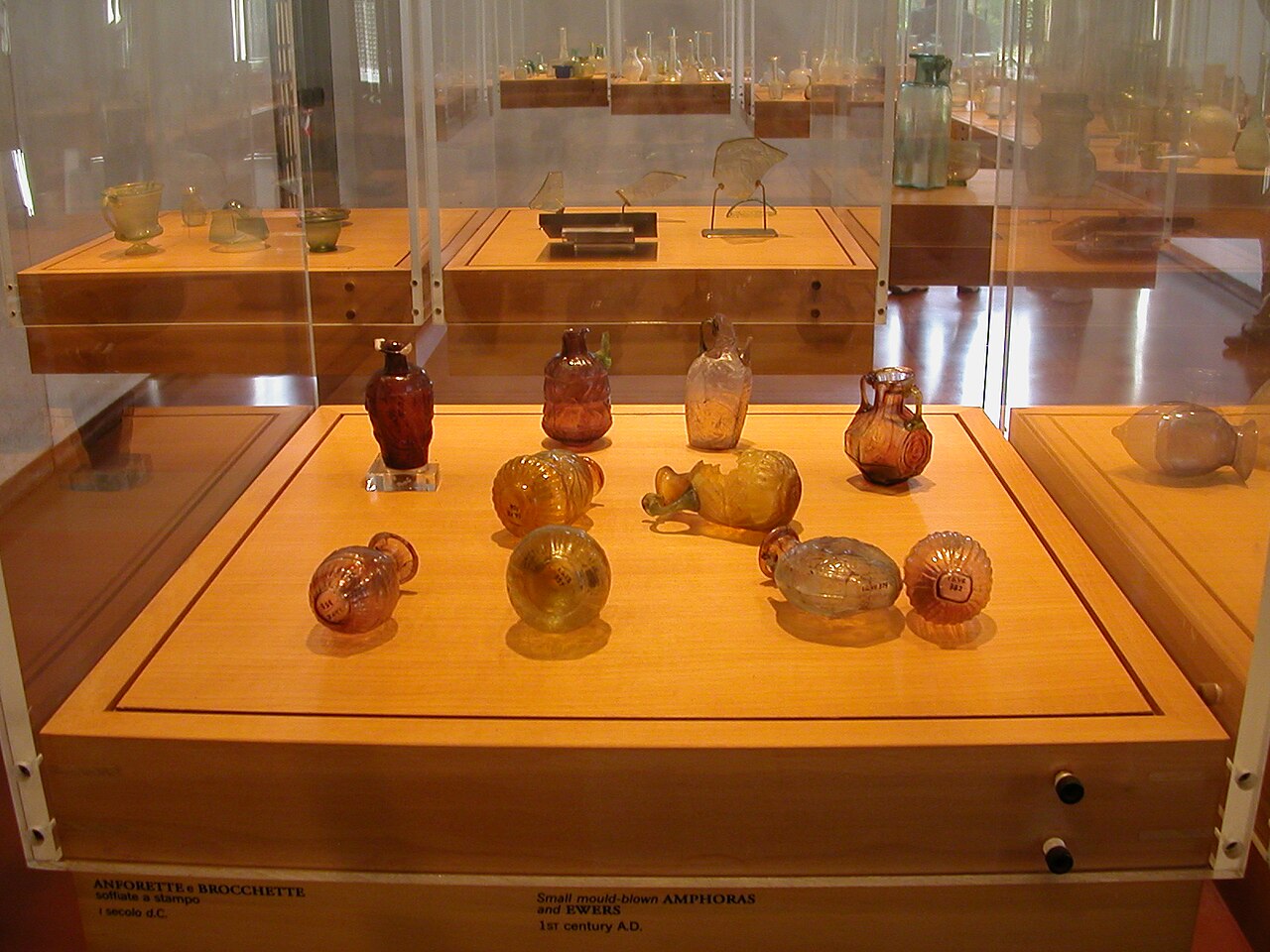
Murano is known to visitors for its furnaces and showrooms, but the island also has a serious museum of the craft, and it is the best place to understand what you are looking at in the shops. The Murano Glass Museum, the Museo del Vetro, occupies Palazzo Giustinian on Fondamenta Marco Giustinian; the booking page notes that the building was once home to the bishops of Torcello. Inside, the collection follows glassmaking from its early roots through the great Venetian period, when Murano's workshops supplied mirrors, goblets and beads to European courts, to the colour-saturated design of the twentieth century. Among the famous pieces is the fifteenth-century enamelled wedding cup associated with the Barovier family, and the rooms show how techniques such as filigree, enamelling, millefiori and chandeliers evolved. The museum was founded in the nineteenth century, when the island's glass tradition was being revived. Because glass is fragile and light-sensitive, the displays are carefully lit, and the building itself is cool and quiet. It is a good rest from the showroom crowds, and a way to judge quality afterwards: once you have seen what the island's masters made, the souvenir stalls look different.
How to fit it into a Murano visit: most people arrive by waterbus from Fondamente Nove or the railway station area, and the museum is a short walk from the Museo stop. The simplest plan is to start with the museum, so that you know what to look for, then watch a glassblowing demonstration and browse the shops.
If you are visiting on a boat tour with a fixed time on the island, check whether the museum is included; many group tours stop only at a furnace and the shops. The tickets in include a standard entry as well as combinations, and the venue's hours can change by season, so confirm on the day.
What to look for inside
The early rooms with ancient and medieval glass, the opulent goblets of the fifteenth and sixteenth centuries, the chandeliers and mirrors of the eighteenth-century export boom, and the twentieth-century galleries where designers worked with Murano's masters. The labels give context on techniques; spend your time on three or four pieces rather than rushing every case.
Photography rules vary by gallery, so ask at the desk. The temporary exhibitions often bring contemporary artists into dialogue with the permanent collection, and the current one is a good reason to go even if you have visited before.
Practical notes
Count on about an hour inside, longer if you love glass. The museum is a good wet-weather stop, and a good choice for older children with some patience, less so for toddlers near fragile displays. Pair it with Burano and Torcello if you are making a full lagoon day, or with a short glassblowing demonstration on the same island. If you are staying for the day only, remember that Venice has had a day-visitor access fee on selected dates; rules and dates change, so check the current position before you travel.
What to expect
The experience
A self-guided museum visit through rooms of Venetian glass from antiquity to contemporary design, in a palace once linked to the bishops of Torcello; temporary exhibitions run alongside the permanent collection.
Best time
Morning, then furnaces and shops afterwards. It is also a good indoor choice in rain or heat.
How long
About an hour inside, longer for glass enthusiasts.
Tips
Start here before shopping so you can judge quality. Hours are listed as ten to six daily, but check the day before you go. Ask about photography rules.
Quick picks
- Best for
- Anyone who wants to understand Murano glass rather than just buy it, and design lovers.
- Families
- Best for school-age children with some patience; the displays are fragile and mostly look-don't-touch.
- Couples
- A quiet, atmospheric hour before a lagoon lunch in Burano.
- Pair with
- A glassblowing demonstration on Murano, then Burano and Torcello.
- Time needed
- Allow an hour or so.
Good questions
Where is the Murano Glass Museum?+
In Palazzo Giustinian on Fondamenta Marco Giustinian on Murano. The booking page notes the building was once home to the bishops of Torcello.
What are the opening hours?+
The booking page shows daily opening from ten to six, but hours can change by season, so check before you go.
What is on at the moment?+
The booking page mentions an exhibition called Babel by Marco Toso Borella, running until 30 March 2027.
Is it worth it if I will see a glassblowing demo?+
Yes. A demonstration shows how glass is made; the museum shows what masters have made with it over centuries, which helps you judge what you see in the shops.
How do I get to Murano?+
By waterbus from central Venice, with several lines serving the island. Check current timetables and ticket options before you travel.