Most visitors come to Vilnius for the Baroque churches, but the twentieth century left a deeper mark on the city than any facade. Lithuania was occupied by the Soviet Union in 1940, then by Germany, then by the Soviets again, and it stayed inside the USSR until it declared independence on 11 March 1990, the first Soviet republic to do so. A walking tour of Soviet Vilnius connects that story to places you can stand in: former security buildings, Soviet-era architecture, squares where statues stood and fell, and the streets where crowds gathered during the Singing Revolution. Tours of this kind typically explain daily life under communism, from queues and propaganda to the quiet resistance of faith and folk culture, and they talk about the Baltic Way of 23 August 1989, when two million people joined hands in a human chain from Vilnius to Tallinn. Many guides also describe the events of January 1991, when Soviet forces attacked the Vilnius television tower and people gathered to defend parliament. The walking format is the cheapest and most flexible way to meet this history, and the guides, who often have family memories of the period, bring humour and honesty to the subject.
How it works
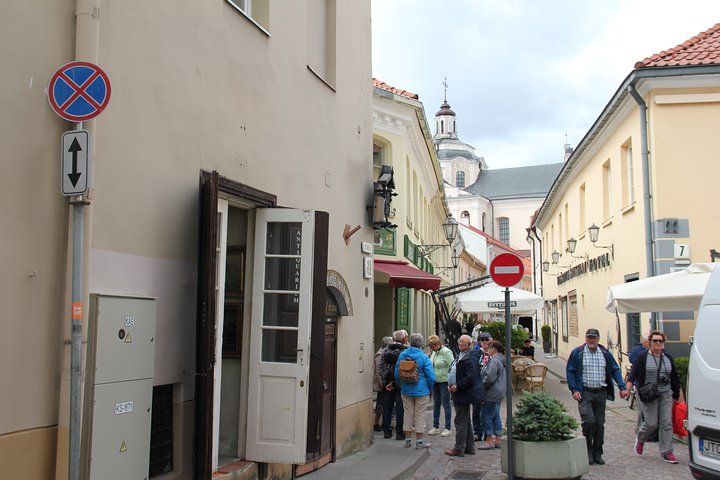
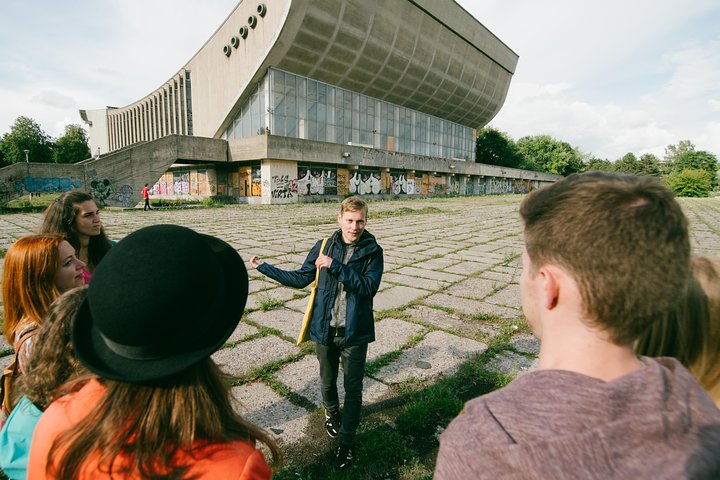
The product is a regular guided walking tour of Soviet Vilnius, led by a local guide who speaks English. It moves through the centre and nearby districts on foot, with the guide pointing out buildings and sites that look ordinary until the story is told. Check the product page for the meeting point, departure time and exact route, since operators adjust them. It is a good-value way to get oriented in the city’s modern history before choosing which museums to visit.
What to expect
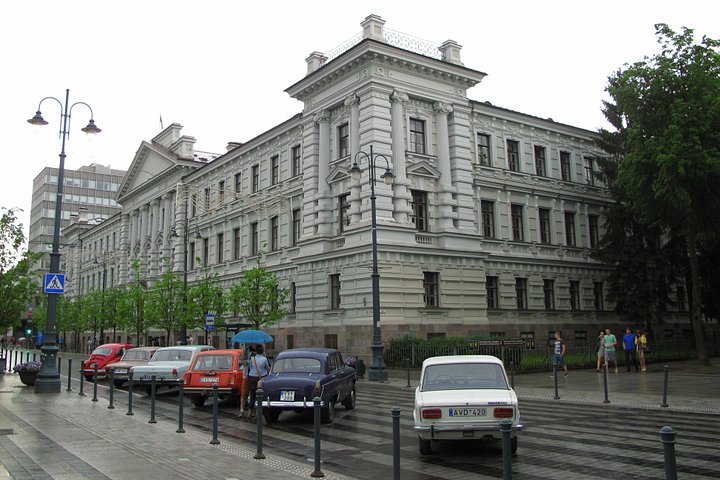
Roughly a couple of hours of walking at a relaxed pace, with plenty of standing and listening. The route is flat to gently sloping, though Vilnius has hills and the occasional cobbled street. Expect a mix of the serious and the wry: the Soviet period was brutal, but the guides also show how people coped, joked and quietly resisted. If you want more depth afterwards, the Museum of Occupations and Freedom Fights on Aukų Street covers the same period inside the former KGB headquarters.
Making the most of it
Combine the walk with the KGB museum on the same or the next day for a complete picture, and ask your guide for recommendations on where to see the Soviet-era television tower or housing districts if you are curious about the architecture. Dress for the weather, since the tour runs outdoors in most conditions, and carry water in summer. It is an ideal activity for history lovers, for travellers who prefer stories to monuments and for anyone who wants to see Vilnius beyond its postcards.
What to expect
The experience
A guided walking tour on foot through the city centre and nearby districts, explaining the Soviet period through the places where it happened.
Best time
Any season; dress for the weather, as the tour runs outdoors.
How long
A couple of hours; check the product page for the exact length.
Tips
Book early in your stay, and add the KGB museum for depth.
Quick picks
- Best for
- History lovers and anyone curious about life behind the Iron Curtain.
- Families
- Best for older teenagers; younger children will find it slow.
- Couples
- An engaging, conversational way to see the less-visited side of the city.
- Pair with
- The Museum of Occupations and Freedom Fights and the Old Town walk.
- Time needed
- A couple of hours.
Good questions
What does a Soviet Vilnius tour cover?+
Typically the occupations, daily life under communism, resistance, the Baltic Way and the road to independence in 1990 and 1991.
When did Lithuania declare independence?+
On 11 March 1990, the first Soviet republic to do so.
How long is the walk?+
About a couple of hours; check the product page for exact timing.
Is it suitable for children?+
It suits older teenagers better than young children.
Should I also visit the KGB museum?+
Yes, it covers the same period in more depth inside the former KGB headquarters.