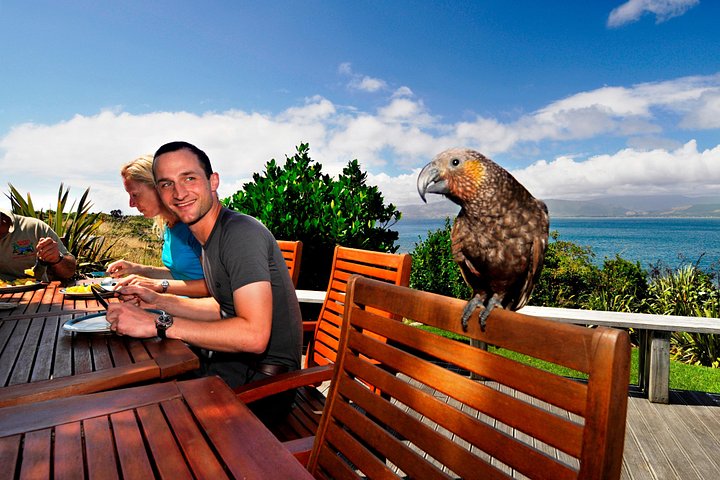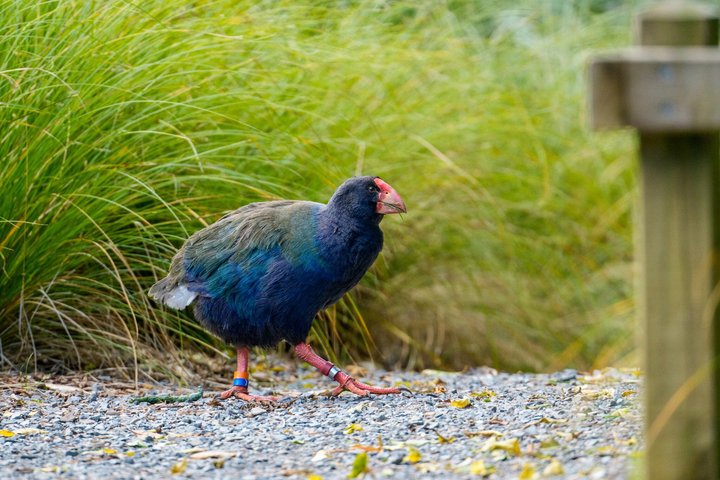
Zealandia Te Mārā a Tāne is a not-for-profit ecosanctuary on Waiapu Road in the Karori valley, about ten minutes by road from central Wellington. A predator-proof fence encloses the valley, and inside it native forest, two lakes and a network of more than 32 km of walking tracks are being restored for wildlife that has vanished from most of the mainland. Visitors can see birds such as kākā and takahē, and tuatara, the ancient reptiles found only in New Zealand. There is an interactive exhibition, a suspension bridge with canopy views and a cafe, so you can spend a few hours or most of a day. It is one of the few places where a short city trip puts you among genuine native bird life, and it is the reason many visitors extend their time in Wellington.
What to do
A small-group guided daytime tour is the most reliable way to spot the wildlife, because the guides know where birds feed and how to read the forest. On your own, pick a loop from the visitor centre, cross the suspension bridge for canopy views and spend time near the lake edges and feeders where birds gather.
Walk slowly and listen, since many birds are heard before they are seen. After dark, separate guided evening tours are offered for people who want to look for nocturnal species, and they need to be booked in advance.
Planning
The sanctuary is open daily except Christmas Day, with typical hours of 10am to 5pm and last entry at 4pm, and shorter winter hours from May to August, so confirm times before you go. Admission rates differ for adults and children, under-5s are free, and a guided tour ticket includes entry.
A free shuttle runs from the city and the Cable Car, though its timetable can change and it may leave early if full, so check it on the day. Wear layers and sturdy shoes, because the tracks can be muddy and the valley is cooler than the waterfront.
Fitting it in
Allow half a day for a guided tour and a loop on your own, and more if you want to try several tracks. Zealandia combines well with a Cable Car ride and the Botanic Garden, since the shuttle starts from the Cable Car. It suits families with children who can walk on uneven paths, and it is a good first nature stop for anyone curious about New Zealand wildlife before heading out to Kapiti Island or the south coast.
What to expect
The experience
A fenced native forest valley with walking tracks, lakes, a suspension bridge and an exhibition, best seen with a small-group guide.
Best time
Go in the morning for bird activity, and book a guided tour ahead in school holidays and summer.
How long
Allow about three hours for a guided tour and a short walk, or half a day for more tracks.
Tips
Wear layers and sturdy shoes, bring a camera with a zoom, and move quietly so the birds stay close.
Quick picks
- Best for
- Visitors who want to see rare native birds and tuatara close to the city.
- Families
- Suits children who can walk on uneven tracks, and there is an exhibition and cafe for breaks.
- Couples
- A quiet forest walk with canopy views from the suspension bridge makes a memorable half day.
- Pair with
- Pair it with the Cable Car and Botanic Garden, since the shuttle runs from the Cable Car.
- Time needed
- Three hours to half a day.
Good questions
What wildlife can I see at Zealandia?+
Visitors can see native birds such as kākā and takahē, and tuatara. A guide greatly improves your chances of spotting shy species.
How do I get to Zealandia from the city?+
It is about a ten-minute drive from central Wellington. A free shuttle runs from the city and the Cable Car, but check the timetable because it can change.
Is a guided tour worth it?+
Yes, if you want to see more than you would on a self-guided walk. Small-group tours are led by guides who know where the birds are, and the tour ticket includes entry.
What are the opening hours?+
The sanctuary is open daily except Christmas Day, usually from 10am with last entry at 4pm, with shorter hours from May to August. Check the website before you go.
What should I wear?+
Wear layers, sturdy shoes and a rain jacket, because tracks can be muddy and the valley is cooler than the city. Bring binoculars if you have them.