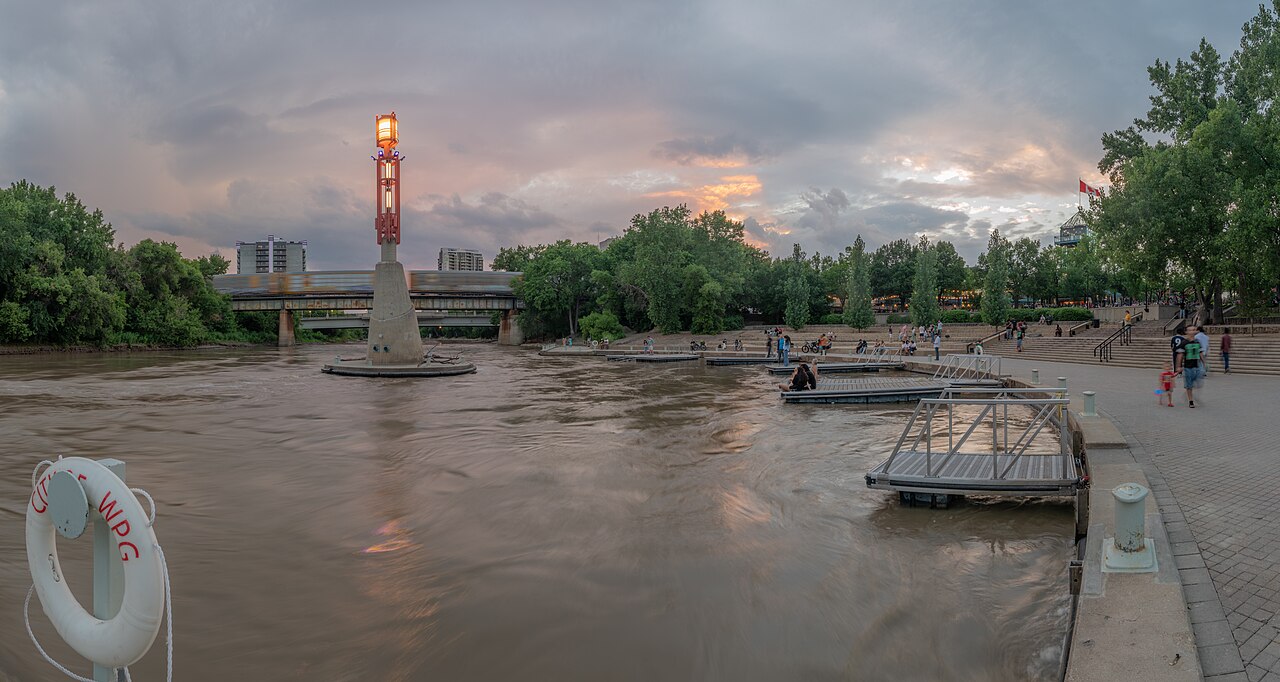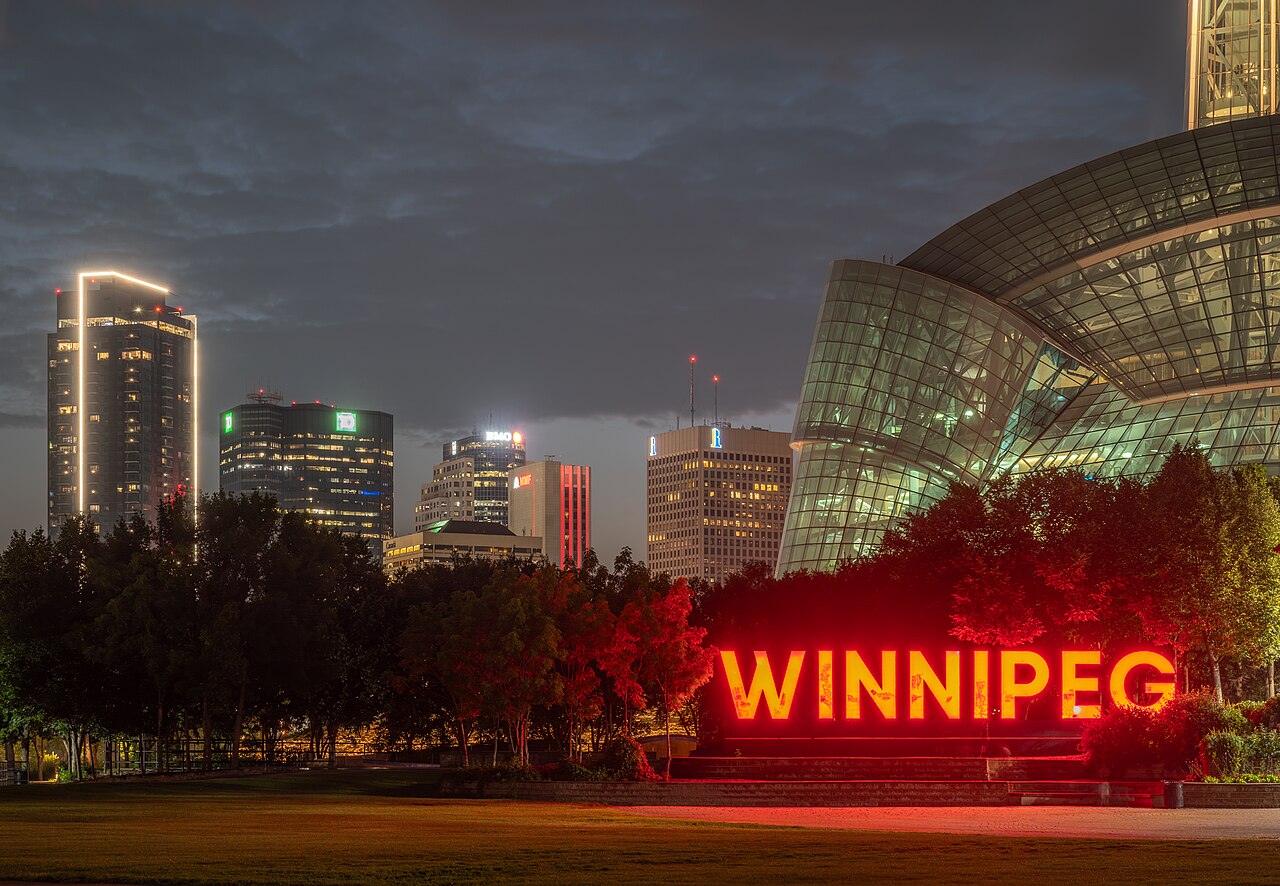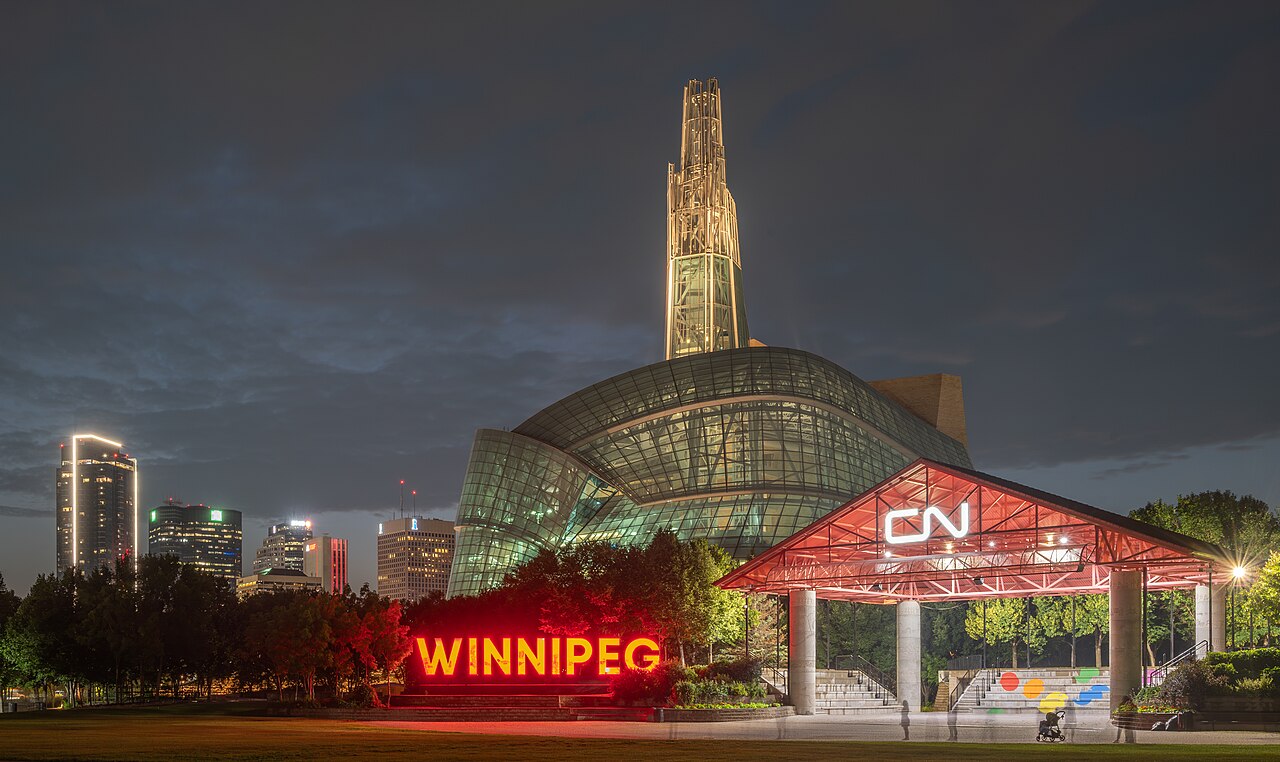
The Canadian Museum for Human Rights stands at the meeting of the Red and Assiniboine rivers, a sweeping building of glass, stone and a tall glass tower that you can pick out from across downtown. Inside, a ramp of glowing alabaster leads you up through galleries that tell stories of human rights in Canada and around the world, from Indigenous rights and the Holocaust to modern campaigns for equality and dignity. The design is part of the experience: you climb slowly from the dark of the lower levels toward light and the city views at the top. It is a serious subject handled with care, using film, objects, personal testimony and immersive spaces rather than long panels of text. Most visitors spend two to three hours, and a bistro on the ground level makes it easy to pause. It sits beside The Forks, so it pairs naturally with a market lunch and a river walk.
What it is and why it matters: this is Canada's national museum of human rights, and the building itself is one of Winnipeg's signature landmarks. The galleries cover the long history of rights struggles, with space given to Indigenous perspectives, to Canadian stories that are not always comfortable, and to ordinary people who changed laws or lives. Some content is heavy, including material about genocide and discrimination, and a few spaces carry advisories, so plan to take breaks and think about whether younger children will be ready for it.
Making the visit work
The museum is generally open Tuesday to Sunday during the day and closed on Mondays, with holiday hours that differ, so confirm on the museum's website before you go. Adult admission is in the low twenties in Canadian dollars, with lower rates for students, seniors and youth, free entry for children six and under, free admission for Indigenous peoples, and a free admission day on the first Sunday of each month.
General admission gives you unlimited access for the day. There is no free museum parking, so use nearby paid lots or walk from downtown. Check the museum's page for the current exhibitions and any galleries that are temporarily closed.
Fitting it in
Arrive soon after opening and do the galleries before lunch, then walk out into The Forks for the market, the river trails or the historic port. In winter the climb to the top of the tower rewards you with a low, golden view over the frozen rivers, and the building is warm, so it is an excellent anchor for a cold day. Wear comfortable shoes, because the ramps and levels add up, and allow extra time if you want to read or watch everything rather than skim.
What to expect
The experience
A self-guided walk up a series of illuminated ramps through themed galleries, with film, objects, testimony and a tower viewpoint at the top.
Best time
Soon after opening on a weekday, or on a cold afternoon when you want a long indoor visit with city views.
How long
Two to three hours for the main galleries, longer if you read and watch in depth.
Tips
Confirm hours and any closed galleries on the museum's website, remember it is closed Mondays, and bring a card for admission and paid parking nearby. Take breaks in the heavier galleries.
Quick picks
- Best for
- Visitors who want Winnipeg's most important cultural stop and a building worth seeing in its own right.
- Families
- Best for older children and teens; some galleries cover difficult history, so preview them first.
- Couples
- A thoughtful afternoon followed by a river walk and a market dinner at The Forks.
- Pair with
- The Forks, the historic port and the riverside trails are right outside the door.
- Time needed
- Allow half a day with a meal break.
Good questions
What is the Canadian Museum for Human Rights?+
It is Canada's national museum dedicated to human rights, set at The Forks in downtown Winnipeg. Its galleries explore rights struggles in Canada and around the world.
How long should I spend there?+
Most visitors spend two to three hours, though a full half day is easy if you enjoy reading and watching films. There is a bistro on site for a break.
Is the museum suitable for children?+
Older children and teens often find it moving and valuable, but some galleries deal with genocide and discrimination. Look at the content advisories and decide what suits your family.
When is it open and when is it free?+
It is usually open Tuesday to Sunday and closed Mondays, and general admission is free on the first Sunday of each month. Always check the museum's website for holiday hours.
Where do I park?+
There is no dedicated free parking, but paid street parking, lots and parkades are nearby. Walking from downtown or the nearby hotels is often easier.