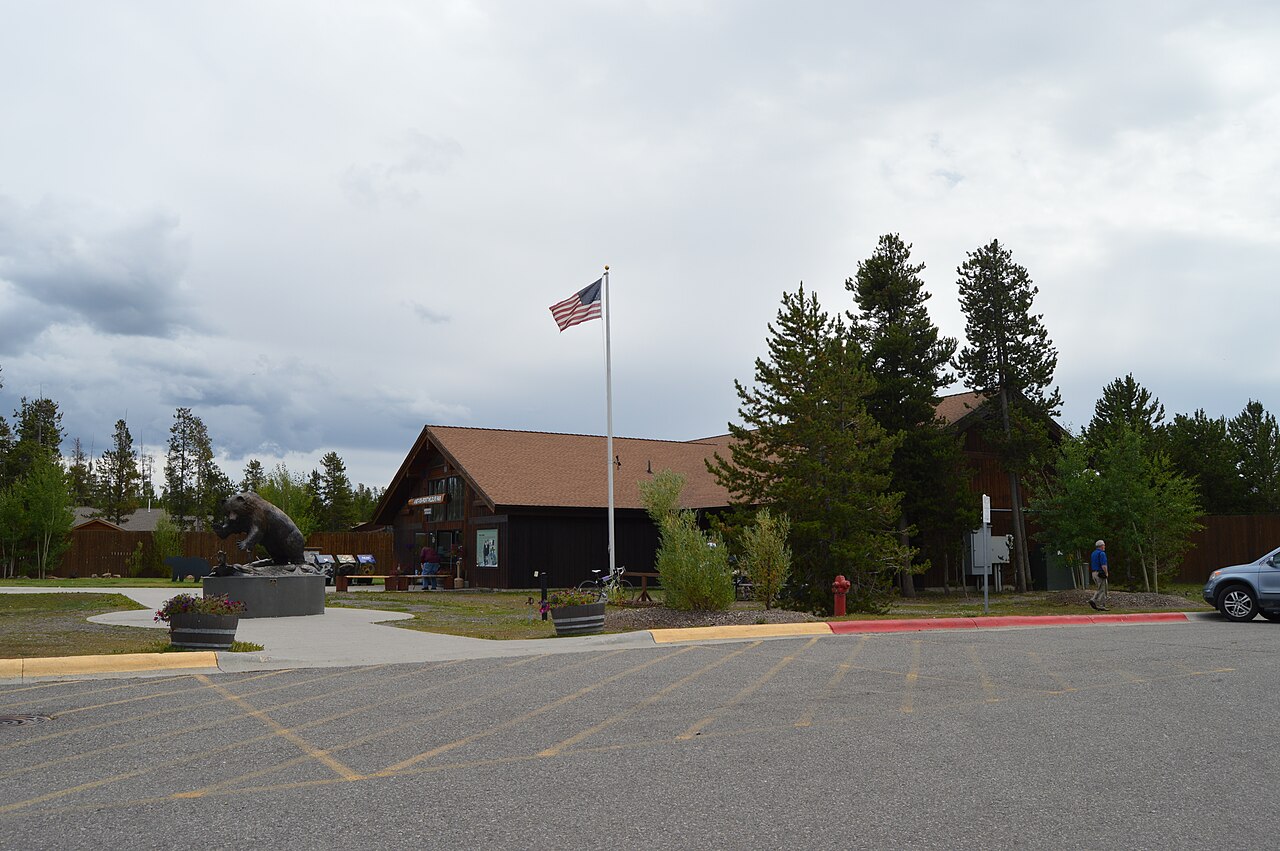
The Discovery Center solves the park's honest problem — wild grizzlies are rightly distant — by housing the ones that can't be wild: nuisance and orphaned bears from across the West live in the naturalistic habitat at the park's West Yellowstone doorstep, digging, wrestling, and demolishing keeper-hidden caches close enough to count claws. Resident wolf packs (captive-born) hold the adjacent territory with daily enrichment and howling on their own schedule; river otters torpedo through their stream habitat; and the Birds of Prey program houses unreleasable eagles and hawks. It's an AZA-accredited nonprofit, not a roadside zoo — the famous sideline is product-testing "bear-resistant" coolers by letting the residents attempt them. Open year-round, tickets valid two consecutive days, and the five minutes from the park's west gate make it the perfect weather-day or arrival-evening anchor.
Every bear here has a file
Raided dumpsters in Whistler, orphaned by a poacher in Alaska, food-conditioned past recall in the Tetons — grizzlies whose alternatives were a bullet, relocated into the center's care since 1993. The nonprofit's deal with visitors is transparent: see the species properly (close, active, unhurried), fund the residents' care, and carry out the education that keeps wild bears wild — the bear-spray demos, food-storage gospel, and distance rules that the park preaches get their visceral why here, twenty feet from a quarter-ton of digging grizzly.
The habitats rotate residents through the day (bears take shifts in the main yard while keepers re-hide food under logs and boulders — the "keeper caches" turn every rotation into a demolition derby of flipped rocks), so repeat passes differ; the ticket's two-day validity is designed for exactly that, and the morning "bear chores" program lets kids help hide the goods behind the scenes (book ahead). The wolves — two packs, raised here — run their forested yards with daily enrichment, photogenic year-round and operatic when a siren or train sets off the howl. River otters (added with their own stream-and-slide complex) steal the middle of any visit; the raptor program's bald and golden eagles sit close enough to study feather detail; and the naturalist program runs keeper talks hourly in season.
The product-testing sideline earned national fame: manufacturers submit coolers and canisters, residents get an hour to break in, and survivors earn the grizzly-tested certification — ask staff when a test is running; it's the best free comedy in Montana. Practicals: in West Yellowstone two blocks from the park's west entrance, open 365 days (winter pairs it with snowcoach departures across the street), indoor exhibits for weather, two-to-three unhurried hours, and the rare attraction equally right as arrival-day primer or departure-day encore.
What to expect
The experience
An AZA-accredited nonprofit sanctuary — rescued grizzlies in rotating habitat shifts with keeper-hidden caches, resident wolf packs, river otters, raptors, and hourly talks. Two blocks from the park's west gate; tickets good two days.
Best time
Morning rotations for the most active digging; any weather (indoor exhibits carry rain); winter visits pair naturally with snowcoach days from the same street.
How long
Two to three hours, rewarding a second same-ticket pass.
Tips
Check the keeper-talk and habitat-rotation board at entry and loop accordingly. Book the morning bear-chores program ahead for kids. Ask whether a cooler test is scheduled — watching a grizzly peer-review product design is worth planning around. Use the two-day ticket as arrival primer and departure encore.
Quick picks
- Best for
- Guaranteed close grizzlies and wolves — the sure thing that makes wild sightings mean more.
- Families
- The park's best family insurance policy: close animals, keeper programs, indoor backup, zero hiking.
- Couples
- An unhurried hour of bears being bears beats most paid attractions in the region.
- Pair with
- Snowcoach or park entry from the same West Yellowstone block — it's the gateway's anchor.
- Time needed
- Two to three hours.
Good questions
Is it a zoo?+
An accredited nonprofit sanctuary — every grizzly is a rescue that couldn't remain wild (food-conditioned, orphaned, or relocated), and the mission funds care plus the education that keeps wild bears alive.
Will the bears actually be visible?+
Yes — residents rotate through the main habitat all day while keepers re-hide food caches, so active digging and boulder-flipping is the norm, not luck. The two-day ticket catches multiple rotations.
What's the cooler-testing thing?+
Manufacturers earn "grizzly-resistant" certification by surviving the residents — scheduled tests let visitors watch a bear attempt product destruction professionally. Ask staff for timing.
Is it open in winter?+
365 days — and winter pairs perfectly with snowcoach departures from the same West Yellowstone blocks, with the wolves at their photogenic best in snow.
How long and how much?+
Two to three hours, modest admission valid two consecutive days — the region's best ticket value after the park pass itself.