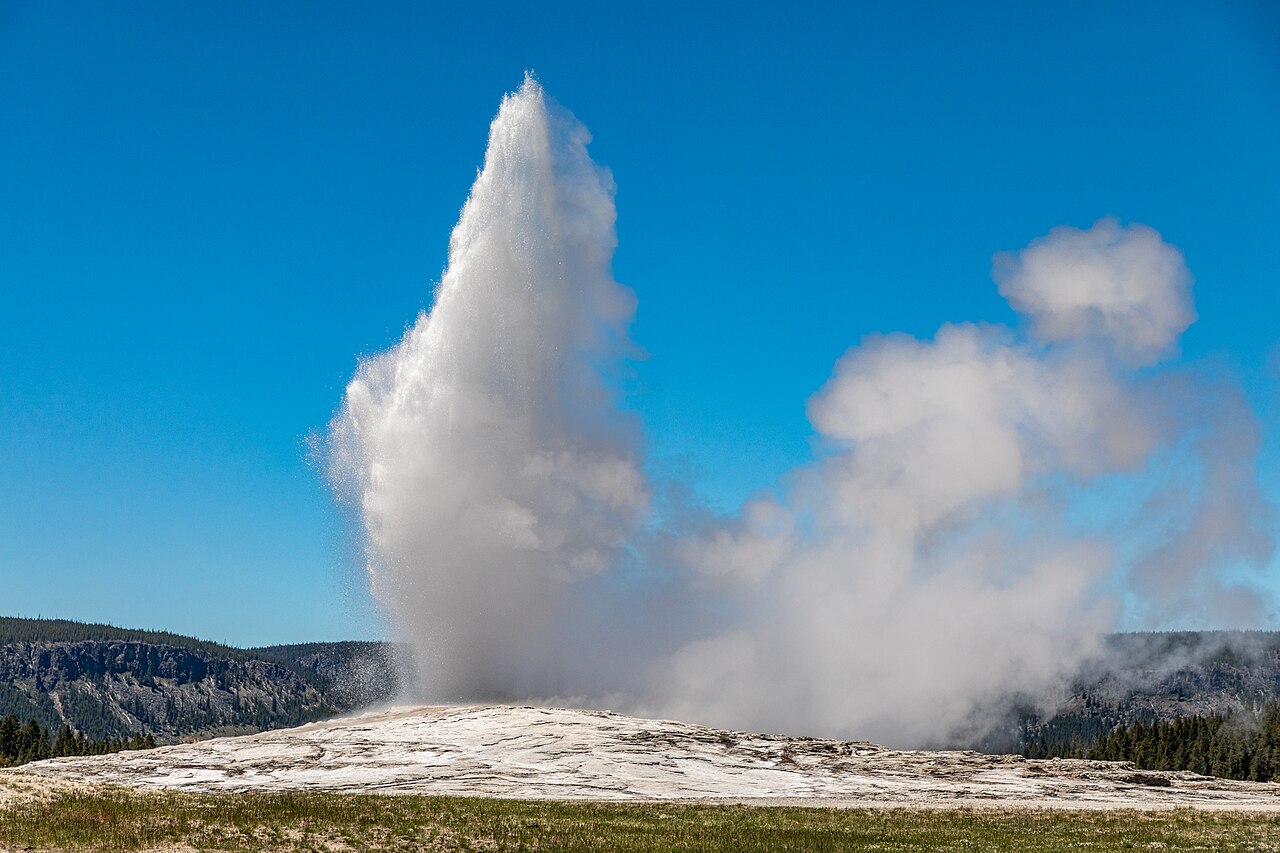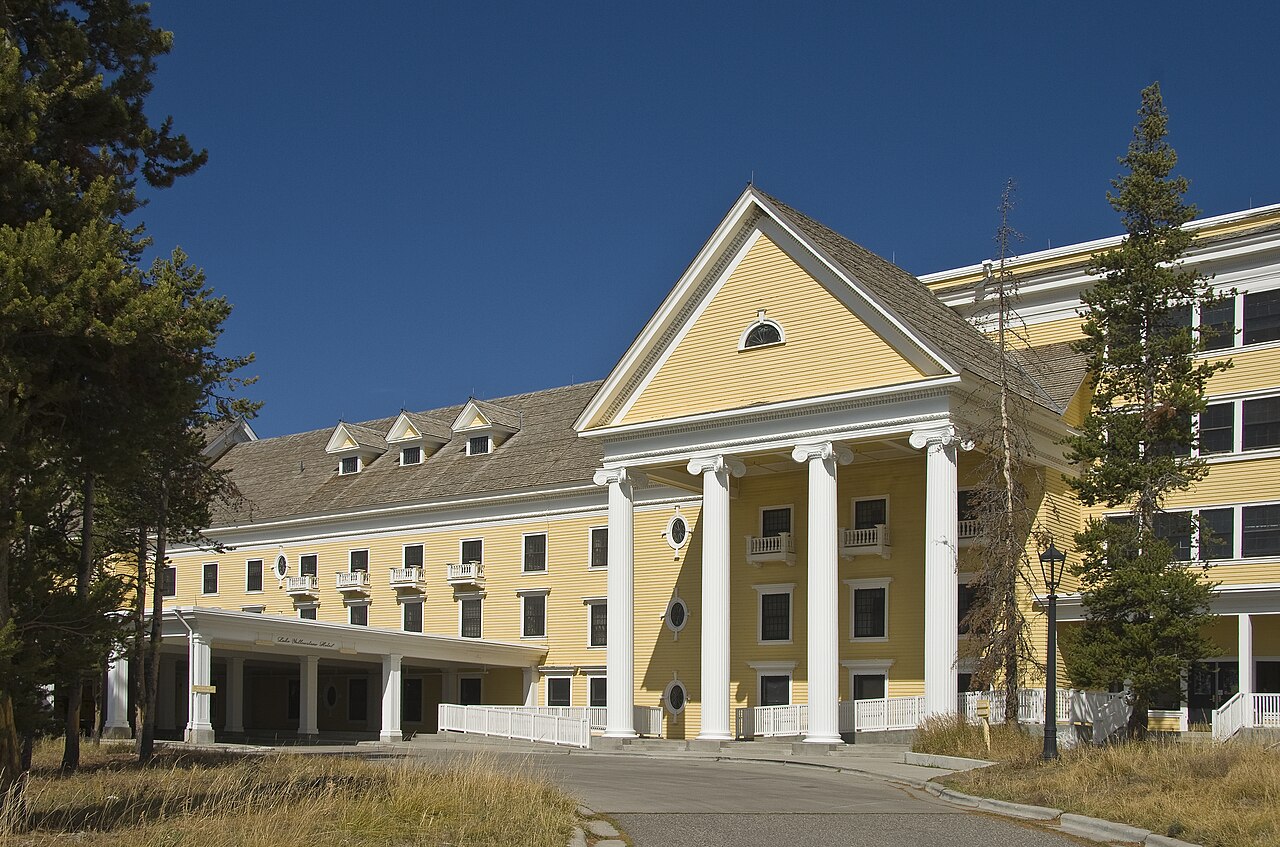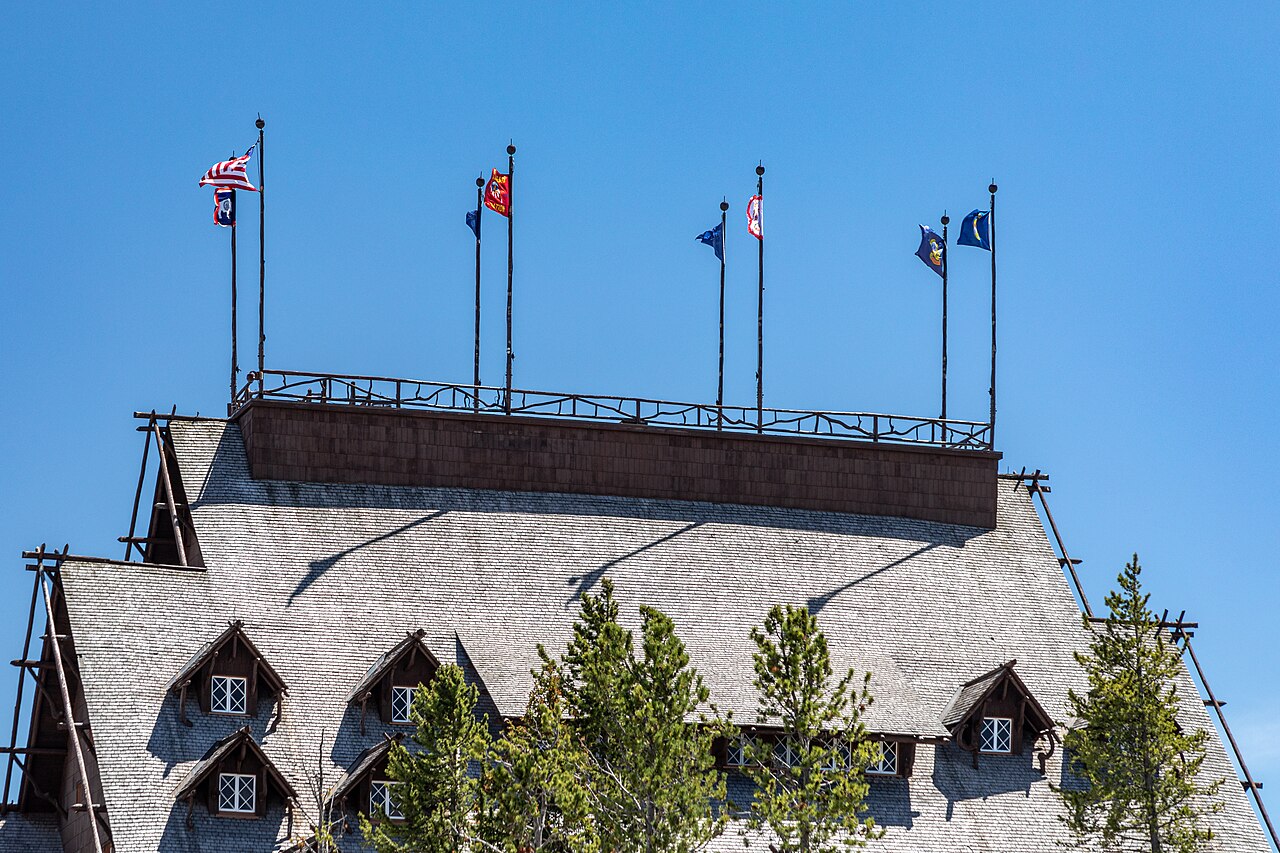
Sleeping at the Old Faithful Inn is staying inside a national monument: Robert Reamer's 1904 masterpiece — the largest log structure on earth, its lobby rising 76 feet through tiers of twisted-lodgepole balconies around a 500-ton stone chimney — standing a few hundred feet from its namesake geyser. Rooms run from the Old House originals (authentic 1904 character, many with shared baths down the hall — the pilgrim's choice) to renovated wings with private baths and geyser-side views. The deck watches eruptions above the crowds, the dining room serves under log trusses, and dawn in the basin — before the day visitors arrive — belongs to guests and coyotes. Seasonal (May-early October), operated by Xanterra, and booked up to 13 months ahead: the hardest, most worthwhile reservation in the park system.
Reamer was 29 when he built the thing that invented "parkitecture": a hotel meant to grow out of its landscape, raised through the winter of 1903-04 from local lodgepole and rhyolite, its asymmetric gables and gnarled-wood balconies setting the template every great lodge since has chased. The lobby remains American architecture's great gasp — seven stories of log scaffolding climbing toward a treehouse crow's nest (where orchestras once played to dancers below), the massive fireplace with its hand-wrought clock, writing desks on the balconies where guests still journal by window light.
The room decision is philosophical. Old House rooms are the 1904 experience itself — log walls, period furnishings, pedestal sinks, and (for most) the famous bathrooms-down-the-hall, which regulars treat as part of the time travel; Old House rooms with private baths, and the East/West wing rooms (mid-century additions, renovated), trade character for convenience, with the wings' upper geyser-side rooms catching eruptions from bed.
None have TVs; the lobby is the entertainment, and the second-floor deck's eruption viewing — above the boardwalk crowds, coffee in hand — is the house privilege. Dining runs the big log room (dinner reservations essential, book with the room), the Bear Paw's quick counter, and the mezzanine bar pouring huckleberry margaritas over eruption views.
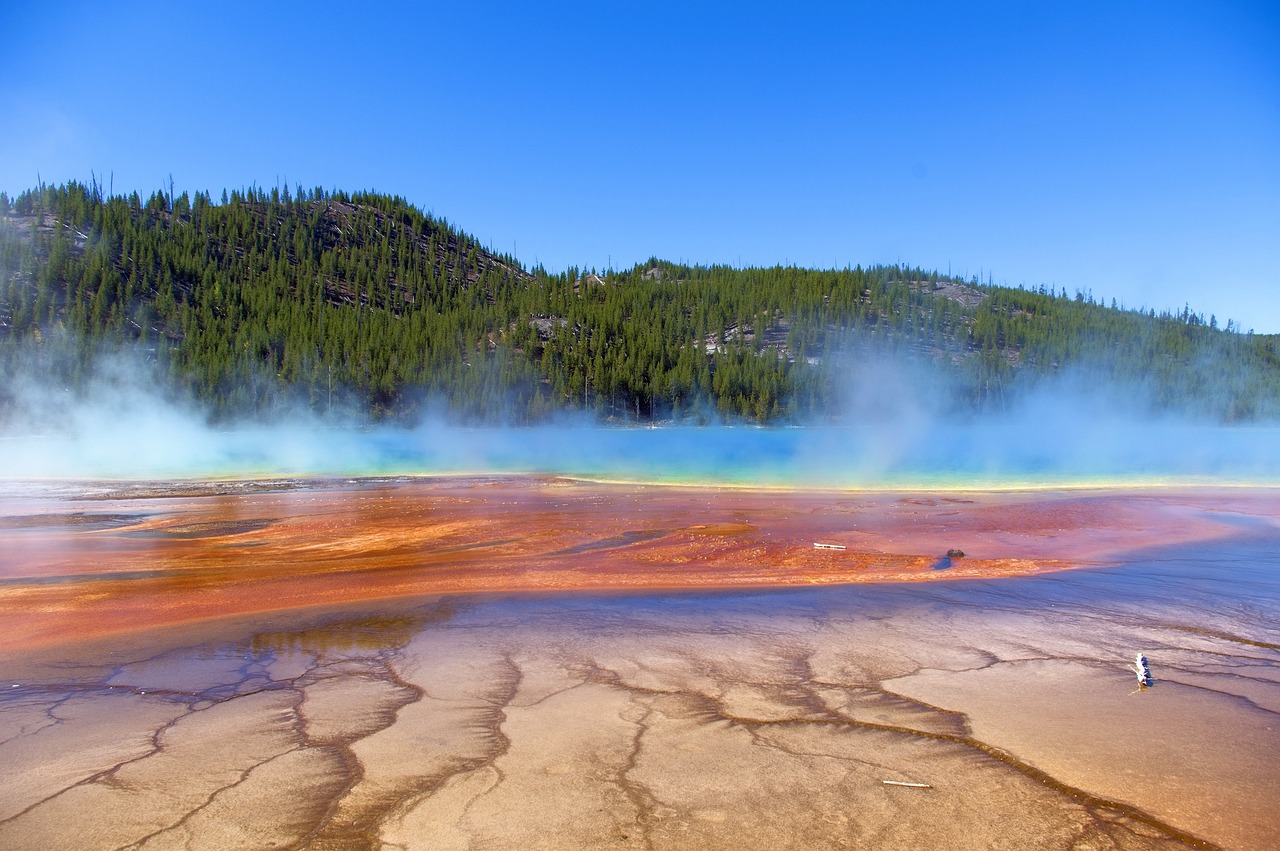
The strategic value is dawn and dusk: guests walk the Upper Geyser Basin's boardwalks in the hours day-trippers can't — first-light steam, evening eruptions under alpenglow, the basin's thermal soundtrack with nobody talking over it. Season runs early May to early October; reservations open 13 months out through Xanterra and the geyser-view and Old House categories vanish immediately (set the calendar alarm; cancellation-watching in the 60-day window rescues many trips). It is not luxury — it's the thing luxury imitates — and no stay in the park system means more.
Why stay here
- ✓Steps from Old Faithful geyser
- ✓1904 log-cathedral lobby
- ✓Eruption-view deck & mezzanine bar
- ✓Old House original rooms
- ✓Geyser-side wing rooms
- ✓Historic dining room
- ✓Dawn basin access before crowds
- ✓National Historic Landmark
Good questions
How far ahead must we book?+
Reservations open 13 months out through Xanterra and the Old House and geyser-view rooms go at once — set an alarm, or hunt cancellations inside 60 days. It's the park system's hardest reservation for a reason.
Are the shared bathrooms a problem?+
The Old House's halls-and-baths arrangement is part of the 1904 experience (robes provided, facilities kept spotless) — pilgrims choose it; comfort-first travelers book the private-bath Old House rooms or the renovated wings.
Is it worth staying versus visiting?+
The visit sees the building; the stay gets the basin at dawn and dusk without day crowds — the two hours that convert Yellowstone from spectacle to memory. There's no comparison.