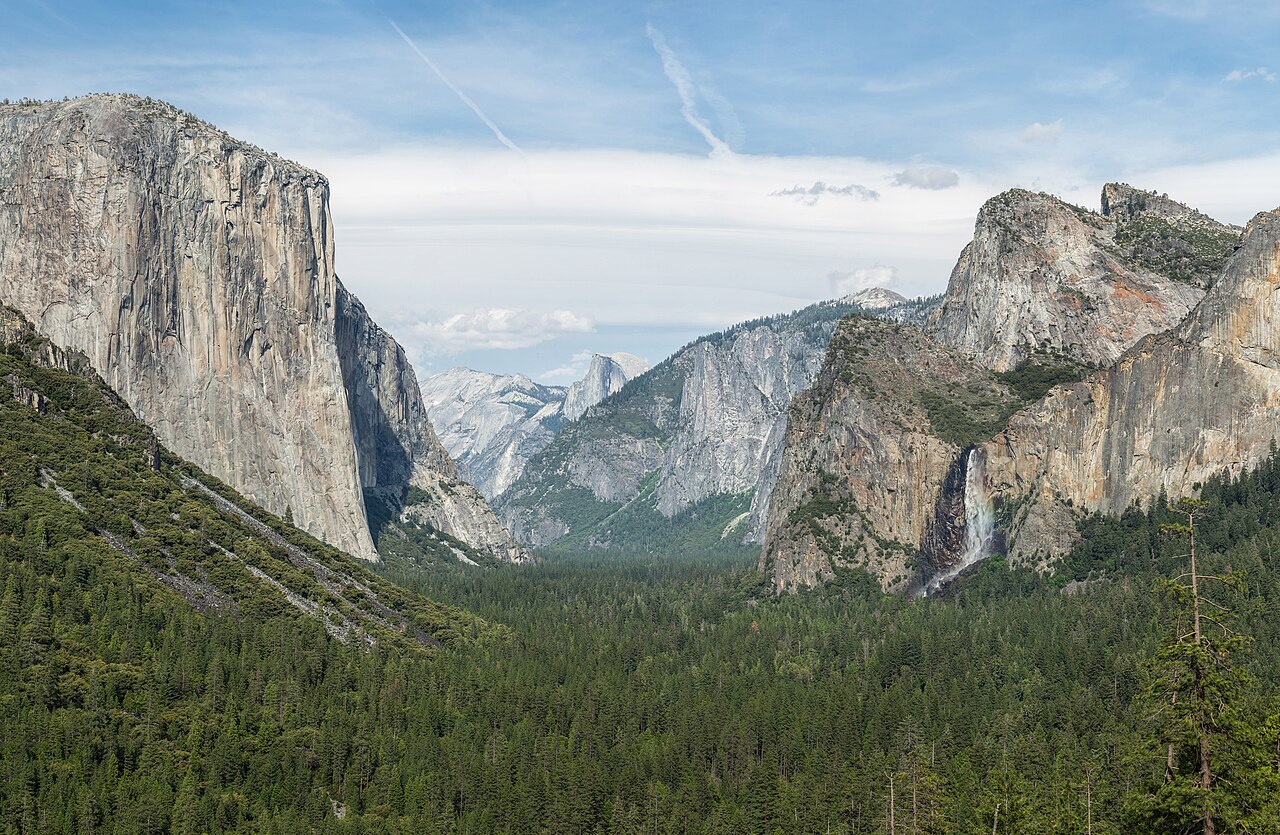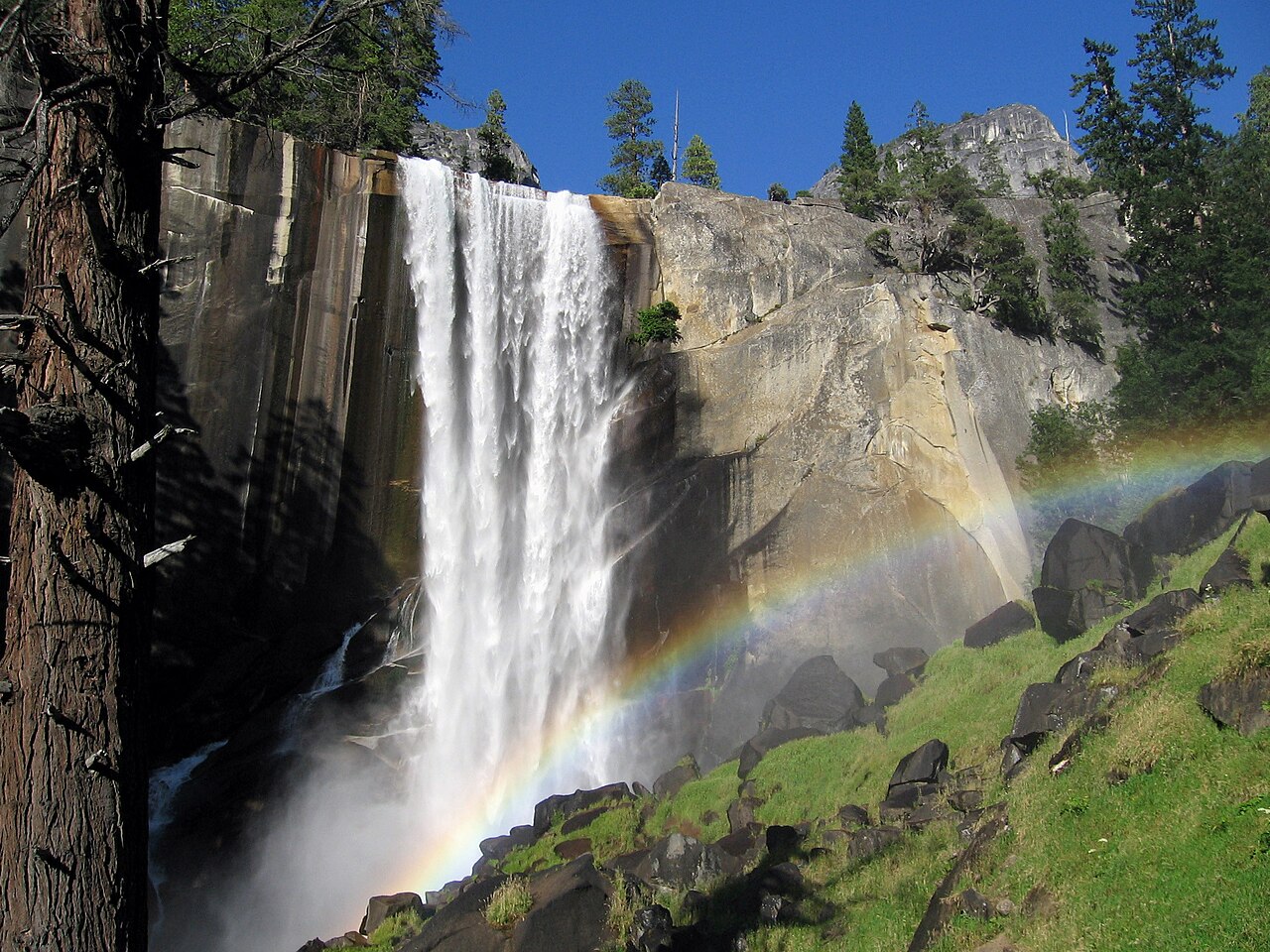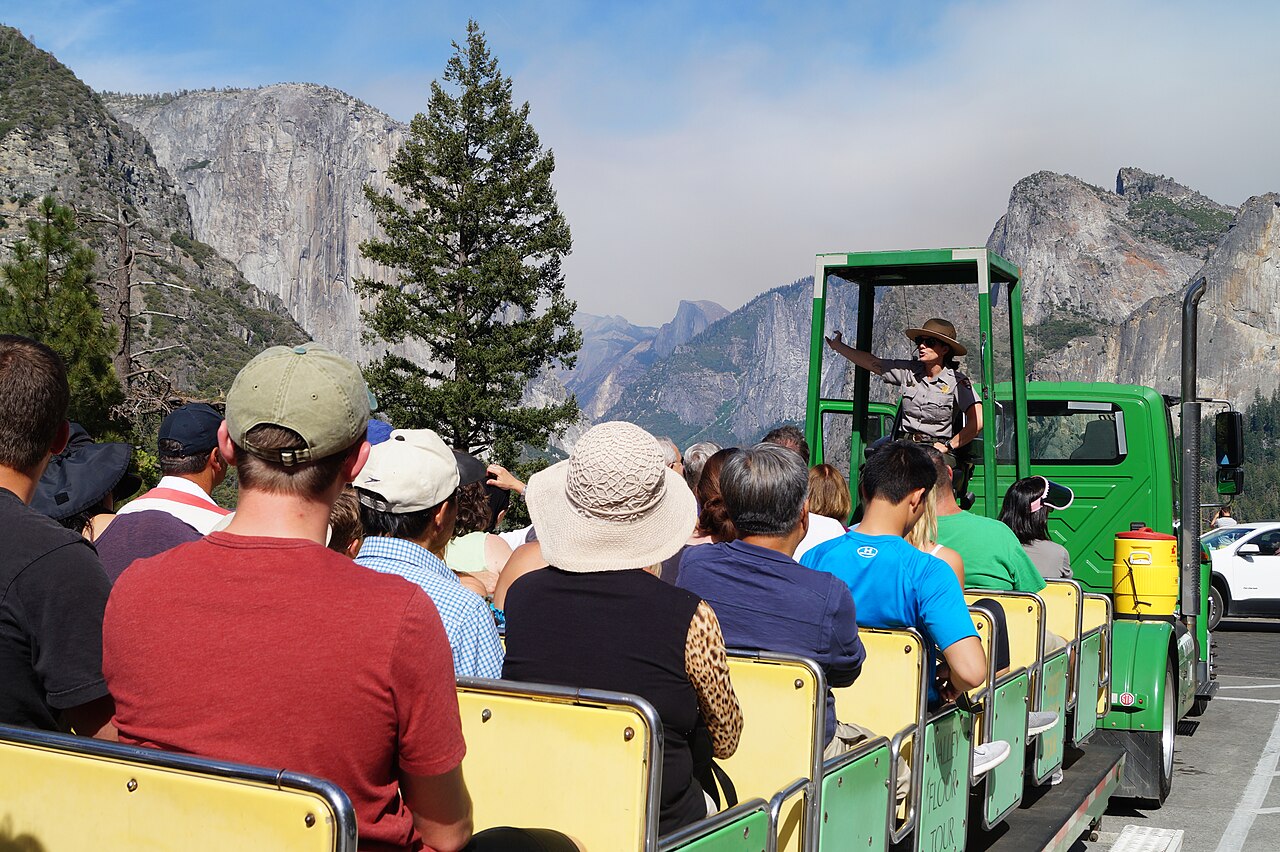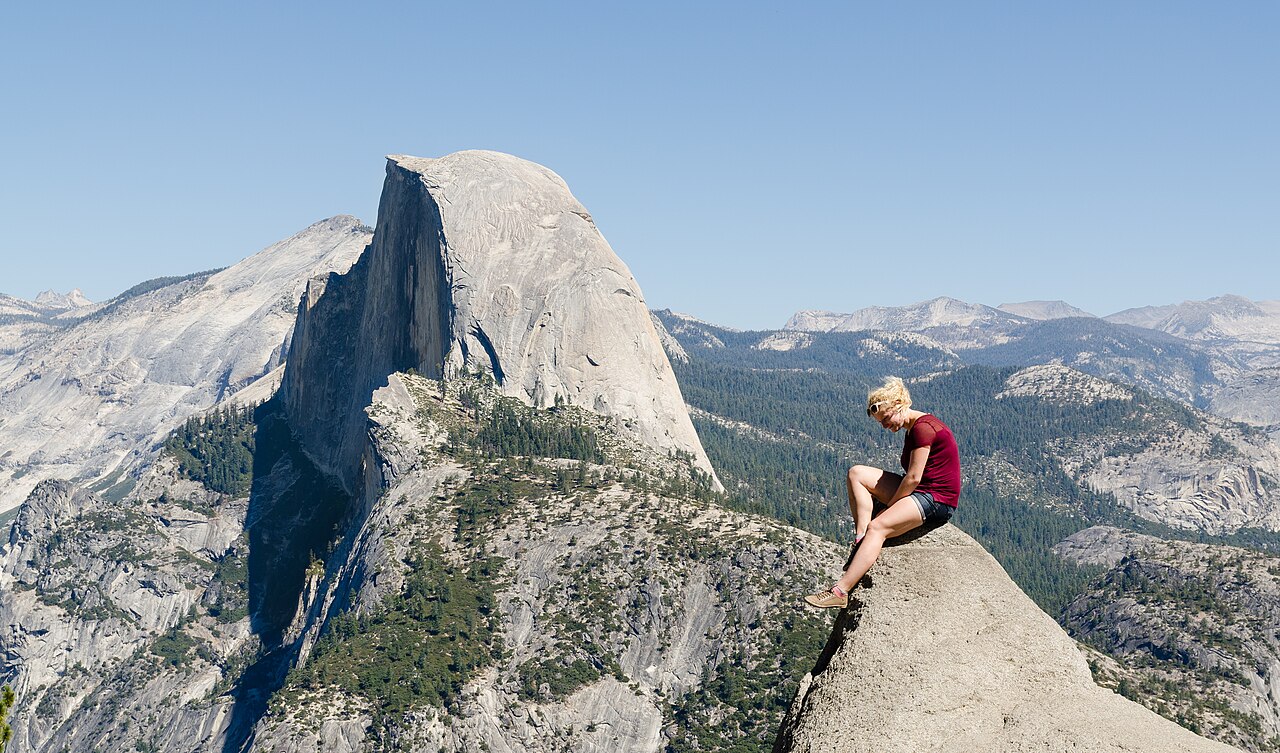
Glacier Point is the viewpoint that makes the whole of Yosemite make sense. At about 7,200 feet on the south rim, it looks straight across to Half Dome, down into the valley more than 3,000 feet below, and east along the Merced River canyon to Vernal and Nevada Falls stepping out of the high country, with the snowy peaks of the Clark Range on the skyline. A short paved walk from the parking area leads to the railed overlook at the edge of the cliff, and the nearby Sentinel Dome and Taft Point trails add even bigger views for a modest effort. The catch is seasonal access. The NPS describes Glacier Point as open roughly late May through November, when Glacier Point Road is clear; the road opened to vehicles on May 9 in 2026. In late September 2026 the road was temporarily closed by the Dome Fire, and the NPS conditions page of October 30, 2026 listed it closed again for snow, with overnight parking banned between Badger Pass and Glacier Point from October 15 until spring. Once winter sets in, the road is plowed only as far as Badger Pass, and the final ten-plus miles become a groomed cross-country ski and snowshoe trail. Experienced skiers can make the long round trip in a day, and snowshoers often choose the shorter route to Dewey Point for a classic rim view. One important change: the concessioner says the Glacier Point Ski Hut will not open for the 2026-27 season because of a lack of power, so the overnight hut trip is off this winter. In summer, the fee-based Glacier Point Tour bus from Yosemite Valley Lodge offers a one-way ride up for hikers who want to walk down the Four Mile Trail or the Panorama Trail.
The view from Glacier Point is a geology lesson laid out in front of you. Half Dome's sheer northwest face, shaped by ice and by the way granite sheds in slabs, rises directly across Tenaya Canyon; Liberty Cap and Mount Broderick sit beside the staircase of Vernal and Nevada Falls; and the valley floor below shows the meadows and the Merced River winding through forest. In the early twentieth century, the point was famous for the Firefall, when burning embers were pushed off the cliff for crowds below — a spectacle the park ended in 1968. Today, sunrise and sunset are the shows: dawn lights Half Dome's face, and late evening throws long shadows into the valley and pink light onto the high peaks.
Visiting when the road is open. Allow about an hour each way from Yosemite Valley by car via Chinquapin and Glacier Point Road. Parking fills on summer days, so arrive early or late. The overlook walk is short and accessible; Sentinel Dome is about two miles round trip with a short climb to a 360-degree summit, and Taft Point is a similar distance to a dizzying cliff-edge viewpoint with fissures in the rock. Hikers who want to descend to the valley can take the Four Mile Trail, which the NPS describes as about 4.8 miles one way with 3,200 feet of elevation change, or the longer Panorama Trail past Illilouette and Nevada Falls to Happy Isles. The Glacier Point Tour bus, which usually runs late May through September when the road is open, is the easiest way to set up a one-way hike.
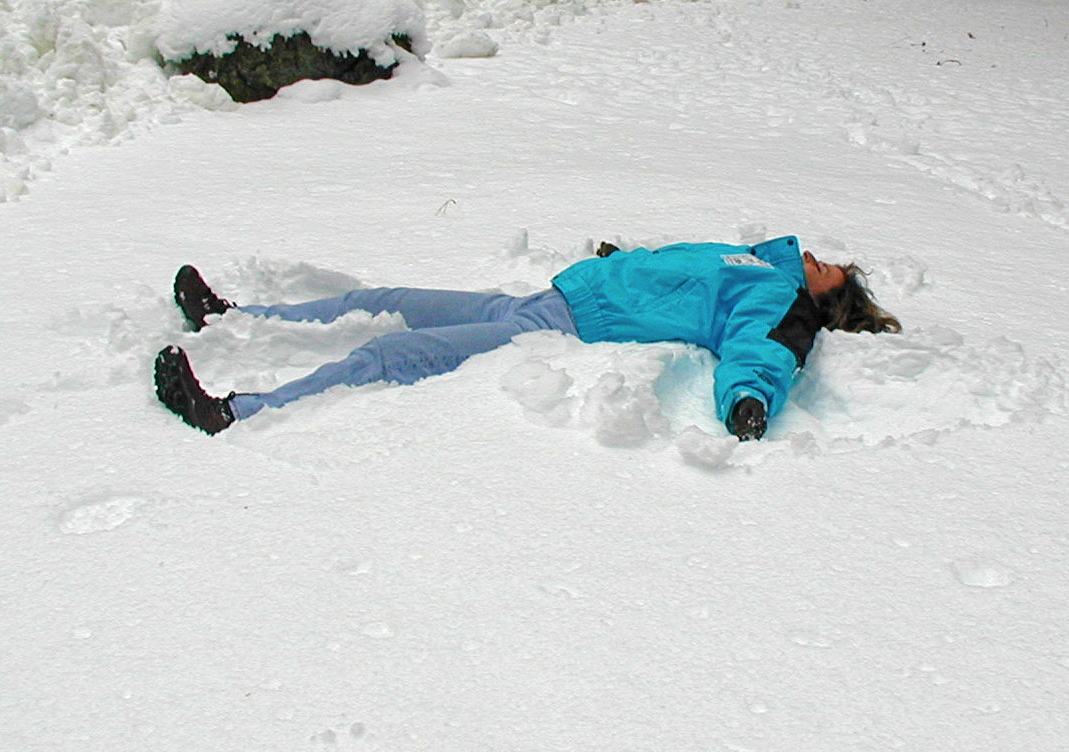
Winter is a different trip. With the road closed beyond Badger Pass, Glacier Point becomes a backcountry destination, and the silence on the rim is extraordinary. The Badger Pass Nordic Center rents gear and offers lessons, and groomed trails start right from the ski area. Snowshoe to Dewey Point for a superb winter view of El Capitan and the valley, or ski the full trail to Glacier Point only if you are fit and experienced and have checked weather and avalanche conditions. The hut is closed for 2026-27, so plan a day trip. Whatever the season, check the NPS conditions page before driving — closures for snow, fire or maintenance can happen with little notice, and Glacier Point Road has no services beyond Badger Pass in winter.
What to expect
The experience
A short walk to a railed overlook 3,000-plus feet above the valley when Glacier Point Road is open; a long groomed ski or snowshoe trail from Badger Pass when it is not.
Best time
Late May through autumn by car, with sunrise and sunset the stars; winter for a day on skis or snowshoes from Badger Pass.
How long
One to three hours by car, plus hiking; a full day on skis.
Tips
Check the NPS conditions page before driving. In summer, consider the Glacier Point Tour and hike down. In winter, the ski hut is closed for 2026-27, so plan a day trip or snowshoe to Dewey Point.
Quick picks
- Best for
- Photographers and anyone who wants the whole of Yosemite Valley laid out at their feet.
- Families
- The overlook walk is easy; hold hands at the rails. Sentinel Dome is a good first summit for kids in summer.
- Couples
- Sunset at the rail with Half Dome turning pink, then the slow drive back under the stars.
- Pair with
- Sentinel Dome and Taft Point in summer; Badger Pass skiing and the Dewey Point snowshoe in winter.
- Time needed
- Half a day with the drive, or a full winter day.
Good questions
Is Glacier Point open now?+
Glacier Point Road usually closes to cars for the season in November and reopens in late spring. On October 30, 2026, the NPS listed it closed for snow. In winter it is plowed only to Badger Pass.
Can I visit Glacier Point in winter?+
Yes, on skis or snowshoes. A groomed trail runs from Badger Pass to Glacier Point; experienced skiers can make the long round trip in a day, and Dewey Point is a shorter snowshoe goal.
Is the Glacier Point Ski Hut open in 2026-27?+
No. The concessioner says it will not open for the 2026-27 season because of a lack of power. The Badger Pass Nordic Center is operating as usual.
How long is the drive from Yosemite Valley?+
About an hour each way by car when the road is open. The fee-based Glacier Point Tour bus also runs from Yosemite Valley Lodge, usually late May through September.
Can I hike from Glacier Point to the valley?+
Yes. The Four Mile Trail drops about 3,200 feet over roughly 4.8 miles, and the Panorama Trail descends past Illilouette and Nevada Falls to Happy Isles. Both are steep and strenuous.