The Hinterdorf, meaning rear village, is the oldest surviving part of Zermatt. More than thirty buildings stand along narrow alleys, including barns, stores, stables and houses built between the sixteenth and eighteenth centuries in the traditional style of the upper Valais. Many sit on flat stone slabs balanced on wooden stilts so that mice cannot climb into the grain and hay, and the heavy rock-slab roofs and larch timber have darkened over the centuries. Some buildings are more than 500 years old. Barns usually have one door and hold hay, while the stores typically have four doors, with one separate compartment per family for dried meat and other goods. The contrast with the glass-fronted shops on Bahnhofstrasse is the charm: a few steps from the main street you are among working-farm architecture, with the Matterhorn rising directly behind. The quarter is free, walkable and best explored on foot in narrow lanes. Guided village tours in German, English and French are available from Zermatt Tourism, and the Matterhorn Museum shows original interiors from houses like these.
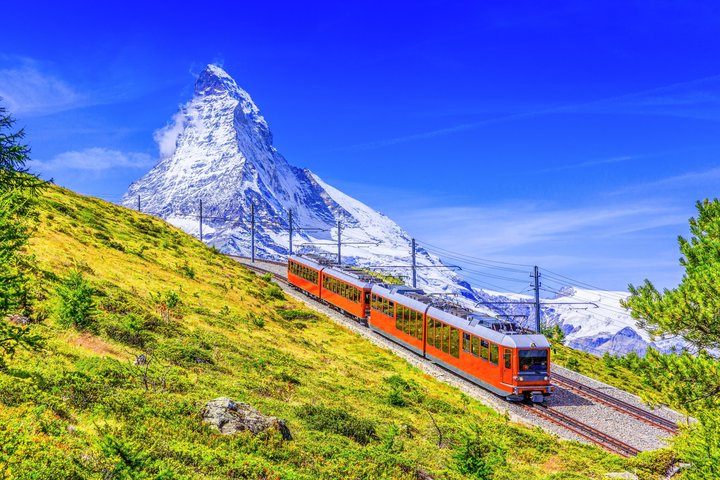
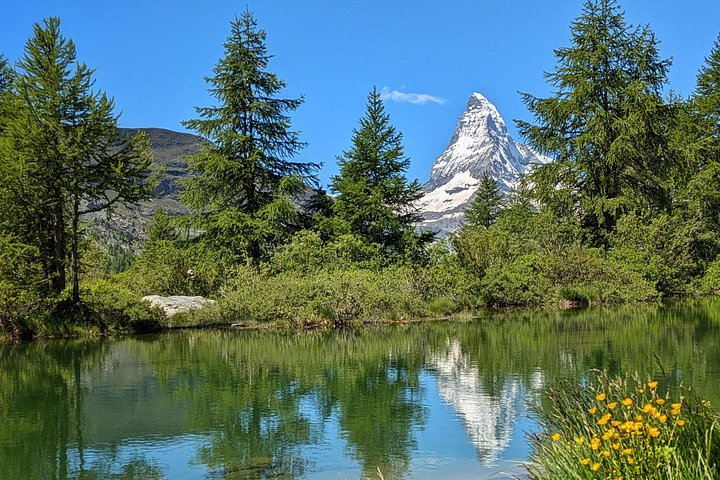
Go with a camera and a slow pace. The classic view is across the stone and timber roofs with the Matterhorn above the last barn, and the light is kinder in the morning and late afternoon. Winter snow on the stone slab roofs makes the scene even more photogenic, though the lanes can be icy, so wear shoes with grip. The streets are public lanes, so be respectful of people who live and work here and do not climb on or lean into the old buildings.
The Hinterdorf sits on Hinterdorfstrasse, close to the church square and the Matterhorn Museum, so it fits naturally into a circular village walk. The tourist board lists a 1.8 kilometre loop of about an hour and a half that starts from the station square and passes the Hinterdorf, the church square, the English Church, the mountaineers cemetery and a memorial to the mountain guides. The whole route is almost flat, so it suits all ages and all weather except heavy snow.
If you want more context, the museum next door explains how these buildings were used, and a guided tour from the tourist office adds the stories behind individual barns. There is no admission fee for the lanes themselves. Treat it as a first-hour stop on arrival or a quiet fall-back when the lifts are shut or the mountain is hidden in cloud.
What to expect
The experience
A free, self-guided stroll through narrow lanes of historic barns and houses, with optional guided village tours through Zermatt Tourism.
Best time
Morning or late afternoon light, and any time you want a break from the lifts.
How long
Allow 45 minutes to an hour and a half, depending on how much you photograph.
Tips
Wear shoes with grip in winter, keep to the public lanes and combine it with the Matterhorn Museum next door.
Quick picks
- Best for
- Anyone who wants Zermatt's traditional side and the classic barns-and-Matterhorn photograph.
- Families
- Flat, free and short, with plenty of space for children to look at the stilted barns.
- Couples
- A golden-hour walk from the Hinterdorf to the church square.
- Pair with
- The Matterhorn Museum and the village walk.
- Time needed
- About an hour.
Good questions
What is the Hinterdorf?+
It is Zermatt's old quarter, with more than thirty barns, stores, stables and houses built from the sixteenth to eighteenth centuries in the traditional style of the upper Valais.
Why are the buildings on stone slabs?+
Many stand on flat stone slabs set on wooden stilts to keep mice out of stored grain, hay and dried meat. The heavy stone roofs are part of the same sturdy design.
Is there an entry fee?+
The lanes are public and there is no admission charge. Guided tours through Zermatt Tourism are available in German, English and French and may carry a fee.
Where is it?+
The quarter is on Hinterdorfstrasse, a short walk from the church square and the Matterhorn Museum. It is easily reached on foot from the station along Bahnhofstrasse.
Is it open in winter?+
Yes, the lanes are open all year and snow on the stone roofs makes winter a good time for photographs. Take care on icy ground.