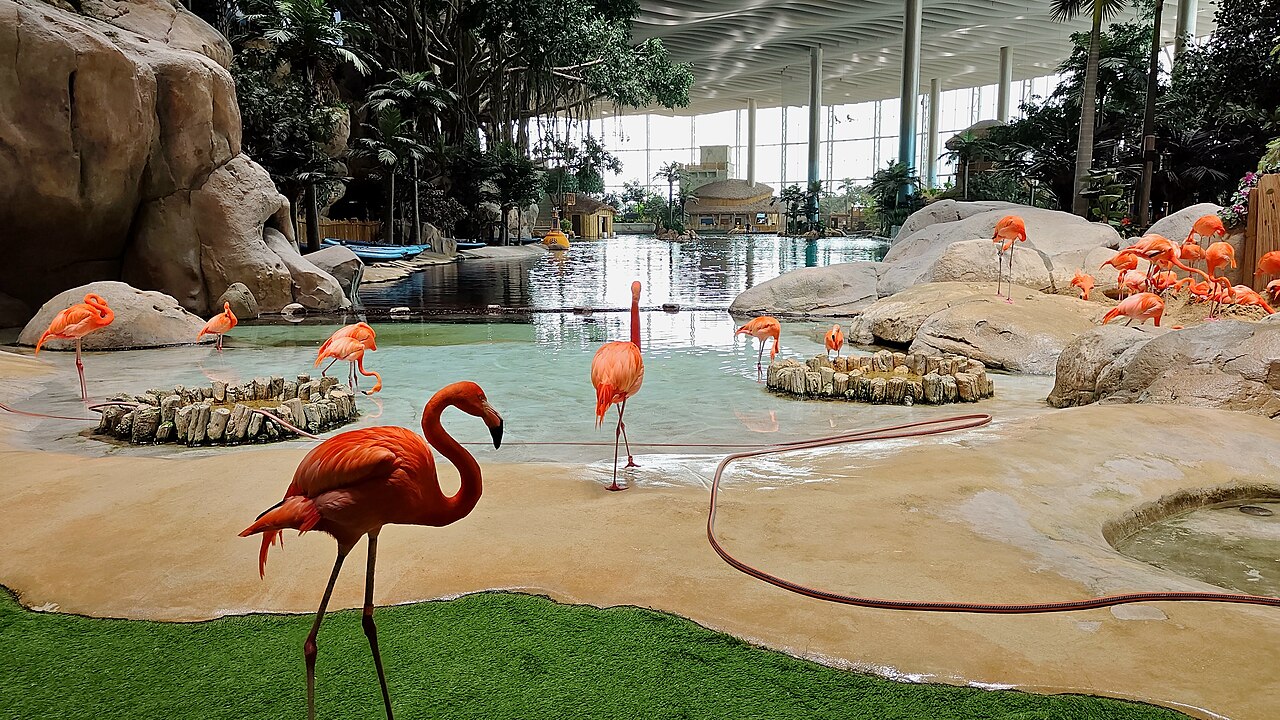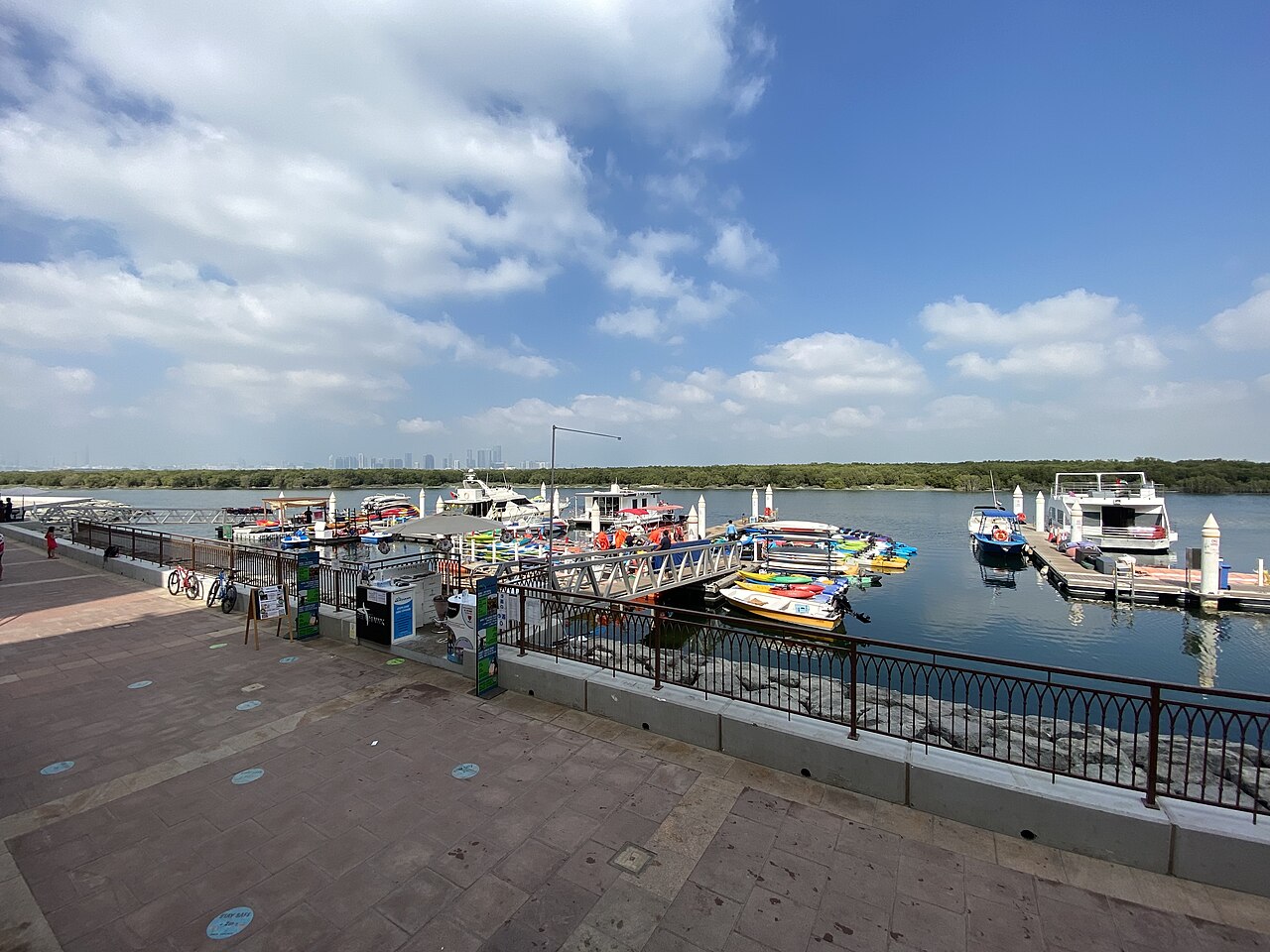
The National Aquarium Abu Dhabi is one of the largest aquariums in the region, built on the waterfront at Al Qana beside the Eastern Mangroves and designed to take visitors on a journey through the water worlds of the Gulf and far beyond. Rather than a single big tank, it is a sequence of habitats: shallow mangrove channels, coral reefs, rivers and flooded forests, deep-ocean tanks and large halls where sharks and rays glide overhead through glass tunnels. The collection is described as holding tens of thousands of animals across hundreds of species, and the mix is wide, from tiny seahorses and colourful reef fish to sharks, rays, turtles and, in the dry-land zones, reptiles and birds. Interpretation is strong, with plenty of screens, touch points and short films that explain how mangroves, reefs and ocean currents connect, and why the Gulf's own habitats matter. It is fully indoors and air-conditioned, which makes it a natural choice for hot afternoons, rainy days or the first morning after a long flight. Tickets can be bought in advance for a chosen date, and some versions add behind-the-scenes or feeding experiences, so check what is included when you book.
How it works
Choose a date and entry slot when you book, then show your confirmation at the entrance. The route is one-way and signposted, so you simply follow the habitats in order, with no need to plan a path. Lifts and wide ramps make the whole building accessible for prams and wheelchairs, and lockers and cafes are available inside.
What to expect
You begin in shallower, brighter water and gradually move into darker, deeper zones, ending in large halls with the biggest tanks. The glass tunnels are the headline moment, as sharks and rays pass over your head. Feeding sessions and talks are held at set times through the day, and the schedule is usually posted at the entrance, so it is worth planning a loop around one or two of them. Dry-land zones with reptiles and birds are a pleasant change of pace for children.
Making the most of it
Arrive at opening time or in the late afternoon, when school groups and weekend crowds are thinner. Allow at least two hours, and three if you enjoy reading the displays or want to stay for several feedings. The area around Al Qana has waterfront cafes and walks beside the mangroves, so it pairs naturally with a kayak trip or an early dinner. If you have a young child, bring a light layer, since the halls are kept cool.
Good to know
Opening hours vary with the season and school holidays, and special experiences usually need to be booked separately, so check when you book. Photography without flash is generally welcome, but tripods and drones are not. Taxis and ride-hailing apps drop off at the entrance, and parking is available for drivers.
What to expect
The experience
A self-guided walk through themed habitats, from mangroves and reefs to deep-ocean halls, with glass tunnels, feedings and short talks.
Best time
Opening time or late afternoon, and any hot or rainy day, since everything is indoors and air-conditioned.
How long
Two to three hours, longer if you plan around feeding sessions.
Tips
Book a dated slot ahead, check feeding times on arrival, bring a light layer and avoid weekend midday if you can.
Quick picks
- Best for
- Families and anyone who wants a cool, absorbing indoor day.
- Families
- Excellent for all ages, with touch points, short films and plenty of space for prams.
- Couples
- Works as a relaxed afternoon, followed by dinner on the waterfront nearby.
- Pair with
- Mangrove kayaking in the morning or dinner at the waterfront nearby.
- Time needed
- Two to three hours.
Good questions
How long do I need at the National Aquarium?+
Allow two to three hours. It is a one-way route through many habitats, and feedings and talks can stretch the visit.
Is the aquarium indoors?+
Yes, the whole visit is indoors and air-conditioned, so it works well in summer heat or on a rainy day.
Is it suitable for young children?+
Very. The route is step-free, there are touch points and short films, and the glass tunnels are a highlight for small visitors.
Do I need to book in advance?+
Booking a dated slot ahead is the simplest approach, especially at weekends and in school holidays, and it saves queuing.
Can I take photos inside?+
Photography without flash is generally fine. Check the rules on tripods and drones at the entrance.