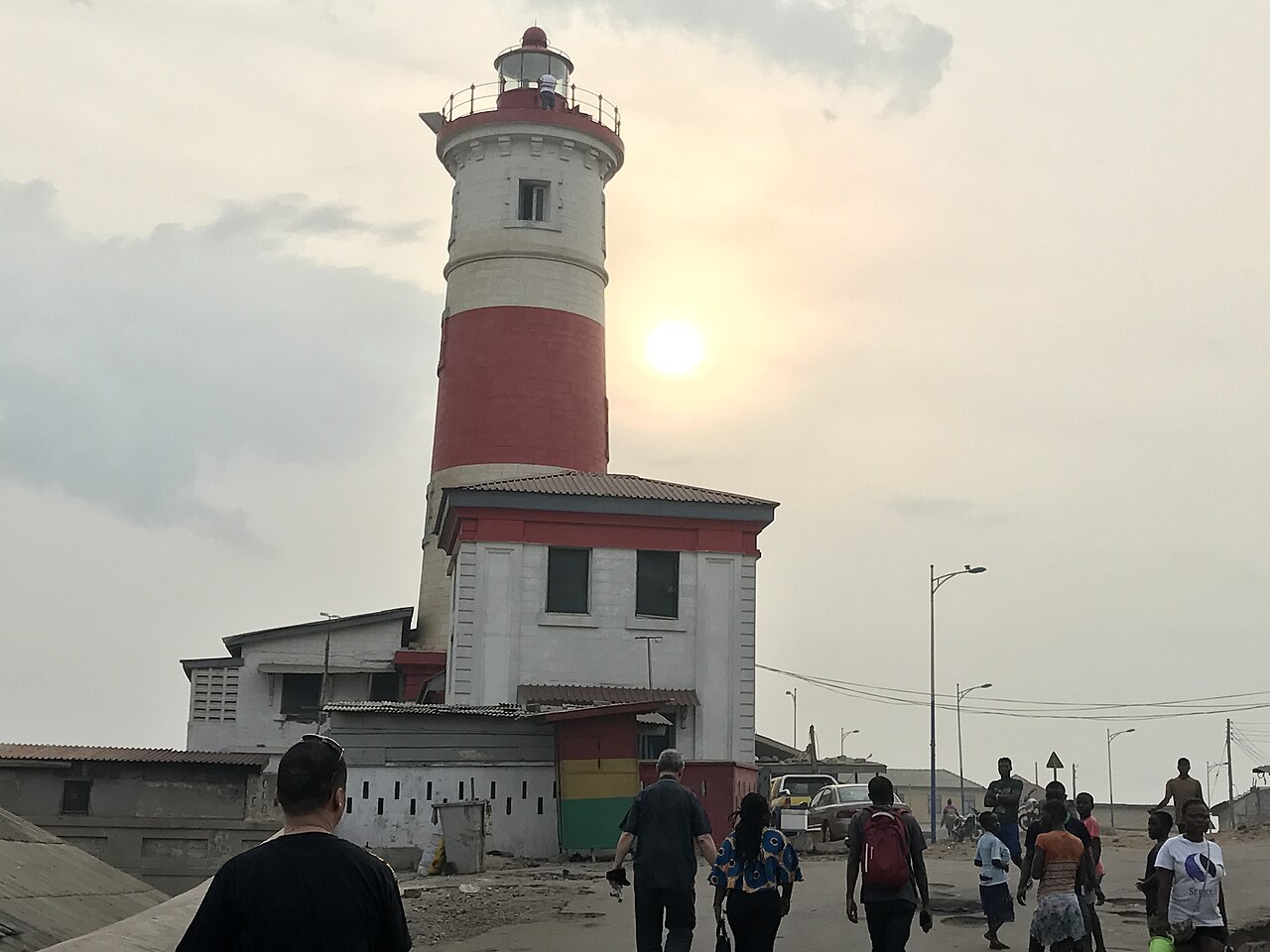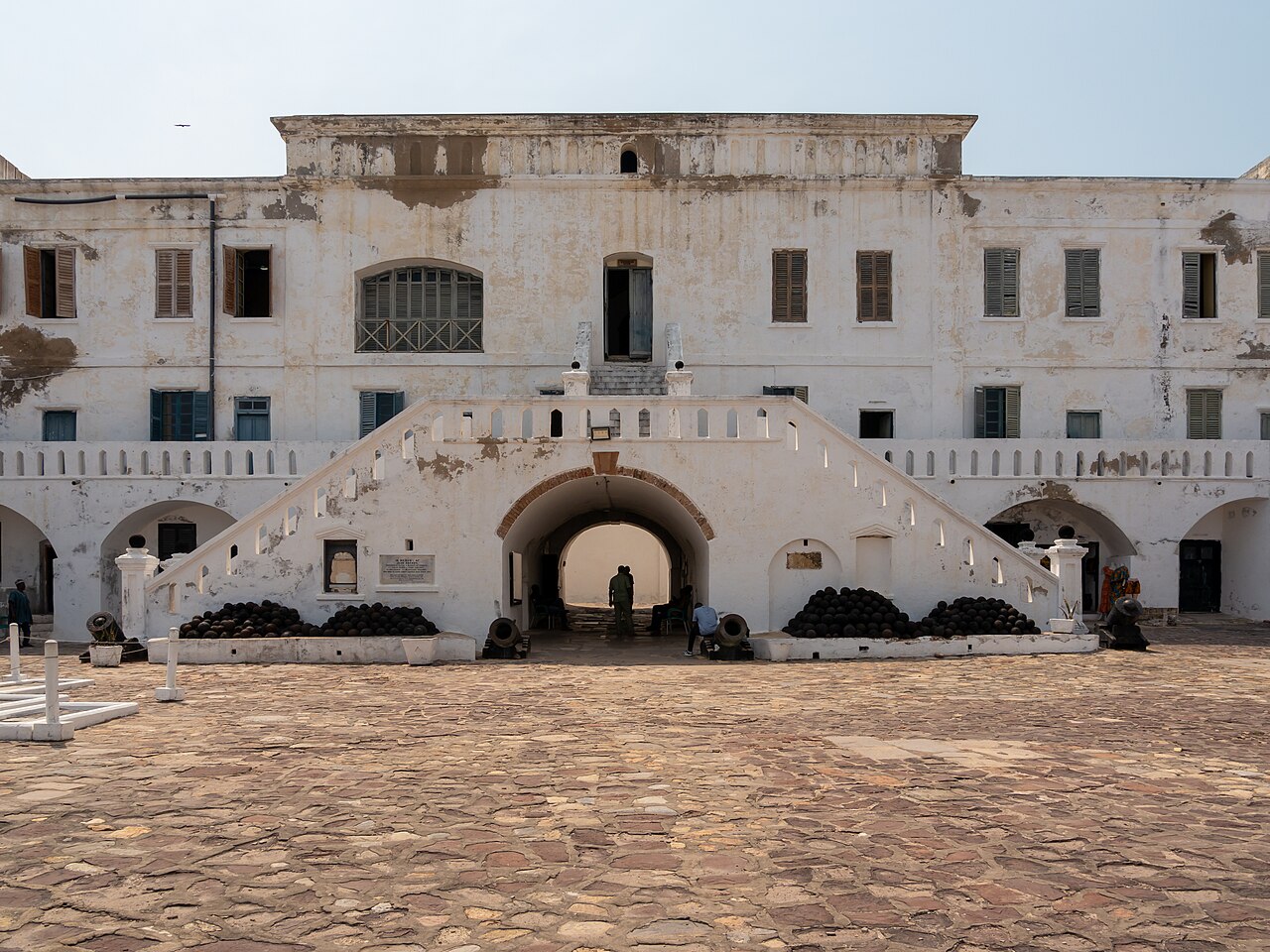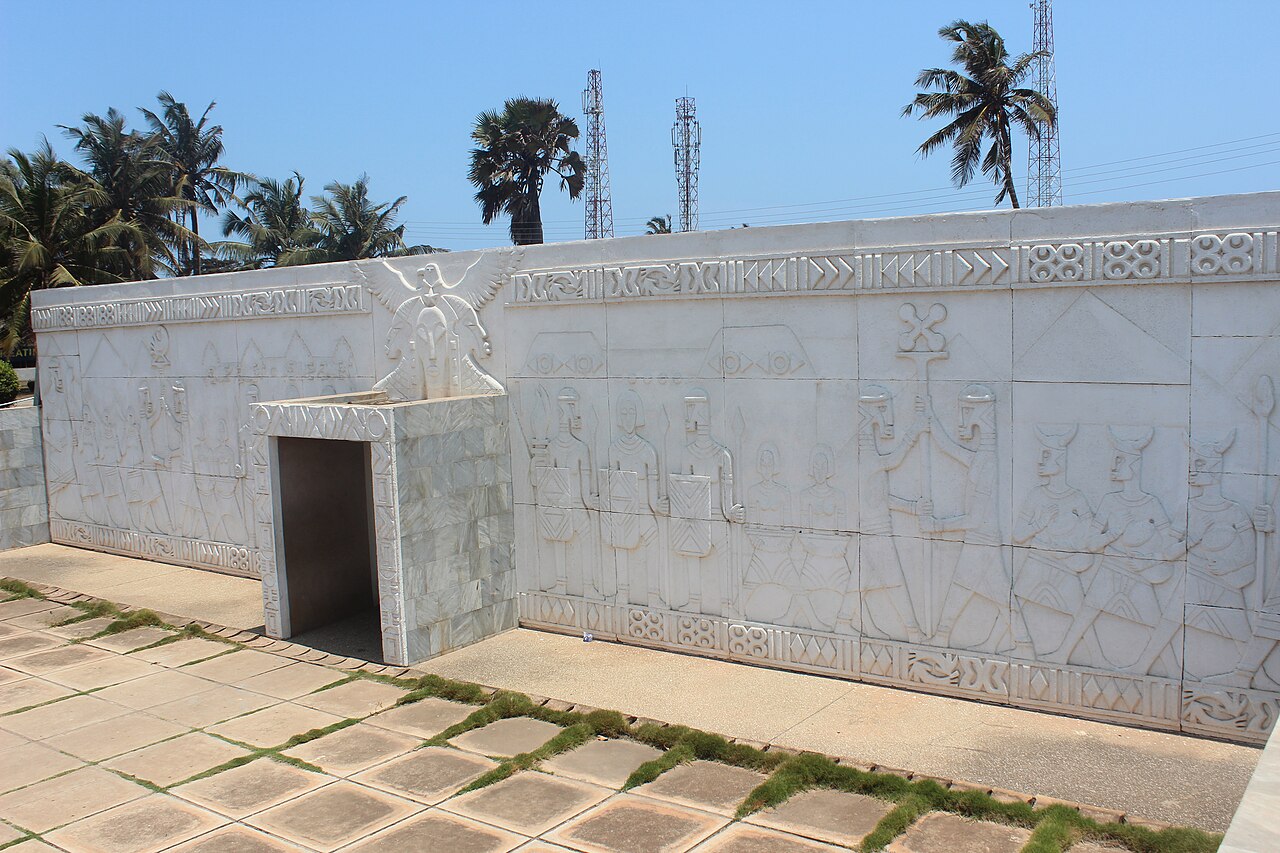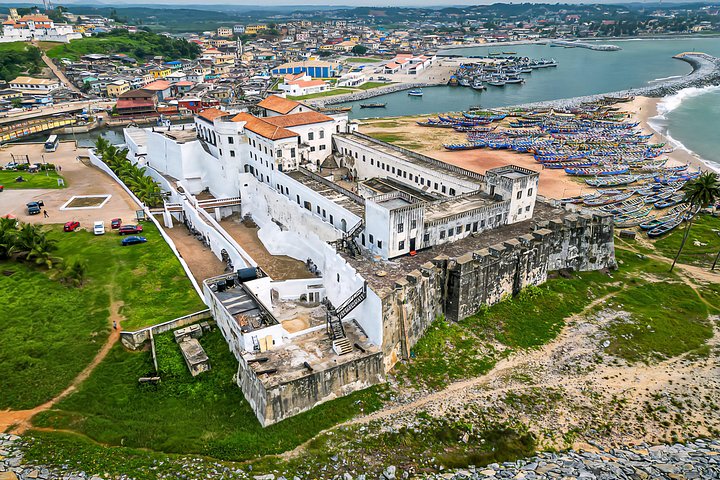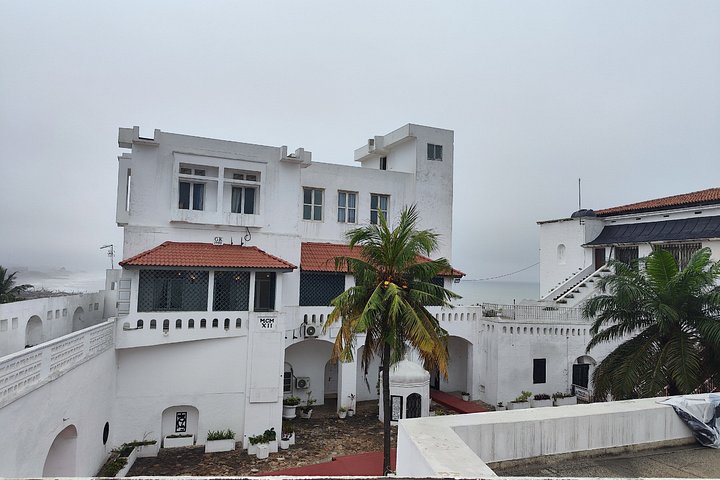
Osu Castle, also known as Christiansborg, is the grand white fortress on the shore of the Gulf of Guinea at Osu. The Danes built the first stone fort here in 1659, replacing an earlier lodge put up by the Swedish African Company, and they named it Christiansborg after King Christian IV of Denmark. Over the following centuries it passed between the Portuguese, the Akwamu state and the Danes before the British took it over in 1850. For much of its history it was a centre of the Gold Coast trade, including the trade in enslaved people, and it later became the seat of government, from Gold Coast governors to the presidents of independent Ghana. It forms part of the Forts and Castles of Ghana World Heritage property, alongside Cape Coast and Elmina. Today it is a working state building as well as a historic site, which shapes how visitors can see it.
What you can see
When access is granted, visitors are shown the credential rooms where ambassadors once presented themselves, the dungeons, the walkway to the Door of No Return, a small chapel and the sea-facing gardens, along with displays of photographs of notable Ghanaians. The seaside setting is striking, with the waves breaking just beyond the walls, and it is a very different place from the larger castles on the coast road. It is also a reminder that Accra's own shoreline played a part in the slave trade, not only the towns to the west.
Access, and why it varies
Because the castle is a government site and a security zone, public access has been limited to set days and times, reported as Fridays during the daytime, and it can close without notice. That makes it a sight to confirm in advance rather than assume. A local guide or a tour operator that includes Osu Castle will know the current position, and many visitors reach it as part of a half-day city tour that also covers other central sights.
If the castle is closed, the exterior is still worth a look from the road along the sea, and the nearby streets of Osu are good for a walk and a meal.
How to visit well
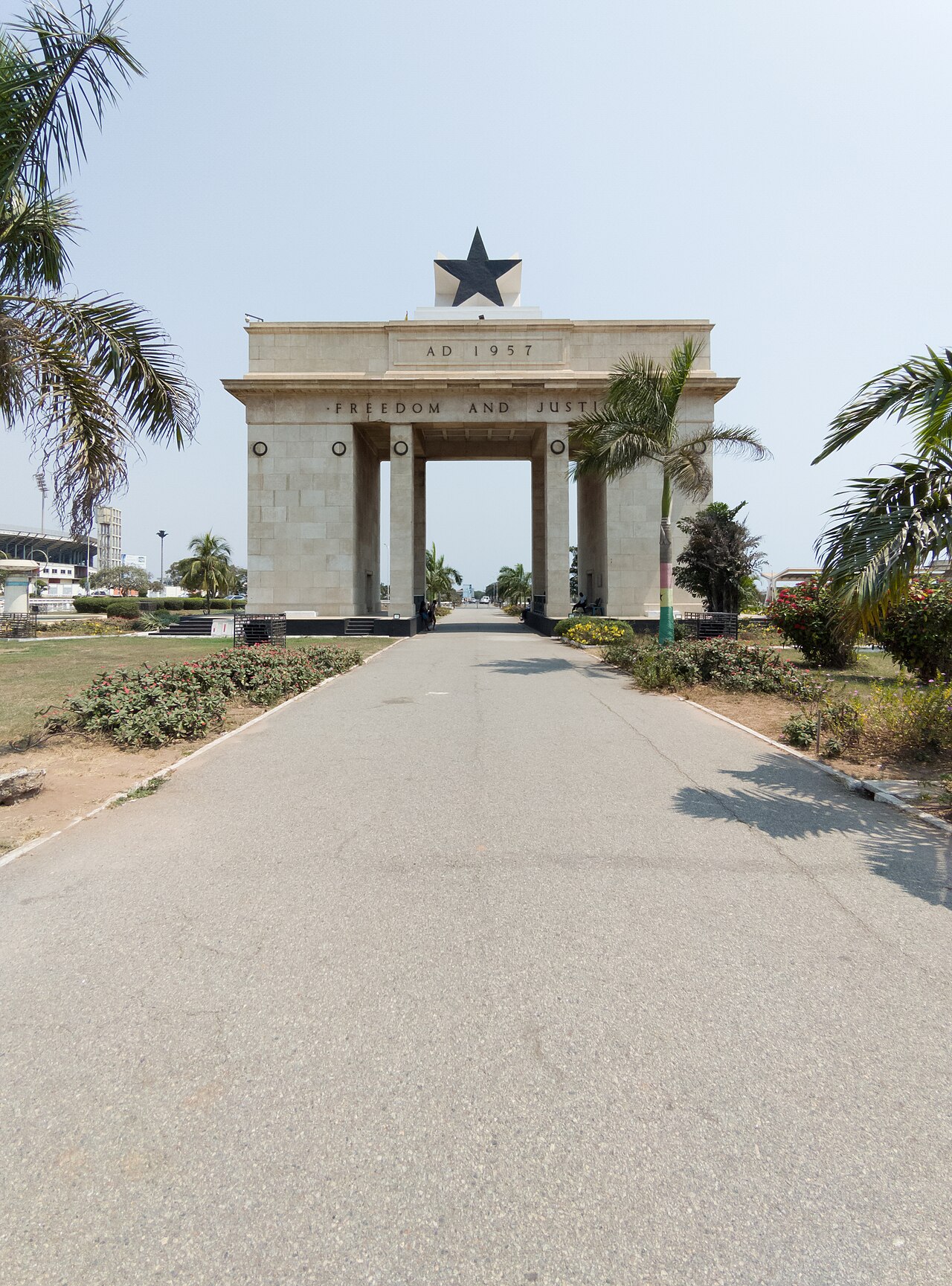
Dress modestly and expect security checks, and leave bulky bags in your car. Treat the dungeons and the Door of No Return with the same care you would at Cape Coast or Elmina, as they are places of remembrance. The castle is in Osu, so it combines easily with Oxford Street, the Arts Centre and the Nkrumah memorial. Ride-hail taxis are the simplest way to get there, and a private tour with pickup removes the guesswork about access and parking.
Bringing the context together
Osu Castle makes most sense after you have seen Cape Coast Castle or Elmina Castle, or just before you go, because it shows that Accra itself was part of the same Atlantic story. The whitewashed walls and the sea beyond them also explain why Europeans fought over this stretch of coast for centuries.
Ask your guide to point out the changes made by each owner, from the Danish builders to the British administrators and the governments that followed. Even a short, well-explained visit leaves a stronger impression than a long, unguided one.
What to expect
The experience
A guided visit to a government-run fortress, usually as part of a private half-day city tour with hotel pickup.
Best time
Go on a day the castle admits visitors, in the morning when it is cooler, and confirm access in advance.
How long
The castle visit itself is short; the full city tour runs four to five hours.
Tips
Dress modestly, expect security checks, keep to permitted areas and ask your guide whether the dungeons and gardens are open.
Quick picks
- Best for
- History-minded visitors who want the full set of Gold Coast forts, not only Cape Coast and Elmina.
- Families
- Suitable for older children who can handle the history of the slave trade.
- Couples
- A sober, atmospheric stop with sea views, best combined with a stroll through Osu.
- Pair with
- Arts Centre, Oxford Street in Osu and Kwame Nkrumah Memorial Park.
- Time needed
- Half a day with a city tour.
Good questions
Is Osu Castle open to visitors?+
Access is limited because it is a government site and a security zone. It has been reported open on Fridays during the day and can close at short notice, so confirm before you go.
Who built Osu Castle?+
The Danes built the first stone fort in 1659 and named it Christiansborg. The British took it over in 1850, and it later became the seat of government.
What can you see inside?+
Visitors have been shown the credential rooms, dungeons, the walkway to the Door of No Return, a chapel and the seaside gardens.
Is Osu Castle part of the World Heritage property?+
Yes, it belongs to the Forts and Castles of Ghana, the same UNESCO property that includes Cape Coast and Elmina castles.
How do I get there?+
It stands on the shore at Osu. Ride-hail taxis are easy, and a private city tour with pickup handles parking and access.