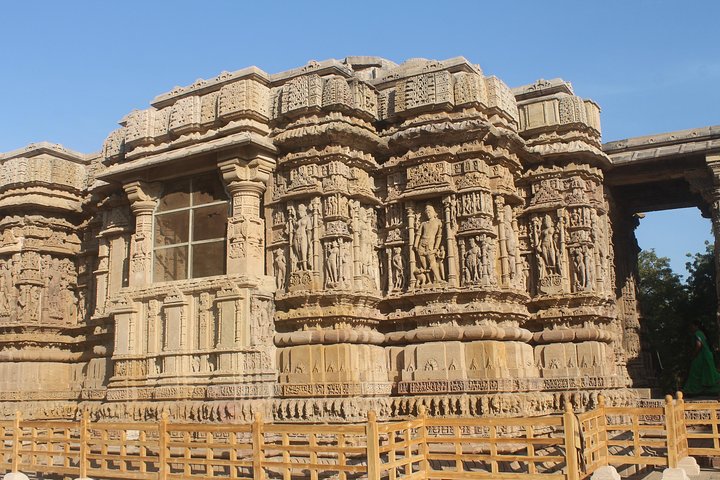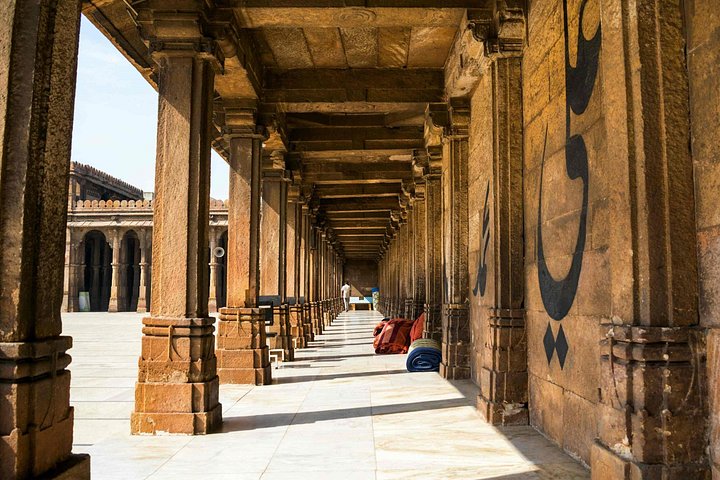
Ahmedabad was founded in 1411 by Sultan Ahmad Shah on the east bank of the Sabarmati, and the walled city he laid out is still the beating heart of the place. In 2017 it became India's first city to be inscribed on the UNESCO World Heritage list, largely because of what you see on a heritage walk: pols, the tightly packed residential clusters whose gated entrances, shared courtyards and richly carved timber facades have housed the same communities for generations. A pol might hold a few dozen families, a small temple, a water well and a chabutro, an ornate wooden tower where grain is left for birds. Walking in, you pass from the roar of traffic into a lane barely wide enough for two people, and the noise drops away. A good guide makes sense of what you are seeing, explaining why houses face inward, how the pols were designed for security and community, and how Hindu, Jain and Muslim neighbourhoods developed side by side.
How it works
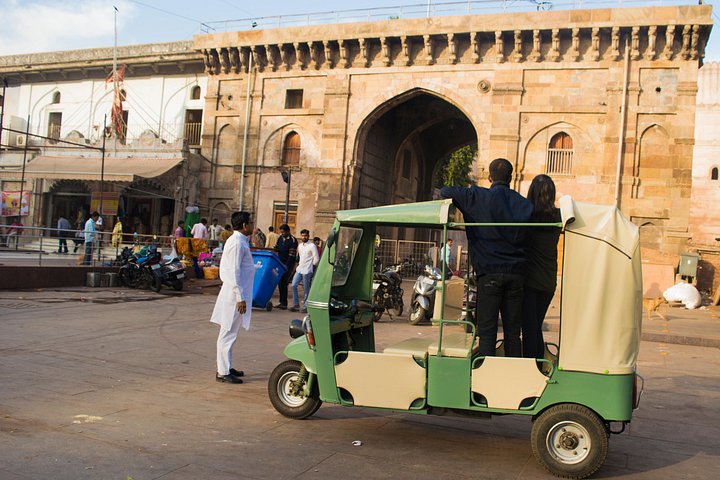
Heritage walks are led by local guides and usually last two to three hours, starting early in the morning or in the late afternoon when the light is soft and the lanes are cooler. The route typically begins near the Swaminarayan temple in Kalupur, an ornate timber-and-stone building from the early nineteenth century, then threads through several pols before reaching the Jama Masjid and the busy streets around Manek Chowk.
Some tours add a Gujarati breakfast, a tuk-tuk ride or a stop at a haveli. The walk is on foot over uneven stone, so comfortable shoes matter more than anything else you pack.
What to expect
The lanes are lived-in neighbourhoods, not a museum, so keep your voice low, ask before photographing people, and do not step into doorways without an invitation. You will see carved brackets, painted ceilings, stained glass, tiny shrines at lane corners and the occasional cow. Dress modestly, because several stops are active places of worship where shoes come off.
Mornings are best for a quiet look at the architecture; by late morning the markets are in full cry. A bottle of water and a hat are useful in the hot months, and the walk is not well suited to wheelchairs or strollers because of steps, narrow lanes and uneven surfaces.
Making the most of it
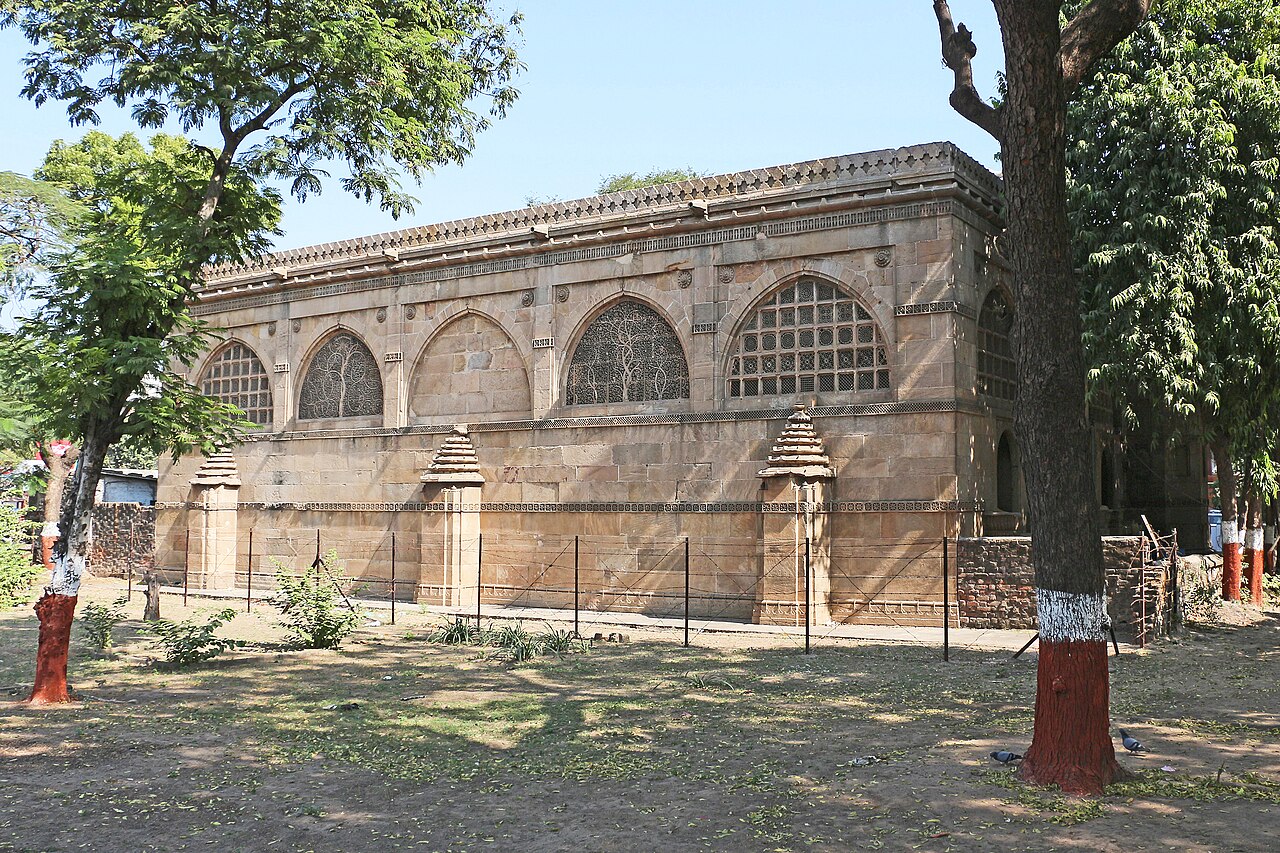
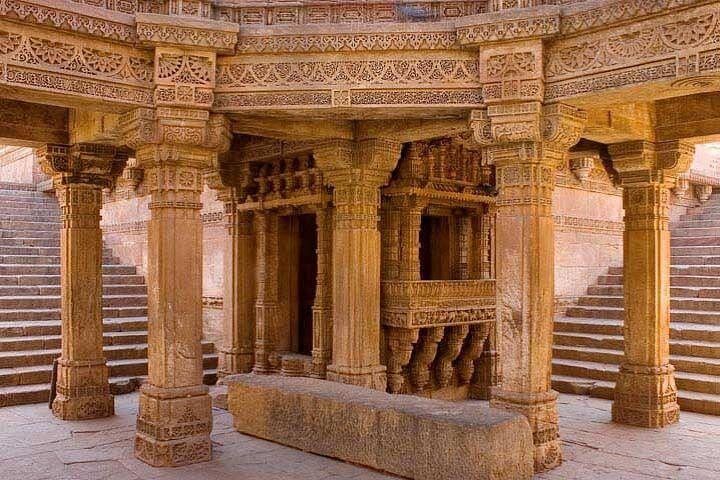
Do the walk on your first full day, because it sets the context for everything else, from Sidi Saiyyed Mosque to the stepwells outside the city. Ask your guide to point out the oldest surviving pols and the differences between Jain and Hindu houses. Follow it with a thali lunch or a wander through the bazaars, and consider returning in the evening to see the same streets lit and busy.
If you have time for only one old-city experience, a guided walk beats an unguided wander, because the best details are hidden behind doors and only visible if someone tells you where to look.
Good to know
Pols are home to families who have lived there for generations, and the best guides have personal ties to the neighbourhoods they lead you through. Tipping a guide is customary and appreciated. Public toilets are scarce in the lanes, so use facilities before you start. The old city is busiest on festival days, when streets can be closed to vehicles and decorated with lights, and during the kite season in January the rooftops fill with people.
If you are sensitive to crowds or noise, choose a weekday morning and ask for a smaller group. Many visitors also say the walk improves with a second visit after you have seen the stepwells and mosques, because the architectural threads then connect.
What to expect
The experience
A guided walk on foot through several pols, temples and markets of the walled city, often finishing near the Jama Masjid and Manek Chowk.
Best time
Early morning or late afternoon, when the light is soft and the lanes are cooler and quieter.
How long
Two to three hours at an easy pace.
Tips
Wear comfortable closed shoes and modest clothing, carry water, and ask before photographing residents.
Quick picks
- Best for
- First-time visitors who want to understand why Ahmedabad is a World Heritage City.
- Families
- Older children who enjoy walking and stories will manage it, but there are steps and narrow lanes.
- Couples
- Quiet early light in the lanes makes a memorable start to a day together.
- Pair with
- The Sidi Saiyyed Mosque and the Manek Chowk evening food market.
- Time needed
- Half a morning.
Good questions
Why is Ahmedabad a World Heritage City?+
UNESCO inscribed the historic walled city in 2017 for its distinctive urban fabric: pols, carved timber houses and a long tradition of Hindu, Jain and Islamic architecture living side by side.
What is a pol?+
A pol is a gated residential cluster of houses sharing a courtyard, well, small shrine and often a bird-feeding tower. There are many in the old city, and each has its own character.
Is the walk suitable for children?+
Yes for older children who can walk for a couple of hours. Strollers and wheelchairs are difficult because of steps and narrow, uneven lanes.
What should I wear?+
Light, modest clothing that covers shoulders and knees, and comfortable shoes that are easy to slip off at temples and mosques.
When is the best time to go?+
Early morning, especially from October to March, when the weather is mild and the lanes are quiet.