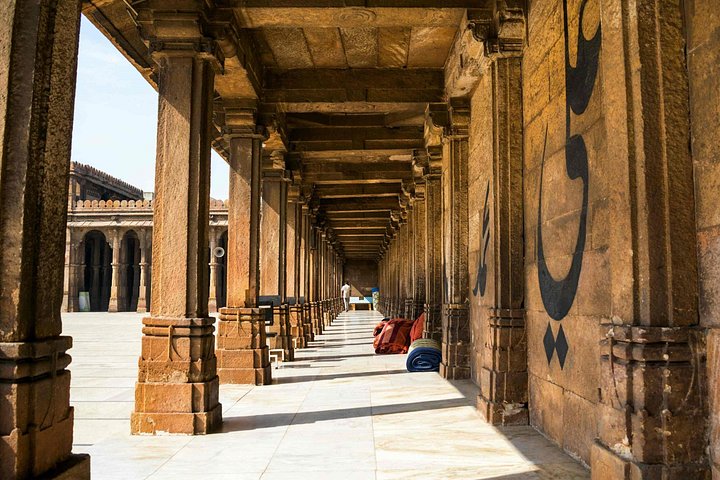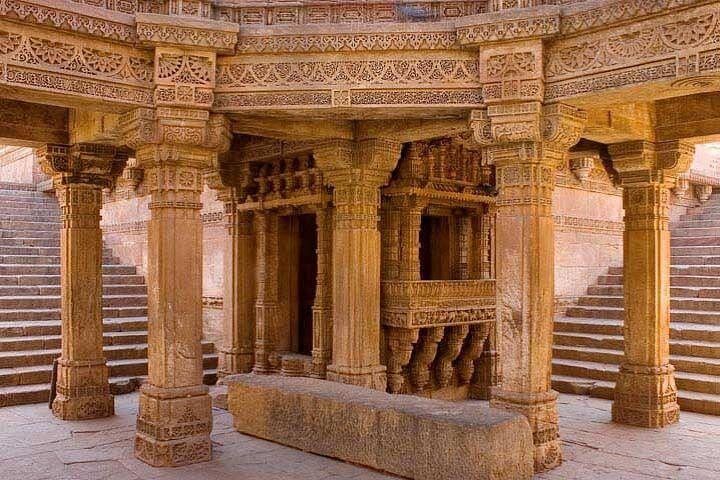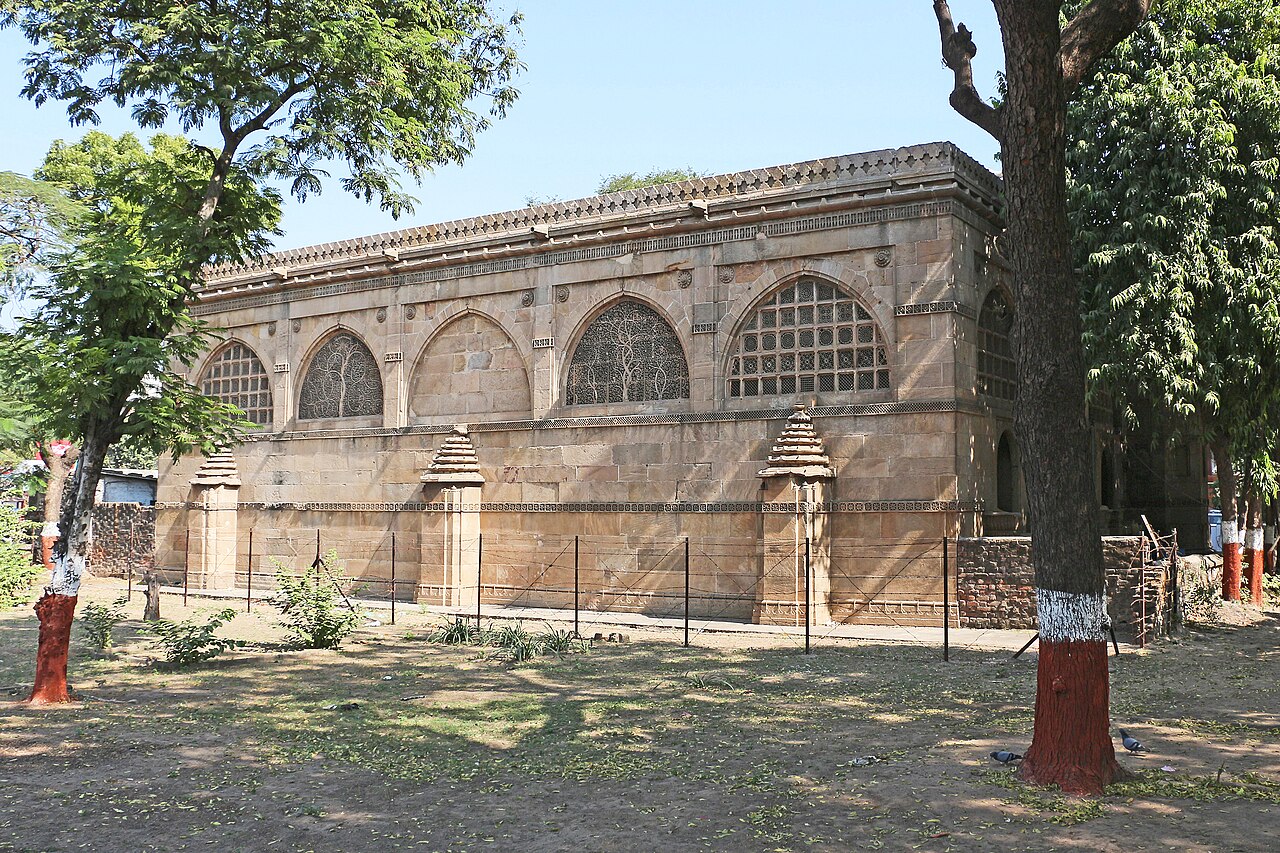
The Sidi Saiyyed Mosque is one of the smallest and most celebrated monuments in Ahmedabad, and its stone-latticed windows are among the most photographed pieces of Indo-Islamic craft in India. It was built in 1573, just before the Gujarat Sultanate fell to the Mughals, by an Abyssinian nobleman in the sultan's service called Sidi Saiyyed. The mosque has no great dome or minarets and is mostly an open arcaded hall, but the ten semicircular windows set into the western wall are exquisite. Two of them, at the rear, are carved from yellow sandstone into a tangled, swirling design of palm trees and curling vines that looks lighter than lace. The motif has become a symbol of the city, and it appears in the logo of the Indian Institute of Management in Ahmedabad.
How it works
The mosque is an active place of worship and a protected monument, free to enter, and open through the day with breaks for prayer. It stands at a busy junction near Lal Darwaza, in the heart of the old town, and it is easily visited alongside a heritage walk. Remove your shoes at the edge of the platform, dress modestly, and avoid visiting during Friday midday prayers. Women are usually welcome in the courtyard area, though customs can differ, so follow signs and the guidance of the caretaker.
What to expect
A surprisingly small space with a large reputation. Most visitors spend half an hour. You will find yourself standing in front of the rear windows, looking at the lattice from different angles as the light changes. The tree-of-life motif is the star, but look also at the side bays and the smaller windows with geometric and floral patterns.
The surrounding streets are noisy and dusty, and street vendors sell souvenir replicas of the lattice in wood, metal and cloth. Photographs are allowed and best taken in morning light, when the stone glows warm.
Making the most of it
Combine the mosque with the nearby Jama Masjid, Teen Darwaza and Bhadra Fort, which sit within walking distance of one another and tell the story of the Gujarat Sultanate. A short visit gets you the core, but a guide can explain the Abyssinian community in Gujarat, the Sidi families who settled and served rulers, and how the craft of jali work developed. If you enjoy the lattice, look for similar pierced stonework in Sarkhej Roza and other monuments across the city.
Good to know
Respect the worshippers and avoid blocking prayer areas. Cash donations are optional. The area gets crowded in the afternoon, and the heat is strongest between noon and four, so early morning or late afternoon is best. Bring a scarf for covering your head if needed, and take care crossing the busy road outside, where traffic rarely stops for pedestrians.
More to know
The mosque stands on a platform raised slightly above street level, and the setting is an open garden with trees, which makes it a pleasant place to sit for a few minutes away from traffic. The Abyssinian presence in Gujarat is a fascinating chapter of history, since the Sidi community arrived as soldiers and sailors and became part of the local fabric, and a descendant community still lives in the state today.
Tea sellers and snack vendors work near the junction, and the old town's other main gates and mosques are all within a short rickshaw ride. Combining this with a morning walk keeps the day efficient and cool.
What to expect
The experience
A short, free visit to the mosque's open prayer hall and the famous tree-pattern stone windows.
Best time
Morning, when light warms the sandstone lattice, or late afternoon.
How long
Thirty to forty-five minutes.
Tips
Remove shoes, dress modestly and avoid Friday midday prayers.
Quick picks
- Best for
- Architecture and photography lovers.
- Families
- A quick, easy stop for families, though the road outside is busy.
- Couples
- A calm moment among the lace-like windows.
- Pair with
- Jama Masjid, Teen Darwaza and Bhadra Fort nearby.
- Time needed
- Under an hour.
Good questions
Why is the Sidi Saiyyed Mosque famous?+
Its carved stone windows, with a tangled tree-of-life pattern, are a symbol of Ahmedabad.
Who built it?+
Sidi Saiyyed, an Abyssinian nobleman serving the Gujarat sultan, built it in 1573.
Is there an entry fee?+
No, it is free to enter.
Can I take photos?+
Yes, respectfully. Avoid photographing worshippers.
How long do I need?+
About half an hour.