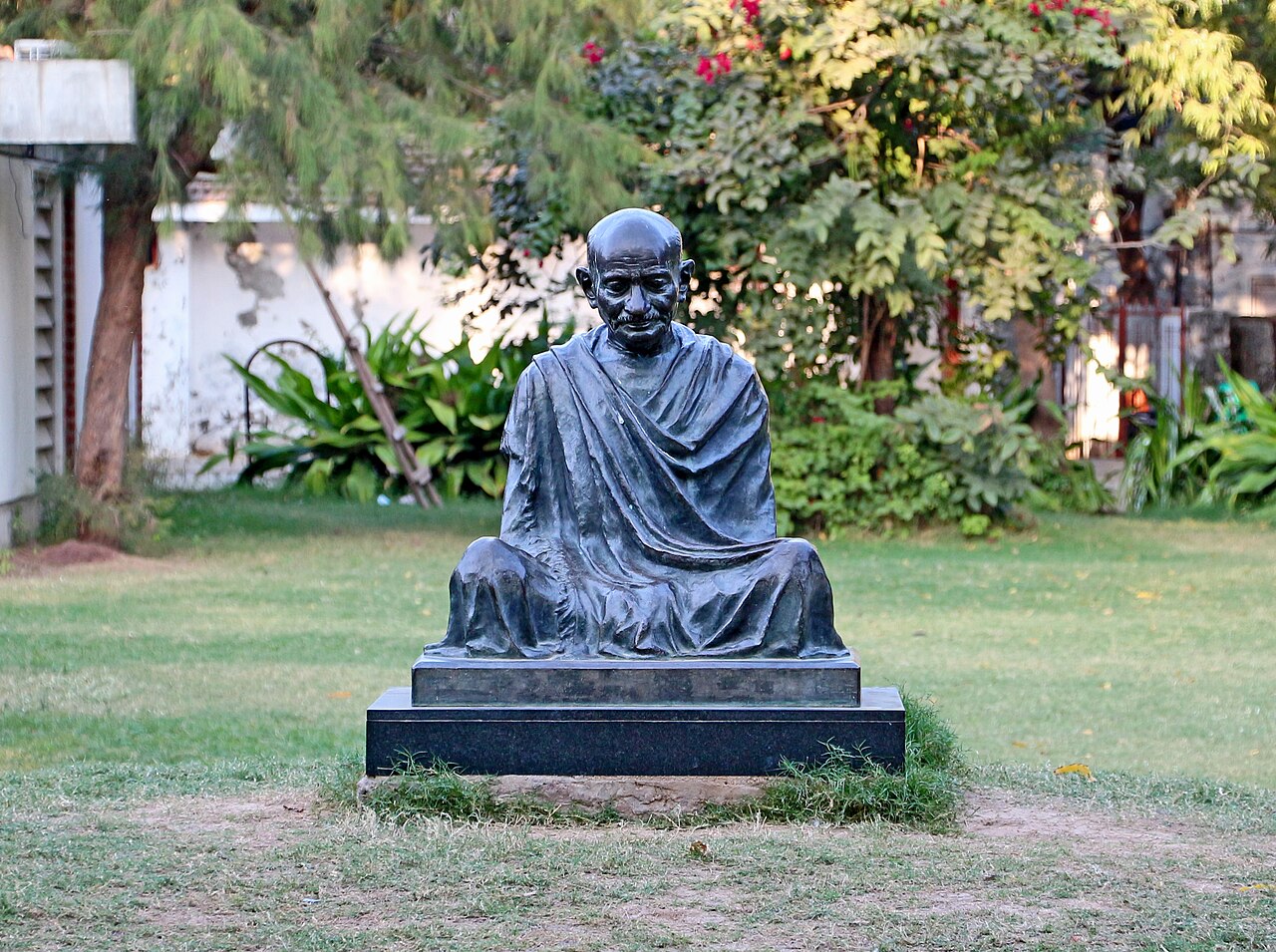
Sabarmati Ashram is the place where Mahatma Gandhi lived and worked for around thirteen years, and it is the single most important site in Ahmedabad for anyone interested in India's independence movement. Gandhi founded the ashram in 1917 on a quiet stretch of the Sabarmati river, and from here he led campaigns, trained volunteers and developed the ideas of non-violent resistance that shaped the freedom struggle. In March 1930 he set out from these grounds on the Salt March to Dandi, a 240-mile walk that became one of the defining acts of the twentieth century, and he vowed not to return until India was free. The complex is deliberately plain: a few modest buildings among trees, a guest house, a prayer ground and the simple cottage called Hriday Kunj, where he and his wife Kasturba lived.
How it works
Entry is free and the grounds are open daily, with hours running through the day and into the early evening; check the current timings with the tourism board before you go. Walk in through the entrance, collect an audio guide or join a guided group if one is running, and follow the paths past the main buildings.
The museum, called Gandhi Smarak Sangrahalay, holds photographs, letters, books and personal items such as his spectacles, sandals and spinning wheel. A short film and a display of his writings give useful context if you are new to the story.
What to expect
This is a reflective, unhurried place rather than a spectacle. You walk the same paths he did, see the cottage rooms with their floor mats and writing desk, and sit by the river where evening prayers were held. Dress simply and respectfully, speak quietly, and expect to remove your shoes in some buildings.
Local school groups visit in large numbers on weekday mornings, which can make the museum feel busy, so late afternoon is often calmer. There is a small shop selling khadi cloth, books and handmade paper from the neighbouring workshops, and buying a book is a good way to take something home.
Making the most of it
Allow at least ninety minutes, more if you like to read every caption. Pair the visit with a Gandhi-themed morning that includes the nearby riverfront promenade, or follow it with lunch in a simple Gujarati restaurant. If you are travelling on to Delhi or Mumbai, the context here makes the Gandhi memorials there far more meaningful.
The ashram sits in the western part of the old city on the river, a short rickshaw ride from the main hotels, and it is easy to combine with a walk in the walled city the same day.
Good to know
The surrounding riverfront has been landscaped with promenades and gardens that are pleasant for an evening stroll, and the ashram sits close to several of the city's quieter residential neighbourhoods. Photography is generally allowed outdoors but may be restricted in some rooms, so look for signs. Small cafes and tea stalls near the entrance serve simple snacks, and the shop is a good place for quiet gifts such as handmade paper, notebooks and books by and about Gandhi.
Because the ashram attracts many Indian school groups and pilgrims, a polite and patient attitude goes a long way, and visitors are often invited into conversation by curious students.
What to expect
The experience
A free self-guided visit through Gandhi's cottage, the prayer ground and the museum, with audio guides and guided groups available on site.
Best time
Late afternoon for a calmer visit; weekday mornings fill with school groups.
How long
Around ninety minutes to two hours.
Tips
Dress simply, remove shoes where asked, and check the current opening hours with the tourism board before you go.
Quick picks
- Best for
- History lovers and anyone curious about Gandhi and the independence movement.
- Families
- Free entry and open grounds make it easy for families, though younger children may tire of the museum.
- Couples
- A peaceful hour by the river, ideal in the late afternoon light.
- Pair with
- The walled city heritage walk and a Gujarati thali lunch.
- Time needed
- Two hours.
Good questions
Is Sabarmati Ashram free to enter?+
Yes, entry to the ashram grounds and museum is free. Audio guides and guided tours may carry a small charge.
Why is the ashram important?+
Gandhi lived here from 1917 to 1930 and began the Salt March to Dandi from these grounds in March 1930.
How long should I allow?+
Plan on ninety minutes to two hours, longer if you want to watch the film and read the museum displays.
What should I wear?+
Simple, modest clothing. You may be asked to remove shoes in some buildings.
Can I buy souvenirs?+
Yes, there is a shop selling books, khadi cloth and handmade paper made in the ashram's workshops.