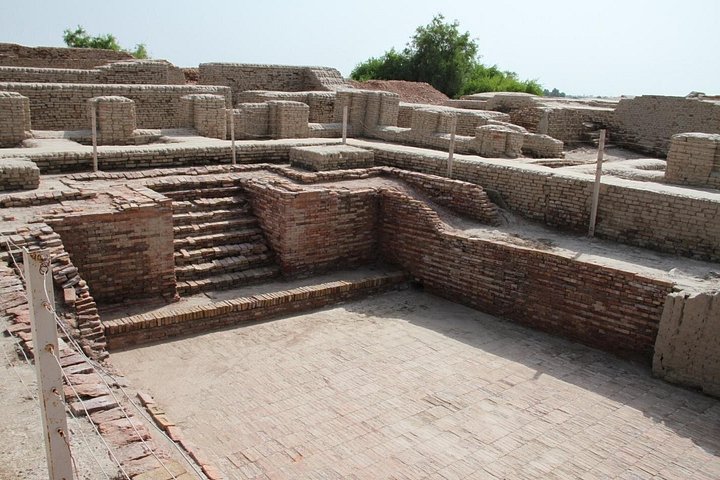
Lothal is one of the most important sites of the Harappan civilisation in India and the best place in Gujarat to feel the age of the subcontinent's first cities. Roughly 4,500 years ago, a planned town of baked brick stood beside a river channel about eighty-five kilometres south-west of Ahmedabad, and its people traded beads, shell and pearl across the Arabian Sea to Mesopotamia and the Gulf. The most celebrated feature is a large rectangular basin of fired brick, thought by many archaeologists to be an early dockyard, connected by channels to the river. Around it you can see the foundations of houses, drains, a lower town of workshops and an acropolis where the rulers lived. The ruins are low and modest, but the planning, with straight streets and sophisticated drainage, is impressive.
How it works
Lothal is a protected site run by the Archaeological Survey of India, with a modest ticket and a small museum. Most visitors go on a day trip with a driver or guide, often combined with Nal Sarovar or a village stop, as the drive takes roughly two hours each way. The museum, which displays seals, beads, pottery and tools, is traditionally closed on one weekday, often Friday, so confirm in advance. Bring water and a hat, as shade is limited.
What to expect
A walk around a quiet, open site with explanatory boards and a guide if you have booked one. The dockyard is the highlight, and a good guide will explain the debate over its true function. You will also see the remains of a bead-making workshop, a drainage system and the raised mound of the acropolis.
The museum is small but well laid out, and the bead collection is lovely. The site is usually uncrowded, so it feels peaceful, and the surrounding farmland adds to the sense of an ancient landscape still in use.
Making the most of it
Lothal is a good choice if you enjoy archaeology, but manage expectations, since this is not a spectacular monument like a temple or fort. The reward is the sense of time and the story of early trade. Go in the cooler months and plan lunch in a nearby village or on the road. Combine it with other sights in the same direction for an efficient day, and keep some time in the afternoon for a rest on the return.
Good to know
Gujarat has other Harappan sites, notably Dholavira in Kutch, which is more remote and spectacular. If you are choosing between them, Lothal is the practical day-trip option and Dholavira the adventure. Children who like history will enjoy the beads and seals in the museum, while others may find the ruins dry. Take insect repellent in the monsoon, when vegetation grows thick around the site.
More to know
Lothal was first excavated in the 1950s and 1960s, and the finds include seals, weights, a bead-making factory and evidence of rice cultivation. The name means mound of the dead in Gujarati, a reference to the way local people long avoided the site. Today the site is tidy and well kept, with paths, signs and a small garden. Local drivers will often add a stop at a village tea stall or a small temple on the way, which gives the day more flavour.
What to expect
The experience
A guided or self-led walk around the excavated dockyard, town and acropolis, with a small museum.
Best time
Morning or late afternoon, outside the heat of midday.
How long
About ninety minutes at the site, plus around two hours' drive each way.
Tips
Bring water, a hat and insect repellent in monsoon, and check the museum's weekly closing day.
Quick picks
- Best for
- History and archaeology lovers.
- Families
- Older children interested in ancient civilisations.
- Couples
- A quiet, reflective day out.
- Pair with
- Nal Sarovar bird sanctuary on the same trip.
- Time needed
- A full day.
Good questions
How old is Lothal?+
The settlement dates to around 2400 BCE and belongs to the Harappan or Indus Valley civilisation.
What is the dockyard?+
A large brick basin that many archaeologists interpret as an early tidal dock, though its exact function is debated.
How far is it from Ahmedabad?+
About 85 kilometres, roughly two hours by road.
Is the museum open every day?+
The museum usually closes one day a week, often Friday. Confirm before travelling.
Is there shade?+
Very little, so take a hat and water.