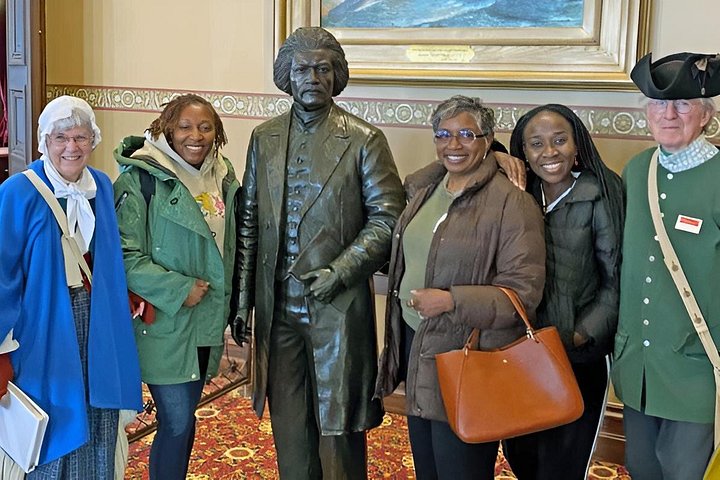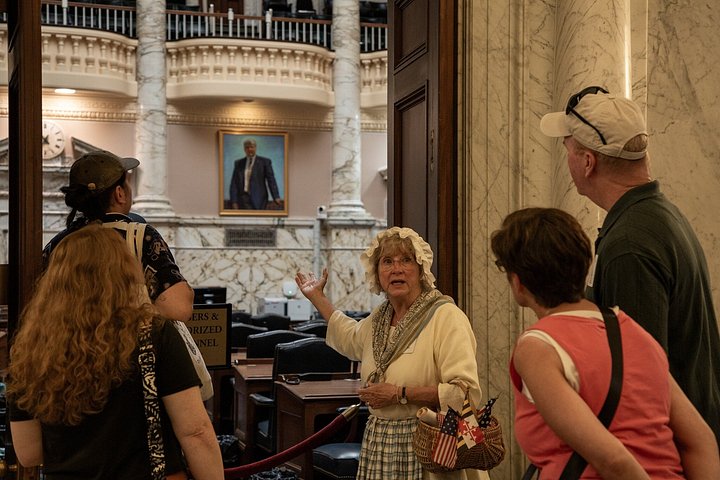
The Maryland State House sits at the top of State Circle and anchors every view of colonial Annapolis. Construction began in 1772, and it is the oldest state capitol still in continuous legislative use. It is also the only state house to have served as the nation's capitol, when the Confederation Congress met in Annapolis from late 1783 to mid 1784. During those months George Washington resigned as commander in chief in the Old Senate Chamber, and Congress ratified the Treaty of Paris, which ended the Revolutionary War. The chamber has been restored with period furniture and a life-size tableau of the resignation, and it is the highlight of most visits. Above all this stands the wooden dome, completed in the 1790s and celebrated as the largest of its kind built without nails, pegged and joined with timber framing instead. Visitors enter through security, can often view the current legislative chambers when they are not in session, and can explore small exhibits on Maryland's history. During the legislative session from January to April the building is busy with lawmakers, lobbyists and school groups, so the atmosphere is livelier but access to some rooms is more limited.
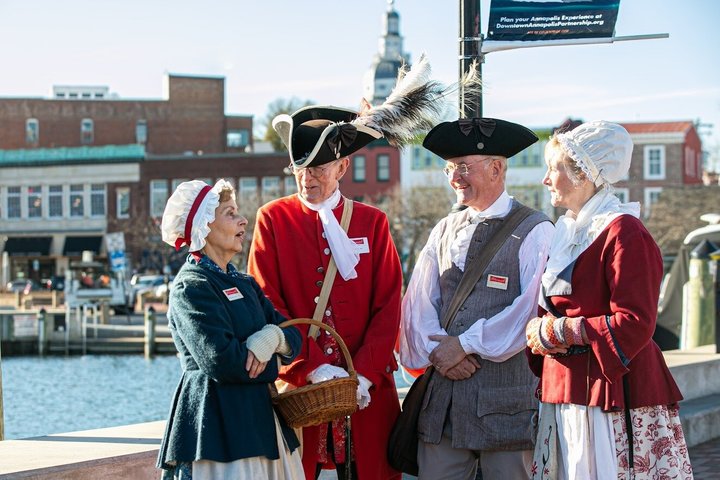
There are several good ways to see the State House. A self-guided walk through the public areas is free, and brochures explain the major rooms. Guided walking tours of colonial Annapolis frequently include the exterior and the circle, and some include a short interior visit, which suits visitors who want context for the architecture and the events that happened here. The grounds themselves are pleasant for a short stop, with statues, a view down toward the harbor and benches in the shade, and State Circle is a good place to orient yourself.
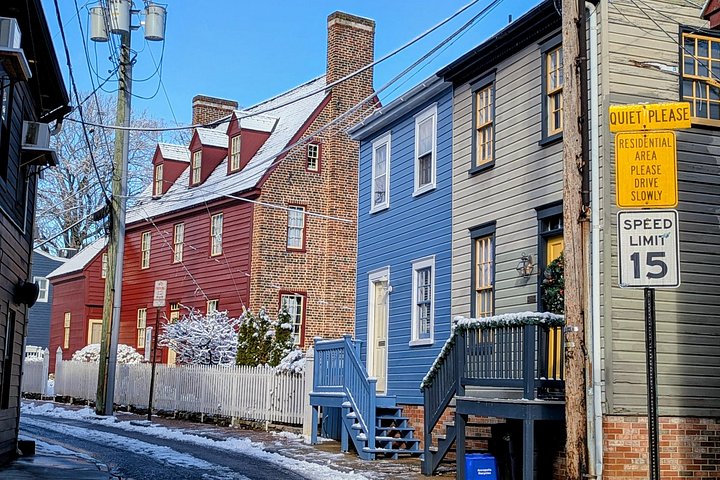
The surrounding streets are some of the most atmospheric in the city. Church Circle is a few steps away with St. Anne's Church, and the brick sidewalks leading toward Main Street and City Dock are lined with eighteenth-century houses, taverns and shops. Allow time to wander because nearly every block has a marker or an interesting doorway. The William Paca House and the Hammond-Harwood House are both within a short walk, which makes it easy to build a loop of the historic core.
Practical notes
The building is a working government complex with security screening, so bring identification if you are asked for it and leave large bags at your hotel. Hours and tour availability vary with the legislative calendar, and some areas close for state business. Accessibility is good at the main entrance, and the surrounding area has hills and uneven brick, so wear comfortable shoes. Parking is limited near State Circle, so use a garage on the edge of the historic district and walk in.
For a deeper understanding of why this building matters, consider how rare it is. Most capitols of the Revolutionary era were rebuilt or replaced, but Annapolis kept its State House in use through the centuries, and its Old Senate Chamber still looks much as it did when Washington stood before Congress.
Interpretive displays explain the building's earlier incarnations, including fires that destroyed previous statehouses on the site. Walk the perimeter of State Circle afterward to see how streets radiate from it, a baroque plan that dates to the town's founding and gives the historic district its distinctive layout.
What to expect
The experience
A walk through the oldest working state capitol, including the Old Senate Chamber where Washington resigned, with optional guided context from a walking tour.
Best time
Weekday mornings are best; during the legislative session expect crowds and tighter access.
How long
One to two hours including the grounds and State Circle.
Tips
Bring identification, leave large bags behind and check opening hours for the day.
Quick picks
- Best for
- First-timers and history lovers who want the American Revolution in a single room.
- Families
- A good stop for school-age children, especially the Washington tableau.
- Couples
- Pair with a stroll along Main Street and a drink in a historic tavern.
- Pair with
- The Paca House, St. Anne's Church and City Dock.
- Time needed
- One to two hours.
Good questions
Is the State House free?+
Entry to the public areas is generally free. Guided walking tours that include it are paid.
What happened in the Old Senate Chamber?+
Washington resigned his military commission there in 1783, and Congress ratified the Treaty of Paris in 1784.
Can I see the dome?+
The wooden dome is visible from outside and the rotunda. The upper dome is not open to casual visitors.
Is it busy during the legislative session?+
Yes. The session runs from winter to spring and access can be more limited.
Are there security checks?+
Yes, expect screening at the entrance, so bring identification and travel light.