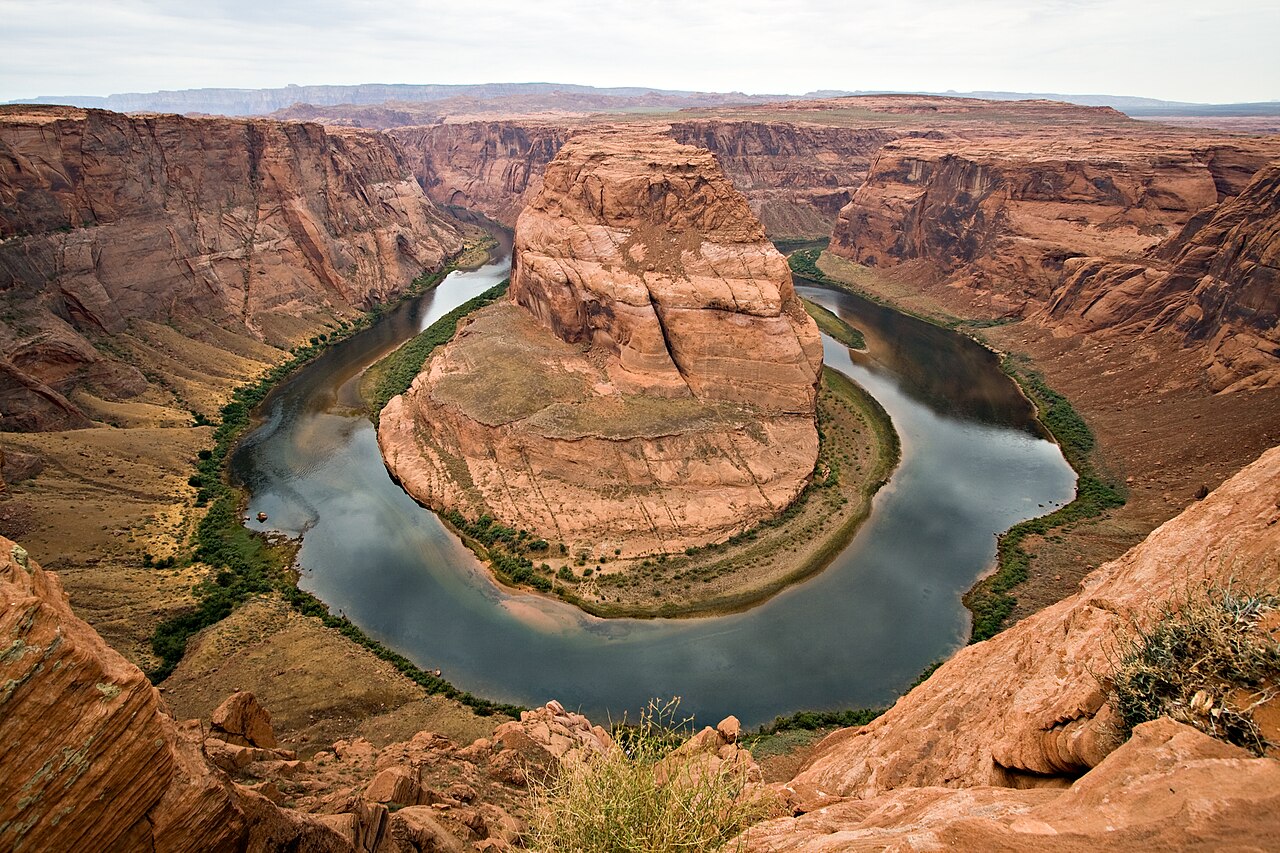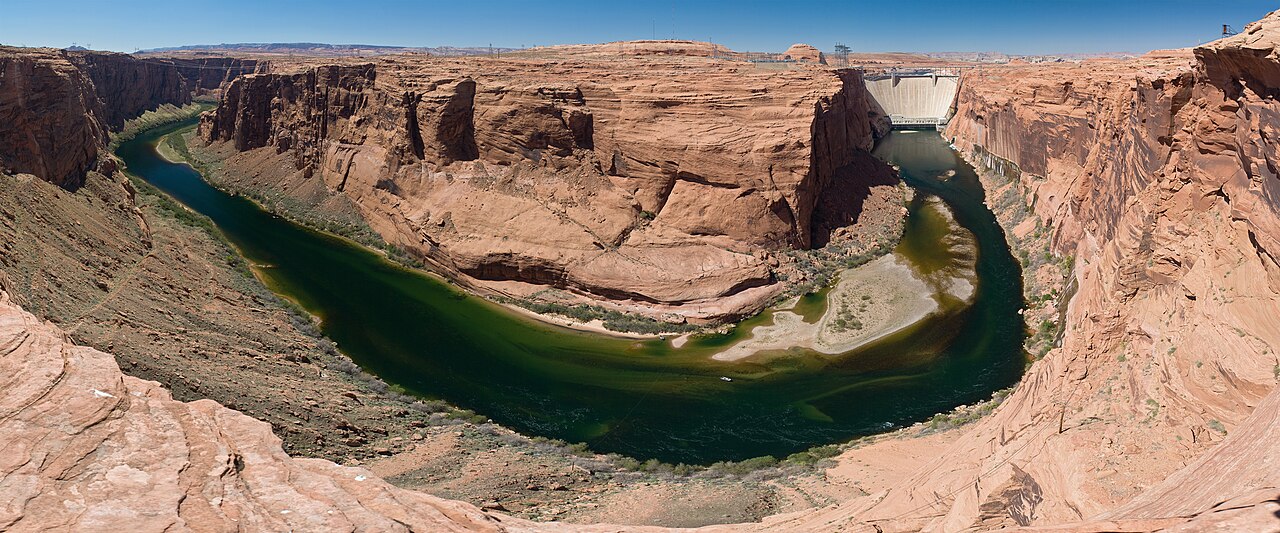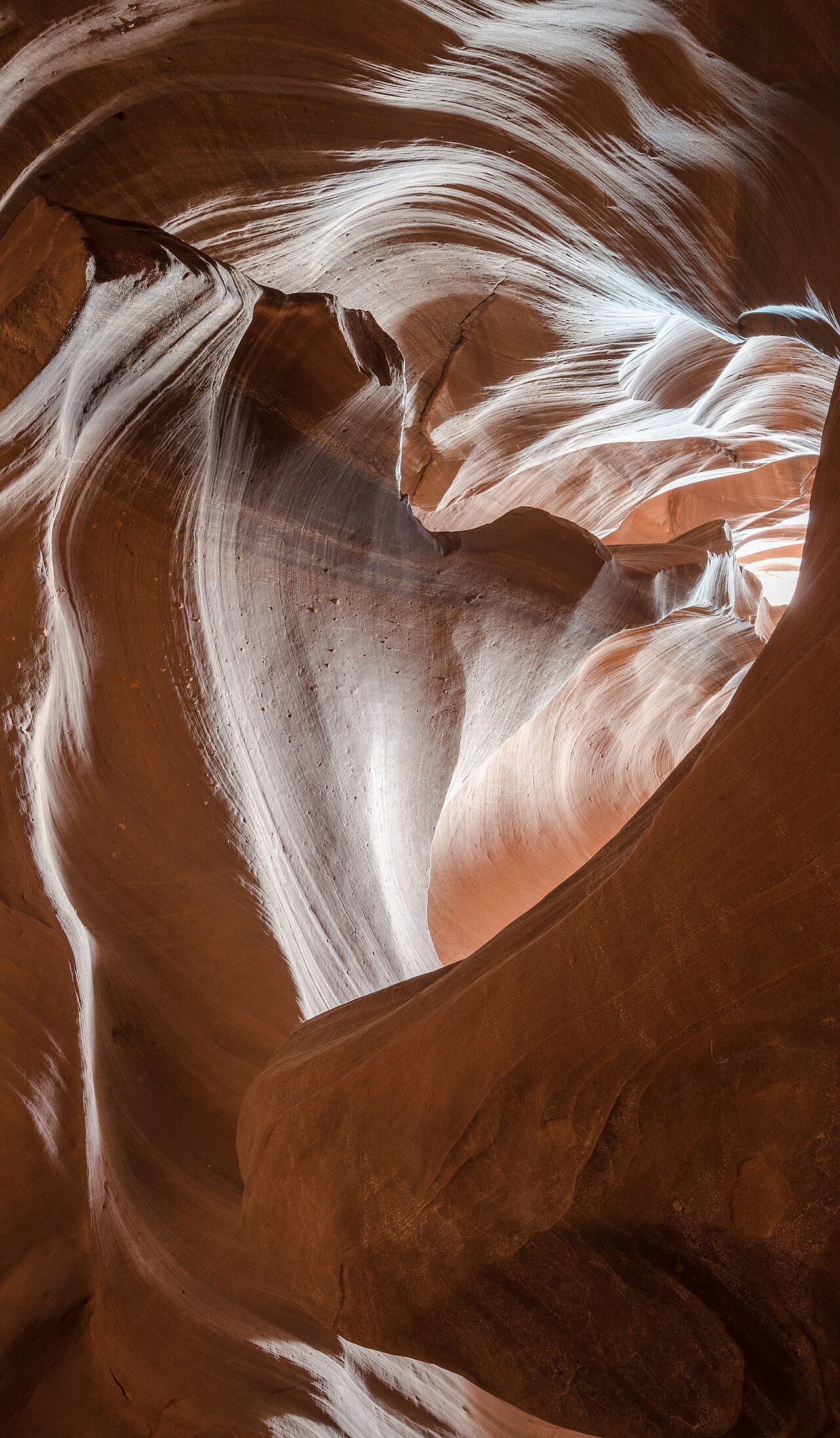
The float trip is Page's great inversion: after days of looking down at the Colorado — from the Horseshoe rim, from slot canyon country — you get on it, boarding pontoon rafts at the base of Glen Canyon Dam (reached through a security-escorted tunnel that is its own small thrill) for roughly fifteen miles of dead-calm, rapids-free river through what remains of Glen Canyon. The walls run a thousand feet of glowing Navajo sandstone, the guides narrate dam, geology, and river history, a mid-trip beach stop visits ancient petroglyphs, and the route passes directly beneath Horseshoe Bend — the same emerald U you photographed from above, now experienced from the water with the crowds a thousand feet overhead. Trips run half-day to full-day in season, no experience or swimming demands, all ages welcome — the rare Southwest adventure equally right for toddlers and grandparents. It ends at Lees Ferry, the historic crossing where Grand Canyon expeditions launch; book direct with the licensed concessioner, well ahead for summer.
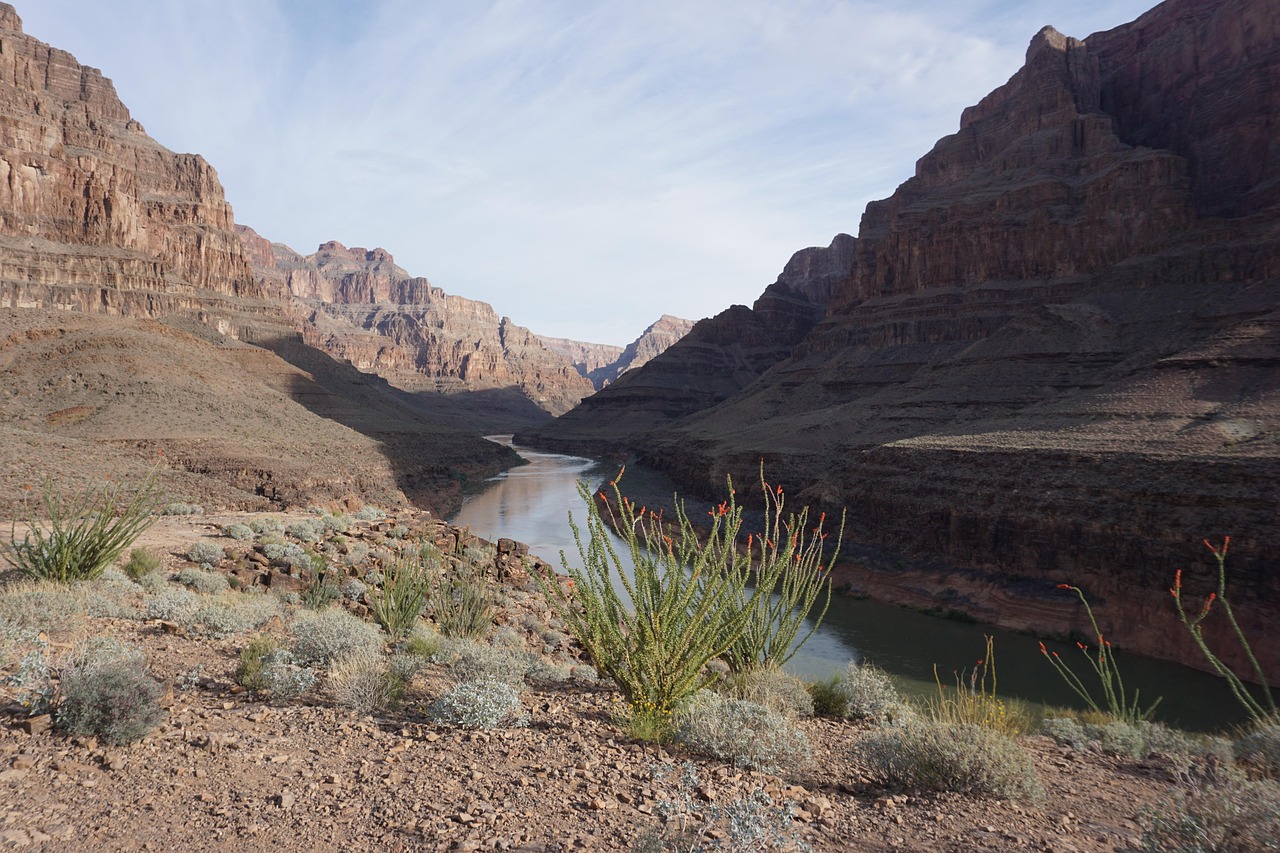
Glen Canyon was, by every surviving account, the equal of its downstream sibling — a serpentine sandstone paradise John Wesley Powell named for its glens — before the 1963 dam drowned most of it under Lake Powell. The float trip runs the fifteen-mile remnant between dam and Lees Ferry: the last stretch of Glen Canyon that still looks like Powell's, and the only way to see it short of a private permit. The experience begins memorably — vans descend through the dam-security tunnel to the river's edge, where the Colorado emerges from the penstocks cold, clear, and green (the silt settles out in the lake; the pre-dam river ran red) — and the current does the rest, carrying the rafts at walking pace beneath walls that climb to a thousand feet of desert-varnished stone.
The miles earn their reputation gently. Guides run the narration — dam engineering, the canyon Powell described, river ecology, the odd bighorn on the talus — with the kind of pacing that lets the walls do the talking; the standard beach stop walks a short trail to a petroglyph panel left by the canyon's first peoples; and the geometry builds to the signature moment: the river entering Horseshoe Bend's curve, rim-top photographers reduced to glitter, the U experienced as a slow, surround-sound sweep of stone. Trips finish at Lees Ferry — the only road access to the river for hundreds of miles, launch point of every Grand Canyon rafting expedition, and a mile-zero marker of river history — with motorcoach return to Page.
Practicalities
This is smooth water, full stop — no rapids, no paddling, no swimming requirement, seats with backs — which is why it books families spanning four generations; the river runs refrigerator-cold even in July (the dam draws from the lake's depths), so the splash factor is refreshment, not hazard. Season runs spring through fall with half-day departures the staple; summer books out weeks ahead. Pair it the obvious way: rim view one day, river view the next — or the ambitious single day of dawn Horseshoe, midday slot canyon, afternoon float that this market's river guide calls the royal flush.
What to expect
The experience
A rapids-free pontoon float down the Colorado from the dam's base to Lees Ferry — fifteen miles of thousand-foot Glen Canyon walls, a petroglyph beach stop, and the pass directly beneath Horseshoe Bend. Guided, narrated, all ages.
Best time
Morning departures for glass-calm water and cool canyon shade; spring and fall for the kindest temperatures. Summer trips run full — book weeks out.
How long
Half a day door to door for the standard trip.
Tips
Layers even in July — the water comes off the lake's cold bottom. The Horseshoe pass comes mid-trip: keep the camera ready. Pair the float with the rim overlook for the full-circle day.
Quick picks
- Best for
- Multi-generation groups — the rare bucket-list river trip with zero fitness or nerve requirements.
- Families
- Calm water, seats with backs, petroglyphs, and a dam tunnel entrance kids rank with the canyon — the region's best family half-day.
- Couples
- The canyon at water level is unreasonably romantic — morning light on thousand-foot walls, the crowd a speck on the rim above.
- Pair with
- Horseshoe Bend's overlook (same bend, both angles) and a slot canyon for Page's complete hand.
- Time needed
- Half a day.
Good questions
Are there rapids?+
None — the Glen Canyon stretch is dead-calm, dam-regulated smooth water. The whitewater Grand Canyon begins downstream of Lees Ferry, where this trip ends and expeditions launch.
Do we pass Horseshoe Bend?+
Directly beneath it — the trip's signature stretch sweeps the full U at water level while the overlook crowd glitters a thousand feet up. It's the shot nobody's phone at the rim can take.
Is it suitable for young kids and older travelers?+
It's the region's most age-proof adventure — no paddling, no swimming requirement, shaded seats, a beach stop. Operators set minimum ages low; four-generation boats are routine.
Why is the water so cold and clear?+
It's drawn from deep in Lake Powell through the dam — filtered of silt and chilled year-round. The pre-dam Colorado ran warm and red; this stretch is a different river by design.
How far ahead should we book?+
Weeks for summer and holiday dates; shoulder seasons forgive more.