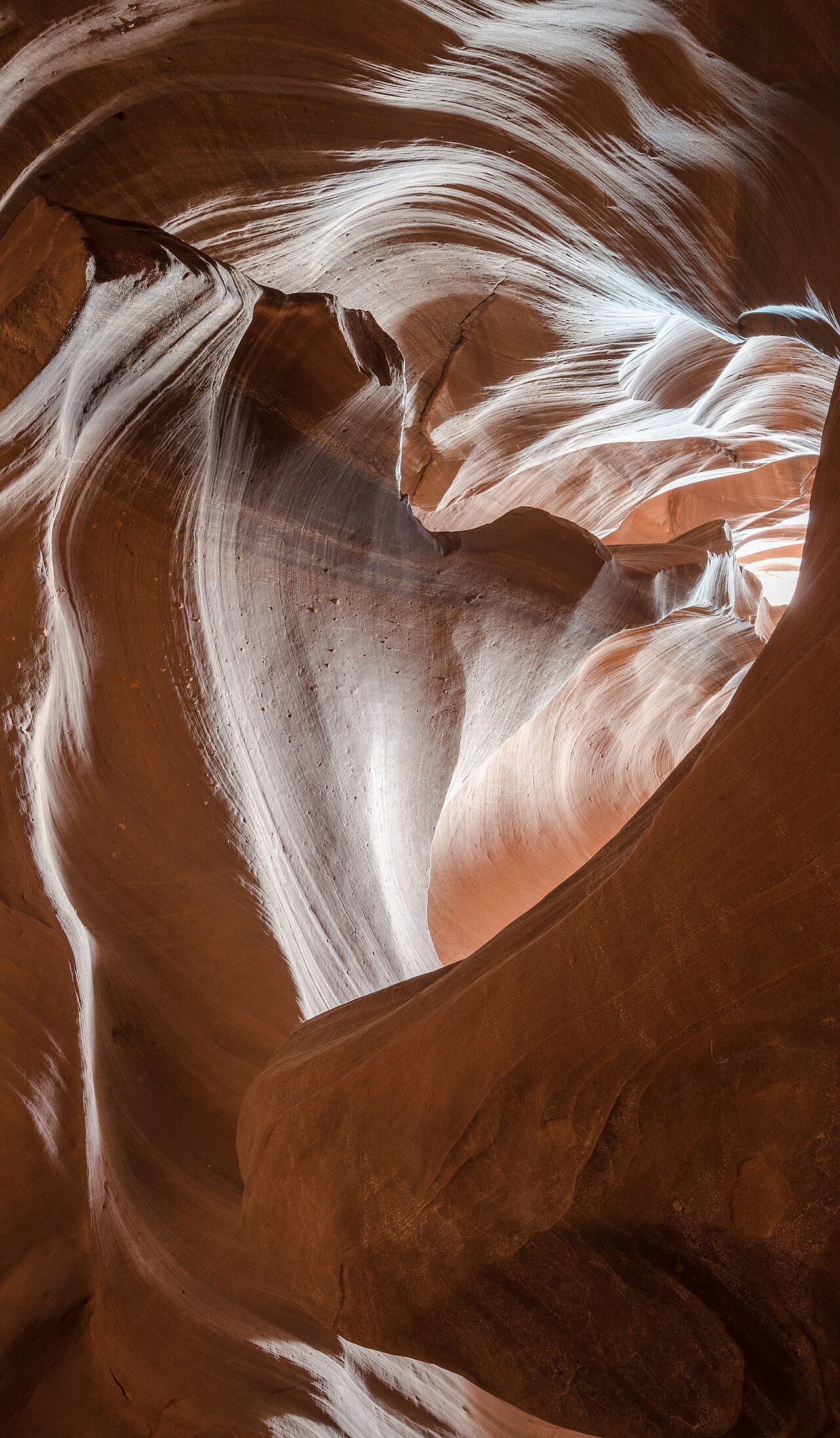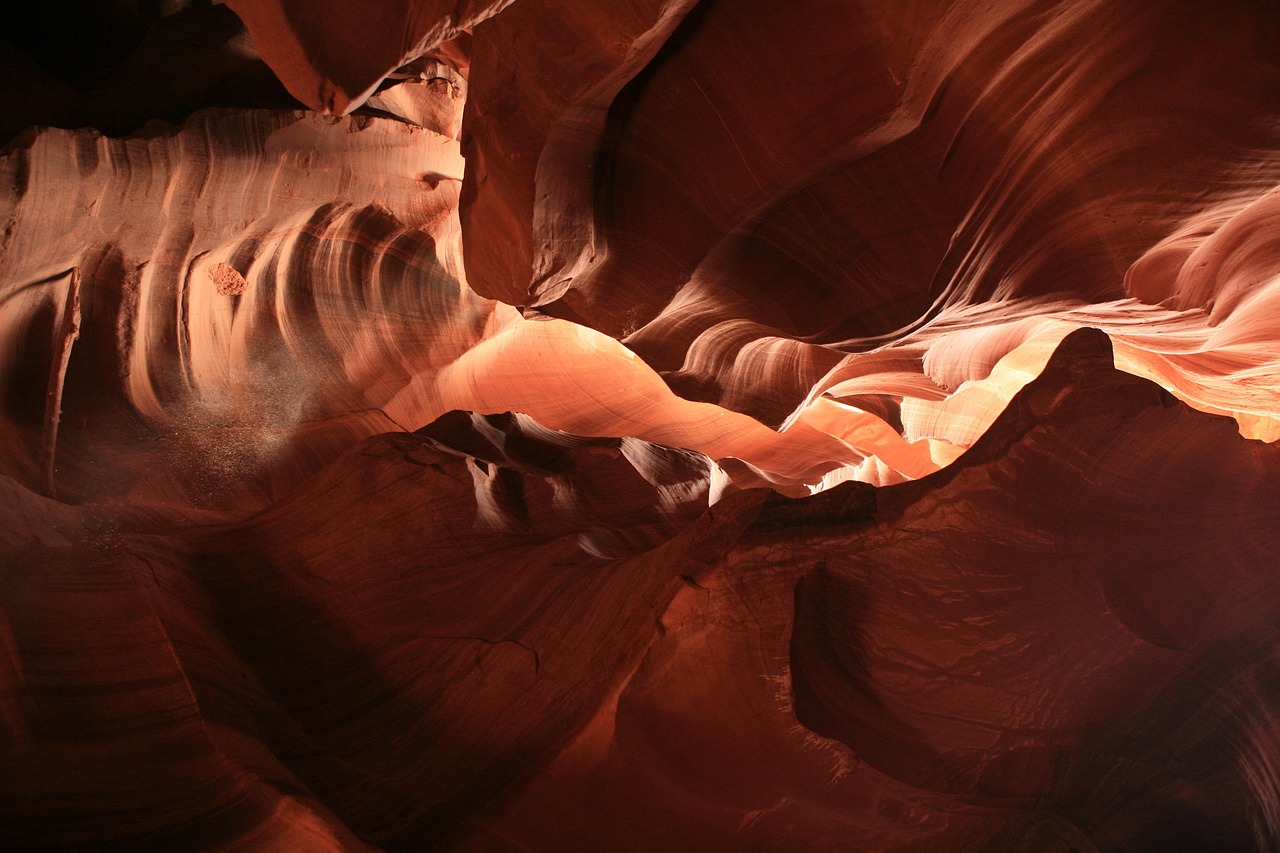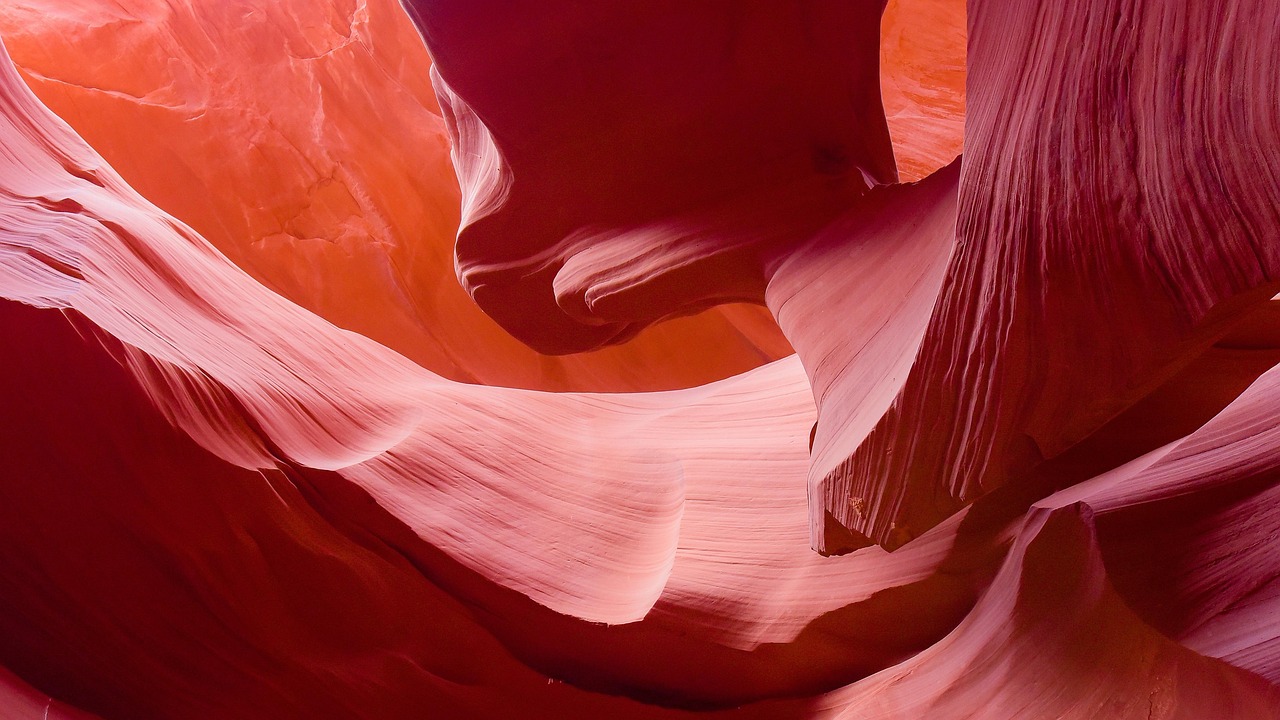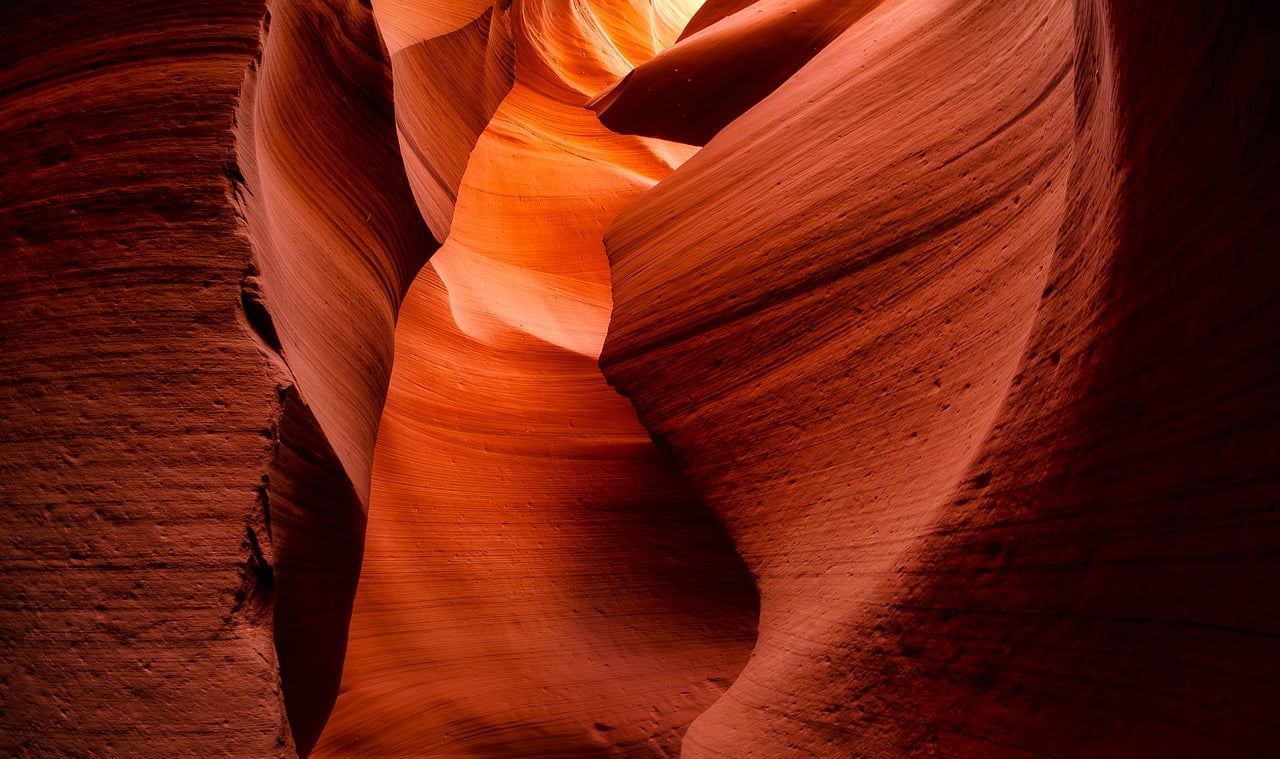
Lower Antelope Canyon — Hasdestwazí, "spiral rock arches" — inverts its upstream sibling: where Upper is a dark cathedral entered at floor level, Lower is a bright crack in the earth you climb down into, descending steel stairways and ladders into a corridor that then runs longer, narrower, and twistier than Upper's, with the sandstone glowing in oranges and purples under an open slot of sky. The two Navajo family operators on the rim — Ken's and Dixie Ellis', both authorized, functionally equivalent — run guided loops of about an hour down in the stone: ladders and tight squeezes give it a mild-adventure flavor Upper lacks, the photography is arguably better outside beam hours (the open rim feeds even light all day), and tickets run meaningfully cheaper with shorter booking lead times. The trade: no true light beams, and the ladders rule out strollers and unsteady knees. For many visitors — photographers especially — this is the better canyon; the comparison guide makes the call case by case.
The geometry lesson comes first
Lower Antelope is an A-slot — wide at the rim, narrowing toward the floor — where Upper is a V. That single difference drives everything. The open top floods the corridor with reflected light all day, so the stone's color show (deeper purples and fire oranges than Upper's) doesn't depend on a midday beam window; the narrow floor makes the walk a genuine scramble in places — five flights of industrial steel stairs and ladders in and out, shoulder-width squeezes, sculpted catwalks — which thins the crowds and adds the small, happy adrenaline Upper's flat stroll never offers; and the canyon runs roughly twice Upper's walking length, so the hour underground feels like a journey rather than a viewing.
Logistics are refreshingly simple
The two operators — Ken's Lower Antelope Canyon Tours and Dixie Ellis' Lower Antelope Canyon Tours, neighboring Navajo family businesses at the same Highway 98 rim lot — run the identical canyon on staggered loops; pick whichever has your time. Tours check in at the rim (no shuttle needed — the entrance is a short walk), descend the first stairway into the slot, and guide the one-way corridor north with the same practiced phone-camera choreography as Upper: the Lady in the Wind, the Shark, ceiling spirals. Rules match Upper's — guided only, no tripods or bags — and the flash-flood protocol is taken with particular seriousness here: the 1997 tragedy that killed eleven hikers happened in this canyon and built the modern system of ladders, alarms, and weather closures that makes today's visit safe.
Choosing and booking
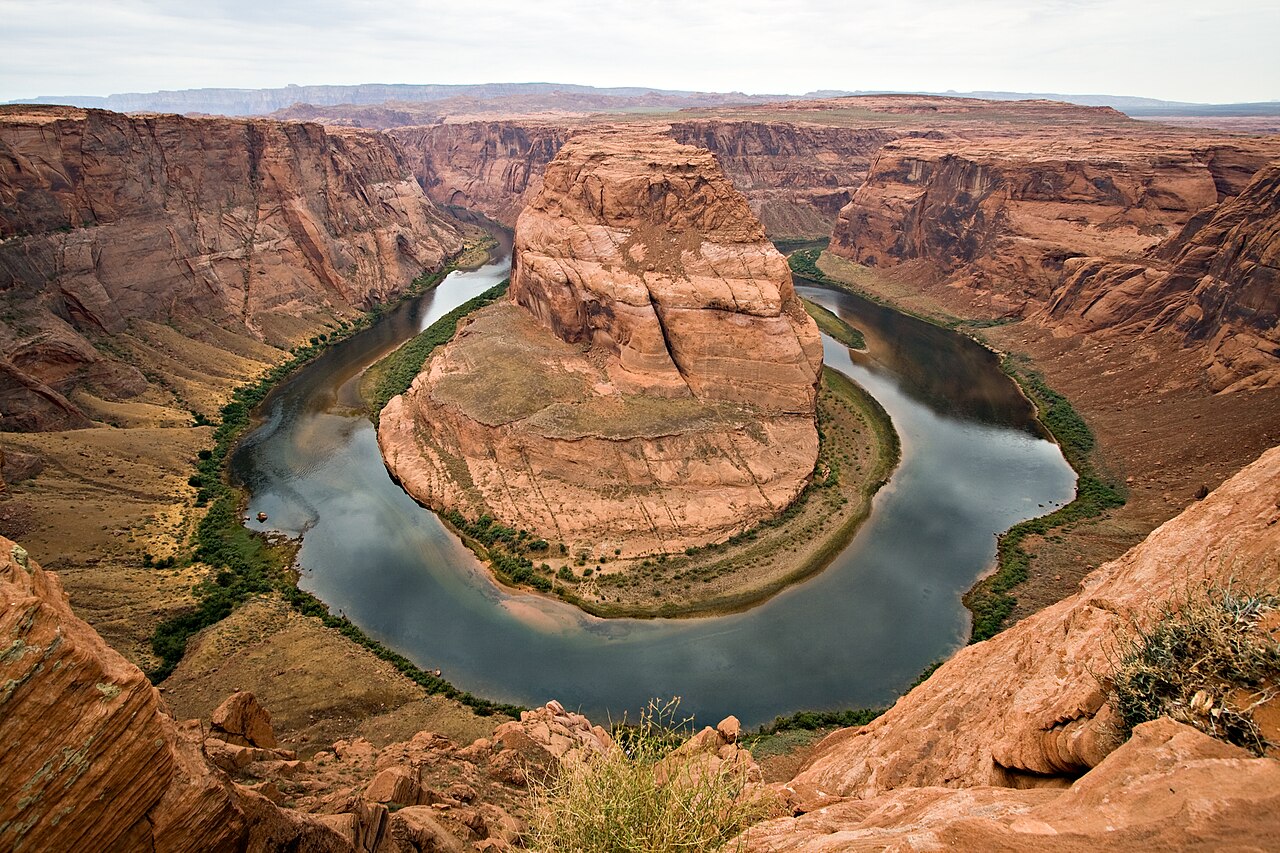
Photographers without a beam obsession, travelers watching budgets, and anyone who likes their nature with a little climbing should book Lower first; families with small kids or mobility concerns should take Upper's flat floor. Lead times run days-to-a-week where Upper wants weeks (midday summer slots still go fastest); mornings beat afternoons for crowd rhythm; and the DST trap applies here too — Navajo Nation clocks run an hour ahead of Page in summer. The power move this market recommends: both canyons in one day, Lower in the morning and Upper's beam slot at midday, with Horseshoe Bend at sunset — the full Antelope hand played in a single rotation.
What to expect
The experience
A guided descent by steel stairs and ladders into a bright, twisting V-slot — longer and narrower than Upper, with all-day color instead of midday beams. Two equivalent Navajo family operators at the rim; about an hour in the stone.
Best time
Mornings for the calmest loops; the open rim keeps the color strong all day, so Lower forgives whatever slot you get. Summer middays are busiest.
How long
An hour to ninety minutes, ladders included.
Tips
Book either rim operator — same canyon, same system. Closed shoes for the ladders; no bags or tripods. Skip it with strollers or shaky knees and take Upper instead. Same DST warning: Navajo time runs an hour ahead of Page in summer.
Quick picks
- Best for
- Photographers and the budget-wise — more canyon per dollar than its famous sibling, with light that works all day.
- Families
- Great for sure-footed kids who'll love the ladders; wrong for strollers and toddlers — that's Upper's job.
- Couples
- The morning loop's quiet stretches feel almost private midweek — the adventurous half of the two-canyon day.
- Pair with
- Upper Antelope the same day for the full contrast, with Horseshoe Bend's sunset as the closer.
- Time needed
- Half a morning.
Good questions
How hard are the ladders?+
Industrial steel stairways, well-maintained, five flights total with hands-on sections between — manageable for anyone reasonably steady, a delight for kids, and a genuine no for strollers, infants, and bad knees.
Ken's or Dixie Ellis'?+
Either — two neighboring Navajo family operators running the identical canyon on staggered schedules. Book whichever has the time you want.
Is it really better than Upper?+
For photography outside beam hours, for value, and for fun-per-minute, many say yes. Upper wins beams, fame, and easy walking. Both in one day settles it best.
Does it have light beams?+
Only hints — the open rim means glow, not shafts. If the solid beam photo is the whole mission, book Upper's midday window; if color and curves are the mission, Lower delivers all day.
Is it safe in storm season?+
Yes, because closures are ruthless — after the 1997 flood the canyon got ladders, alarms, and a strict upstream-weather protocol. A canceled slot is the system doing its job; operators reschedule.