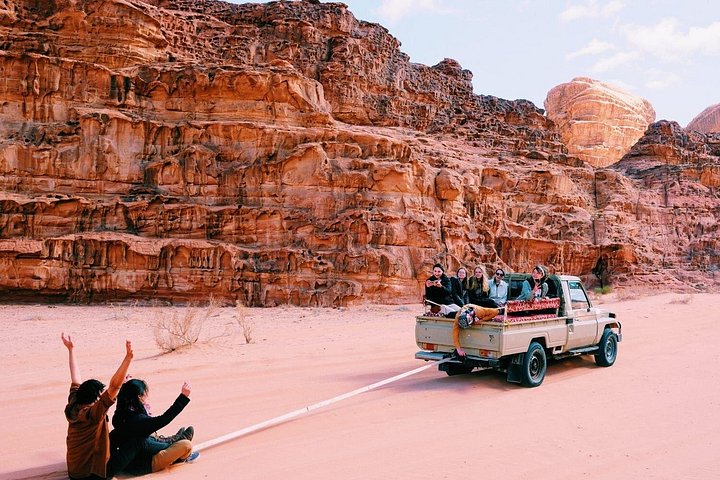
Wadi Rum is the Jordan of postcards: red sand, vast sandstone cliffs and a silence that feels huge after the noise of town. The protected area, a UNESCO-listed landscape, lies about an hour's drive from Aqaba, and the standard way to see it is by 4x4 with a local guide. A full-day tour winds across the flat valley floor between towering rock walls, stopping at natural arches such as Burdah, narrow canyons such as Khazali, ancient inscriptions and the sites linked to Lawrence of Arabia, including the formation known as the Seven Pillars of Wisdom and the spring that carries his name. Guides are usually local Bedouin who grew up here and know the best light for each place, and the day typically includes a picnic lunch cooked or served in the shade of a rock, with sweet tea. You climb dunes, walk short stretches and sit in silence at a viewpoint while the sun moves. The tour here is a full-day format with a Bedouin picnic lunch, which gives enough time for a relaxed pace and several stops without feeling rushed.
The landscape has layers of history. Rock carvings and inscriptions show that people have passed through Wadi Rum for thousands of years, from early desert tribes to the Nabataeans who traded between Petra and the coast. In the First World War the area became associated with the Arab Revolt and T. E. Lawrence, whose writing helped make the place famous, and later film crews arrived to shoot desert epics. Today the local Bedouin community runs the tourism, and hiring a local guide directly supports families who live here.
Planning
A protected-area entrance fee is paid at the Visitor Centre, or covered if you hold a Jordan Pass, so check the booking page for what is included. Wear closed shoes, sunglasses and a scarf or hat for dust and sun, and pack layers because mornings and evenings can be cold, especially in winter. Bring cash for tips and for any extras at camps. Pickup arrangements differ by operator, and some tours start at the village rather than in Aqaba, so confirm the meeting point.
Pacing
Choose a full day if you can, since half-day tours skip some of the furthest sights. Seasons matter, with spring and autumn the most comfortable and summer very hot, so start early and drink plenty of water. If you plan to stay overnight, a full-day jeep tour followed by a camp evening is the best way to see sunset and stars without rushing. Photographers should aim for early morning and the hour before sunset, when the sandstone glows orange and red and shadows give the cliffs depth.
What to expect
The experience
A guided 4x4 loop through Wadi Rum's valleys, arches and canyons, with a picnic lunch and tea with your Bedouin guide.
Best time
Spring and autumn for mild weather; start early in summer, and bring layers for cold winter mornings.
How long
A full day, usually six to eight hours including lunch and stops.
Tips
Bring closed shoes, sun protection, a scarf and water; check how the entrance fee or Jordan Pass is handled.
Quick picks
- Best for
- Almost everyone, since this is the core Wadi Rum experience.
- Families
- Great for older children who like adventure; expect bumpy rides and plenty of sun.
- Couples
- Aim for the sunset stop with tea and a quiet view over the valley.
- Pair with
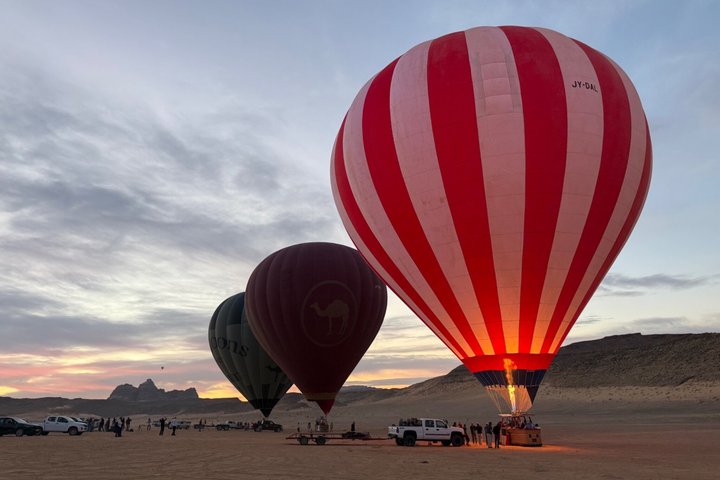
- An overnight desert camp, a camel trek or a sunrise balloon flight.
- Time needed
- A full day, or add a night for the best experience.
Good questions
How far is Wadi Rum from Aqaba?+
It is roughly an hour's drive by road, about 76 km according to distances published by Aqaba hotels. Many tours include pickup from Aqaba, while others start at the village.
What will I see on the tour?+
Typical stops include natural rock bridges, canyons, dunes, ancient inscriptions and Lawrence of Arabia sites. Exact routes depend on the guide and time available.
Is there an entrance fee?+
A protected-area fee is paid at the Visitor Centre, or covered with a Jordan Pass. Check the booking page for what your tour includes.
What should I wear?+
Comfortable, modest clothing, closed shoes, sunglasses and a hat or scarf. Bring layers for cool mornings and evenings.
Is a full day too long?+
It is a long day but pacing is relaxed, with breaks for lunch and tea. If you are short of time, half-day tours cover fewer sights.