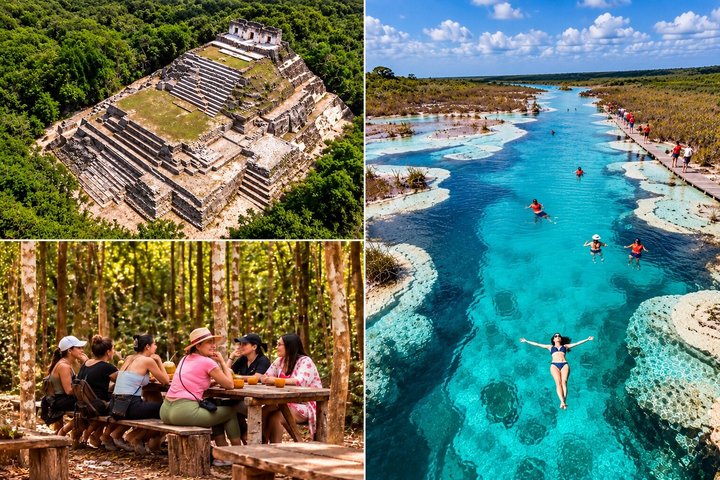
Oxtankah is an archaeological site on the shore of Chetumal Bay, about ten miles north of the state capital and a little over half a mile from the water, facing the island of Tamalcab. The archaeology authority INAH says the city flourished between 250 and 600 AD, in the Early Classic, and remained inhabited more thinly in the Late Classic and Postclassic periods, when it became a ceremonial sanctuary where people left offerings. The core of the site is the Plaza of the Columns, with elite residences to the west and north. The Plaza of the Serpents building is described as unique at Oxtankah, with an esplanade leading to six rooms. Stucco murals once decorated the facades, and the architecture shows influence from the Petén region. Water was managed with chultuns, wells and modified cenotes and collapse hollows. The result is a compact, varied site with a different feel from the large jungle pyramids at Ichkabal or Dzibanché, and it combines well with a day in Chetumal.
The Spanish chapel
What makes Oxtankah unusual is the layer of colonial history in the north of the site. Spanish builders raised a chapel here in the second half of the sixteenth century, within a Maya city that was already ancient. Seeing church walls beside Maya platforms gives a clear sense of how the two worlds overlapped on this coast. It is one of the more distinctive pieces of history you can see within easy reach of Bacalar, and it makes the site worth including even if you have already visited other ruins.
What the visit is like
The site is a walk through plazas and low mounds under trees, close to the bay, so it is shaded in places but warm and humid. Most visits take about an hour or two. Because it is less visited than the large Maya sites, it tends to be quiet, and you can read the layout at your own pace. Opening hours and admission arrangements are not stated on the INAH page, so check locally before you go, and carry cash for any fee.
Planning
Oxtankah is roughly an hour from Bacalar by road, passing through Chetumal, so it works well as a half-day outing that you can combine with the Museo de la Cultura Maya in the city, which explains the wider Maya story. A taxi, hire car or private driver is the usual way to reach it, as public transport is limited.
Wear sun protection, sturdy shoes and insect repellent, and bring water. Rain can make paths slippery, so allow flexibility in the wetter months. If you are short of time, pick between Oxtankah, Dzibanché and Ichkabal according to whether you prefer a bay setting, a forest setting or a day with pickup.
Why visit
For many travellers, Bacalar is about water, and Oxtankah offers a different texture. The sea breeze from the bay, the remains of a Spanish chapel and the sense of a Maya city that shifted over many centuries make it a thoughtful stop. If you enjoy photography, the plazas look best in the morning light, and the contrast between old stone and the sea can be striking. Pair the trip with a seafood lunch in Chetumal before heading back to the lagoon.
What to expect
The experience
A self-guided walk through Early Classic plazas, residences and a colonial chapel on the shore of Chetumal Bay.
Best time
Morning, for cooler air and softer light.
How long
One to two hours at the site, plus travel from Bacalar.
Tips
Check hours and fees locally, bring water, repellent and sun protection, and wear sturdy shoes.
Quick picks
- Best for
- History lovers who want a quieter site with a colonial twist.
- Families
- Easy walking and a short visit, though little shade in places and few facilities.
- Couples
- A calm, uncrowded stop combined with a day in Chetumal.
- Pair with
- The Museo de la Cultura Maya in Chetumal and a stroll along the bay.
- Time needed
- A half day including the drive.
Good questions
What is Oxtankah?+
It is a Maya city on Chetumal Bay that flourished in the Early Classic period, between 250 and 600 AD, according to INAH.
What makes it different from other ruins nearby?+
It sits on the bay and includes the remains of a Spanish chapel from the second half of the sixteenth century.
How far is it from Bacalar?+
It is roughly an hour by road, through Chetumal. A taxi, hire car or private driver is the usual way to reach it.
Are the opening hours and fees published?+
The INAH page does not state them, so check locally and carry cash for any admission.
Can I combine it with the Chetumal museum?+
Yes. The Museo de la Cultura Maya is in the city centre and makes a good companion visit on the same day.