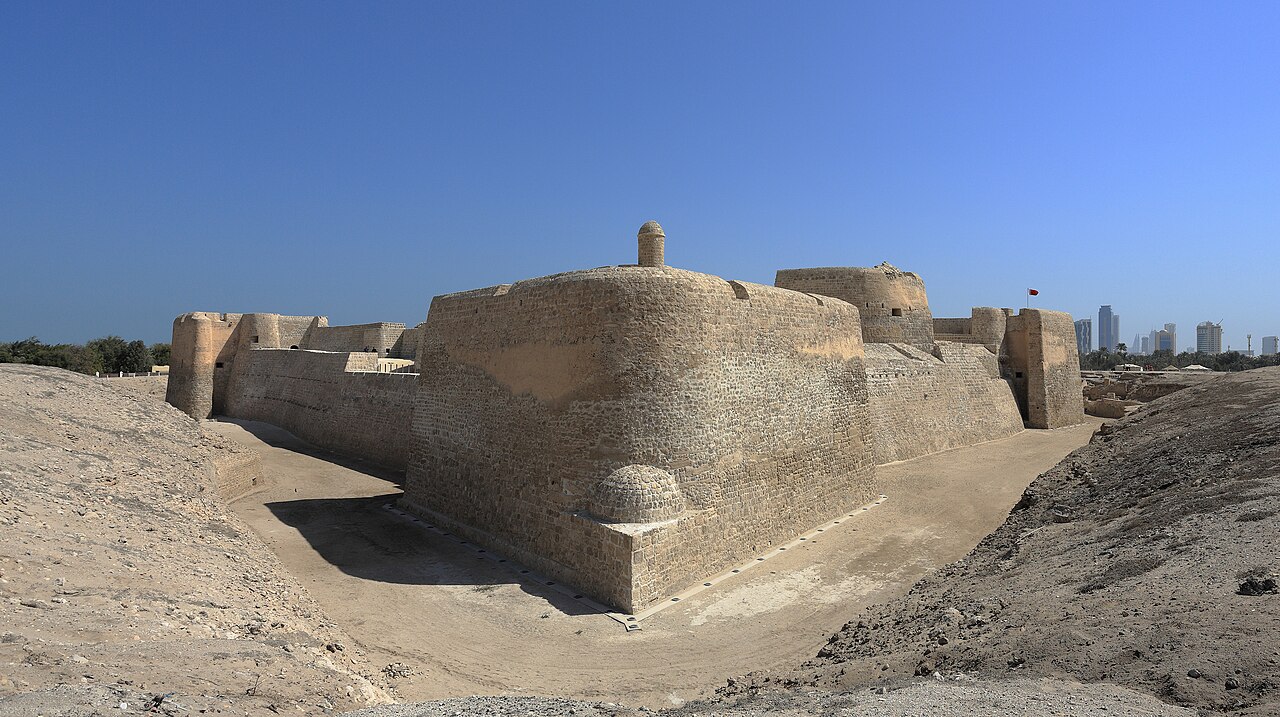
Bahrain Fort, known locally as Qal'at al-Bahrain, is the island's headline heritage site and the clearest way to understand why Bahrain matters. The fort itself is the last chapter of a story told in layers. Archaeologists have found that the mound beneath it was occupied almost continuously for more than 4,500 years, and it served as the capital of the Dilmun civilization, the Bronze Age trading power that linked Mesopotamia with the Indus Valley. Over the centuries the settlement was succeeded by later cultures, and the stone fort that dominates the skyline today is the Portuguese-era structure on top, its walls and towers looking out over the Gulf and the palm groves behind. The whole site is a UNESCO World Heritage listing, and it is a rare place where you can walk past excavated city streets, wells and walls, then climb to a rampart for a view over the water. Directly across the road, a modern site museum holds about 500 artefacts found in the digs, with galleries arranged by period, and a café overlooking the coast sits beside it. Guided tours are free and audioguides in three languages are available at the information desk, so you do not need to hire anyone to get a great visit.
What you see
The fort and the dig are one site, so allow time to wander the excavated areas below the walls as well as the fort itself. The ruined streets, house foundations and defensive walls belong to different eras, and information panels help you read them. The fort is modest in scale, which suits a visit of an hour or two, and the climb up gives sweeping views to the sea on one side and the green belt of date palms on the other.
The site museum, a short walk across the road, tells the Dilmun story with seals, pottery and burial goods, and its sea-facing café is a pleasant place to rest.
How to visit
The site is well signposted and about fifteen to twenty minutes by car from central Manama on the north coast, easy by taxi or ride-hailing. Opening hours are broadly morning to evening, with the museum closing on one weekday, which the venue's page gives as Monday, so confirm before you go. Admission to the fort is a small fee for visitors, and the museum has its own modest ticket.
Shade is limited, which makes midday uncomfortable for much of the year; early morning or the last hours before sunset are ideal, and sunset is when the stone glows and the light over the water is at its best. Dress modestly, wear a hat and carry water in the warmer months.
Making it a half day
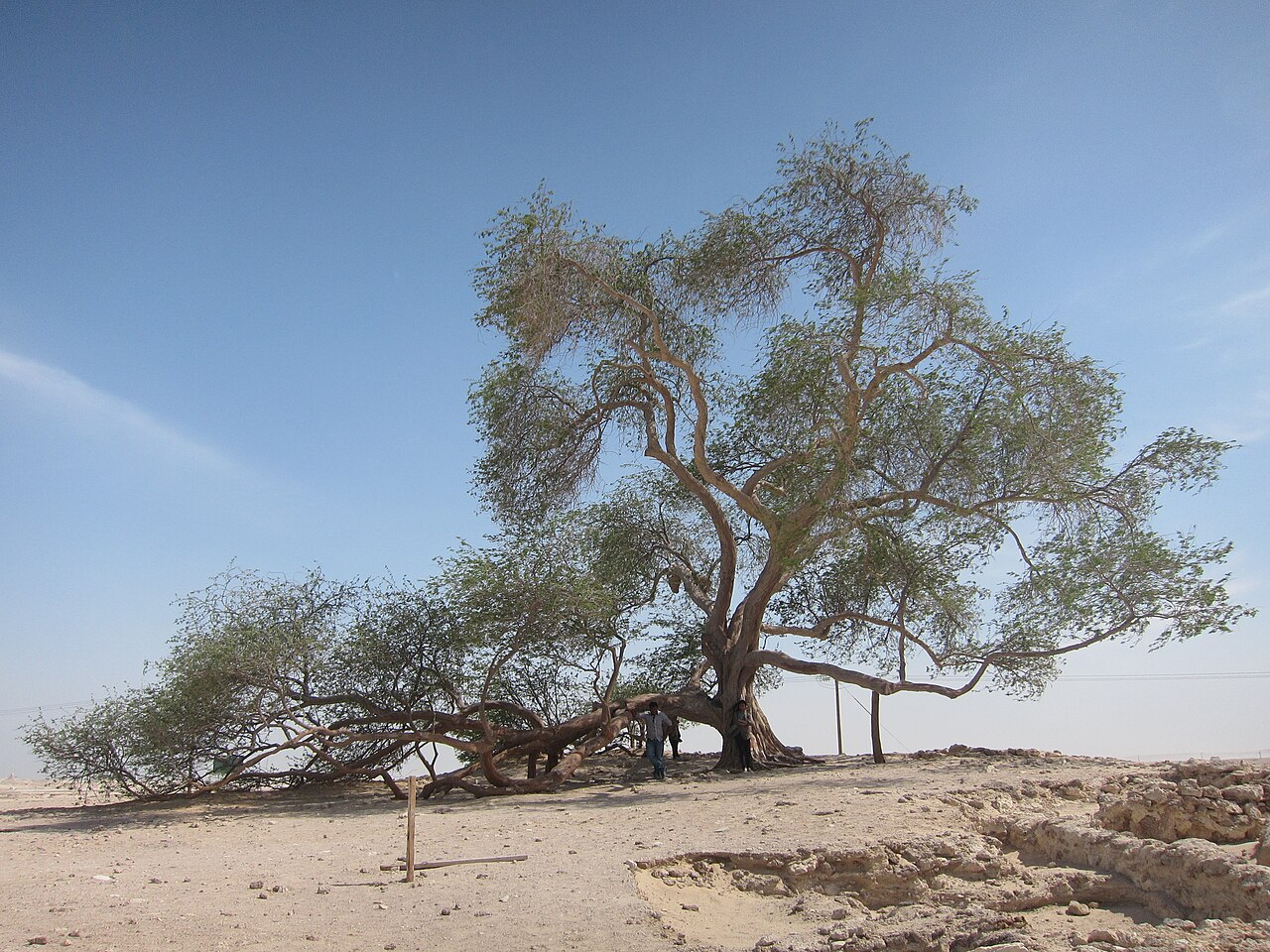
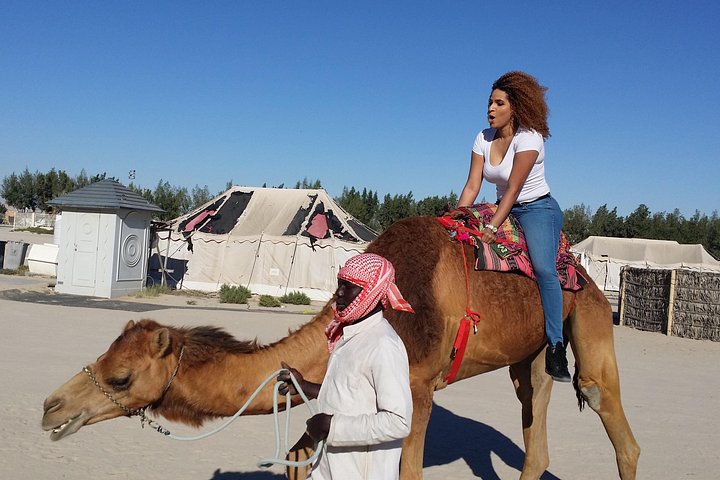
Pair the fort with the Pearling Path trail in nearby Muharraq, the Al Fateh Grand Mosque or the Bahrain National Museum, or fold it into a guided circuit that includes the camel farm and the Tree of Life. If you can only see one historic site in Bahrain, this is the one, and it is the easiest of the three UNESCO sites for a first-timer to enjoy independently.
What to expect
The experience
A self-guided walk through excavated Dilmun city layers and up onto the fort ramparts, followed by the site museum across the road, with free audioguides and free guided tours on request.
Best time
Early morning to beat the heat, or the last hour before sunset for golden light over the water.
How long
About an hour and a half for the fort and dig, plus a half hour for the museum and café.
Tips
Carry water and a hat, wear sturdy shoes for uneven ground, collect a free audioguide at the information desk, and check the museum closing day before you set out.
Quick picks
- Best for
- Anyone who wants to understand ancient Bahrain in a single stop, from Bronze Age Dilmun to the Portuguese fort.
- Families
- Space to roam, ramparts to climb and a café with a view; shade is limited, so go early with hats and water.
- Couples
- A sunset visit, then a drink at the sea-facing café, is one of the most atmospheric evenings on the island.
- Pair with
- The Pearling Path in Muharraq, the Bahrain National Museum and the Al Fateh Grand Mosque for a full day of heritage.
- Time needed
- Two hours is comfortable; a half day if you add the museum and a long café stop.
Good questions
Is Bahrain Fort worth visiting?+
Yes. It is a UNESCO World Heritage Site with more than 4,500 years of continuous occupation, and it combines real archaeology with a sea-view fort and an excellent site museum.
How much time do I need?+
Allow about two hours for the fort, dig and museum together. Add time if you want to linger at the café or stay for sunset.
How much does it cost?+
The fort has a small visitor fee and the site museum has its own modest ticket. Guided tours and audioguides are free, and local residents have traditionally paid less, so check the current price on arrival.
What is the best time of day to go?+
Early morning or the hour before sunset. Shade is limited and midday heat is intense for much of the year, while sunset gives the best light on the stone and the sea.
Can I visit without a tour?+
Yes. The site is signposted, information panels explain the layers, and free audioguides at the information desk cover the site in several languages.