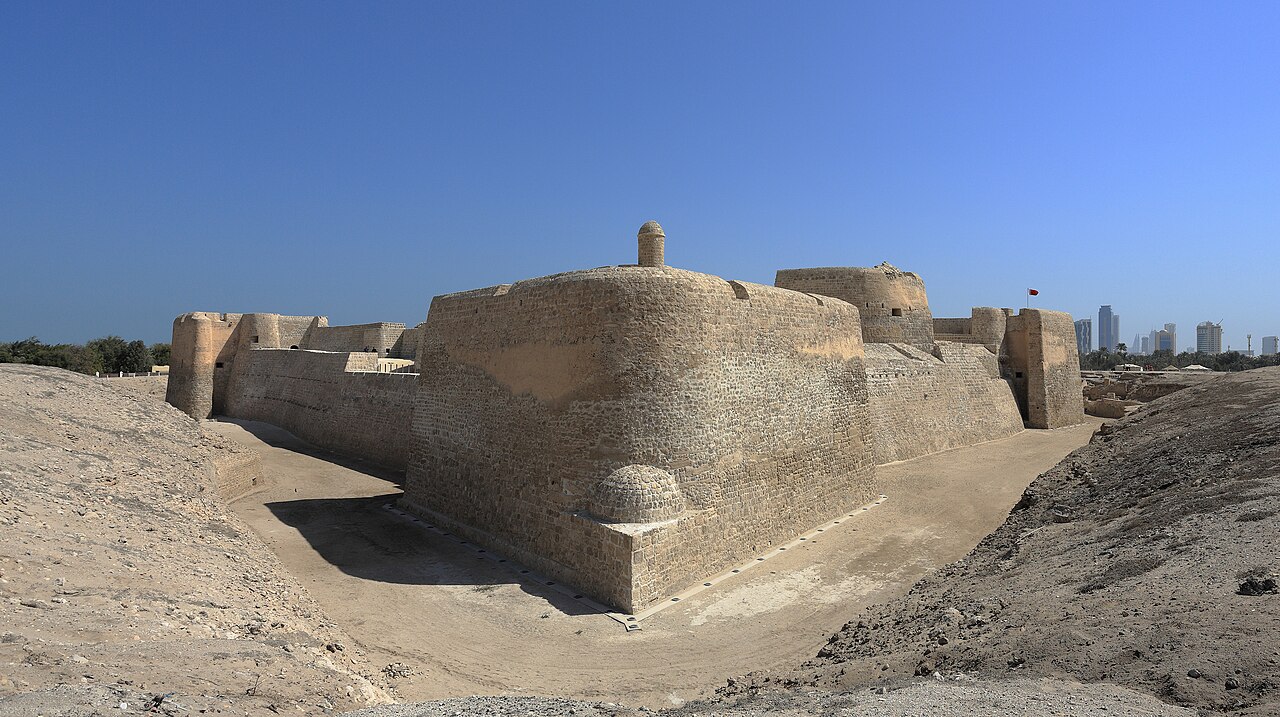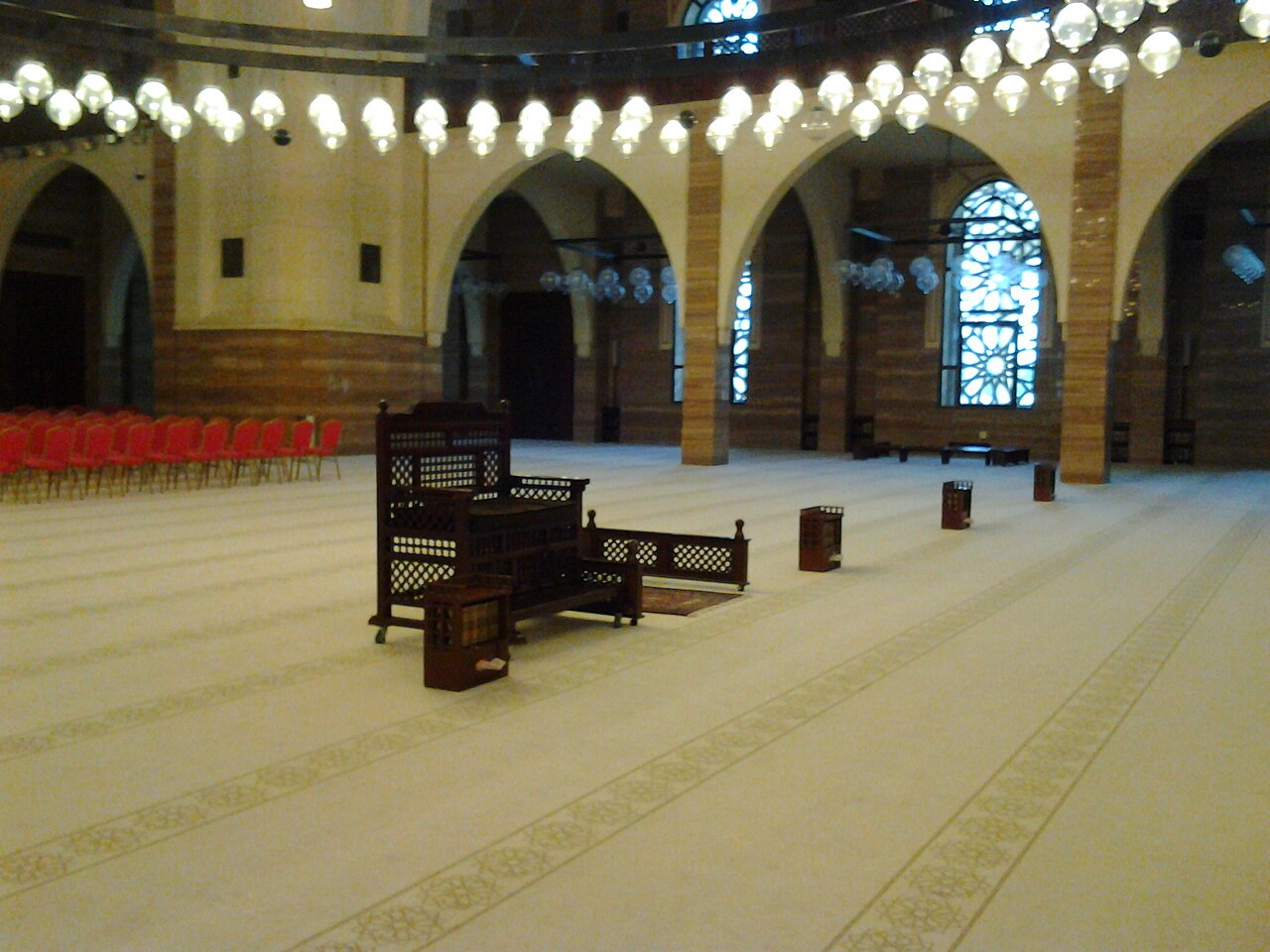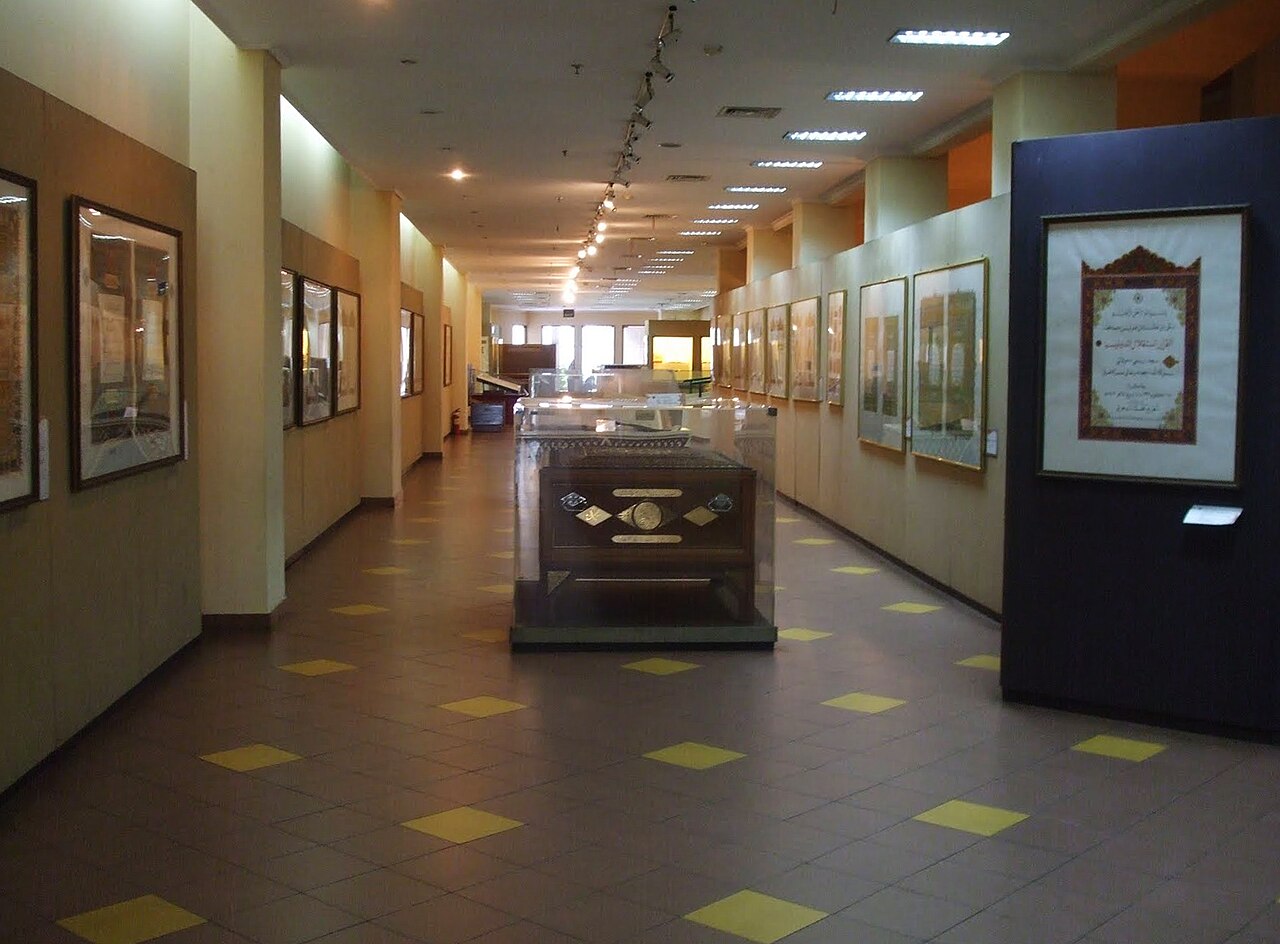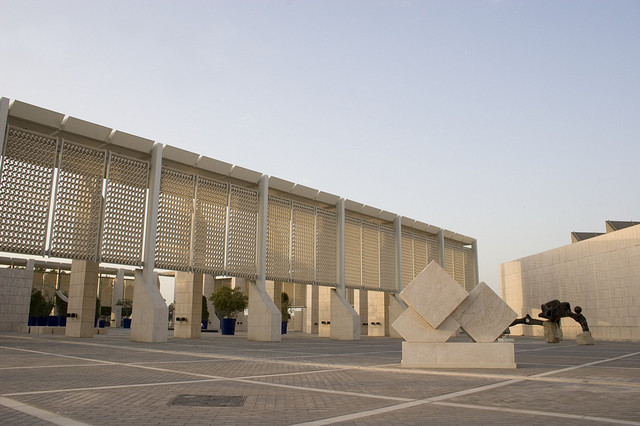
The Bahrain National Museum opened in 1988 on a man-made peninsula in Manama, facing across the water to Muharraq and next to the National Theatre. It is the island's main museum and the best place to put everything else you will see in context. Six main halls lead you through the story in order. The Hall of Graves explains Bahrain's remarkable burial mounds, with models and finds moved from their original sites; the Dilmun hall shows seals, pottery and the trade that made the island rich; the Tylos and Islam hall carries on through Hellenistic and early Islamic centuries with pottery, glassware, jewellery, gravestones and an early Umayyad coin. Other halls cover customs and traditions, traditional trades and crafts, including a recreated market lane with artisan shops, and documents and manuscripts, with rare Qurans among them. The collection is arranged to be read as a walk through time, so it works well for a first-timer who knows nothing about the island. The building is calm, airy and well air-conditioned, and the sea-facing setting adds a pleasant coda to the visit.
What stands out
The burial-mound models are the most Bahrain thing in the museum. The island is dotted with tens of thousands of ancient mounds, and the Dilmun Burial Mounds are the third of the country's UNESCO sites, so seeing a reconstructed tomb interior makes the landscape you drive through suddenly make sense. The recreated traditional market and craft street is the other favourite, with small artisan shops that evoke the traditional trades, which pairs well with the Pearling Path later in your trip.
Practicalities
Opening hours are generally morning to evening and the museum closes on Tuesdays, so avoid planning it on that day. Admission is a modest fee per adult. The museum is a short taxi ride from Bab Al Bahrain and the souq, and the car park is also the departure point for boats to the Pearling Path at Qal'at Bu Mahir, so the two pair very naturally in the same morning. A good pace is about ninety minutes to two hours for the main halls.
How it fits
Go to the museum first and the sites second. After you have seen the Dilmun seals, the burial-mound models and the sections on pearling, the fort, the mounds and Muharraq all carry more meaning. It is a comfortable choice at midday when outdoor sites are too hot, and a dependable rainy-day option. Families will find the craft street and the visual displays engaging, and history lovers can easily stretch the visit into a half day.
What to expect
The experience
A self-guided walk through six chronological halls, from burial mounds and Dilmun to Tylos, Islamic Bahrain, traditional trades and rare manuscripts.
Best time
Midday, when outdoor sites are too hot, or any morning; avoid Tuesdays, when it is closed.
How long
About ninety minutes to two hours for the main halls.
Tips
Start here before visiting the fort and Muharraq, check the closing day, and combine with the Pearling Path boat that leaves from the museum car park.
Quick picks
- Best for
- First-timers who want the whole story of Bahrain explained before they see the sites.
- Families
- The recreated craft market and the visual displays hold children's attention, and the air-conditioning is a welcome break.
- Couples
- A calm cultural morning followed by the seafront and a drive across the causeway to Muharraq.
- Pair with
- Bahrain Fort, the Pearling Path boat to Qal'at Bu Mahir and the Al Fateh Grand Mosque.
- Time needed
- Two hours for the main halls; three if you read everything.
Good questions
What is in the Bahrain National Museum?+
Six halls cover burial mounds, Dilmun, Tylos and Islam, customs and traditions, traditional crafts and documents and manuscripts. Highlights include burial-mound models, seals, jewellery and a recreated market lane.
What days is it open?+
It is open most days from morning to evening and closed on Tuesdays. Confirm the current hours with the Bahrain Authority for Culture and Antiquities before you go.
How much does it cost?+
Admission is a modest fee per adult. Prices can change, so check the venue's listing, and ask about discounts for children and residents.
Is it suitable for children?+
Yes. The traditional craft market and the visual displays suit most ages, and a young audience tends to enjoy the burial-mound reconstructions.
How do I get there?+
The museum is on the Shaikh Hamad Causeway side of Manama, a short taxi or ride-hailing trip from the souq, with parking on site.