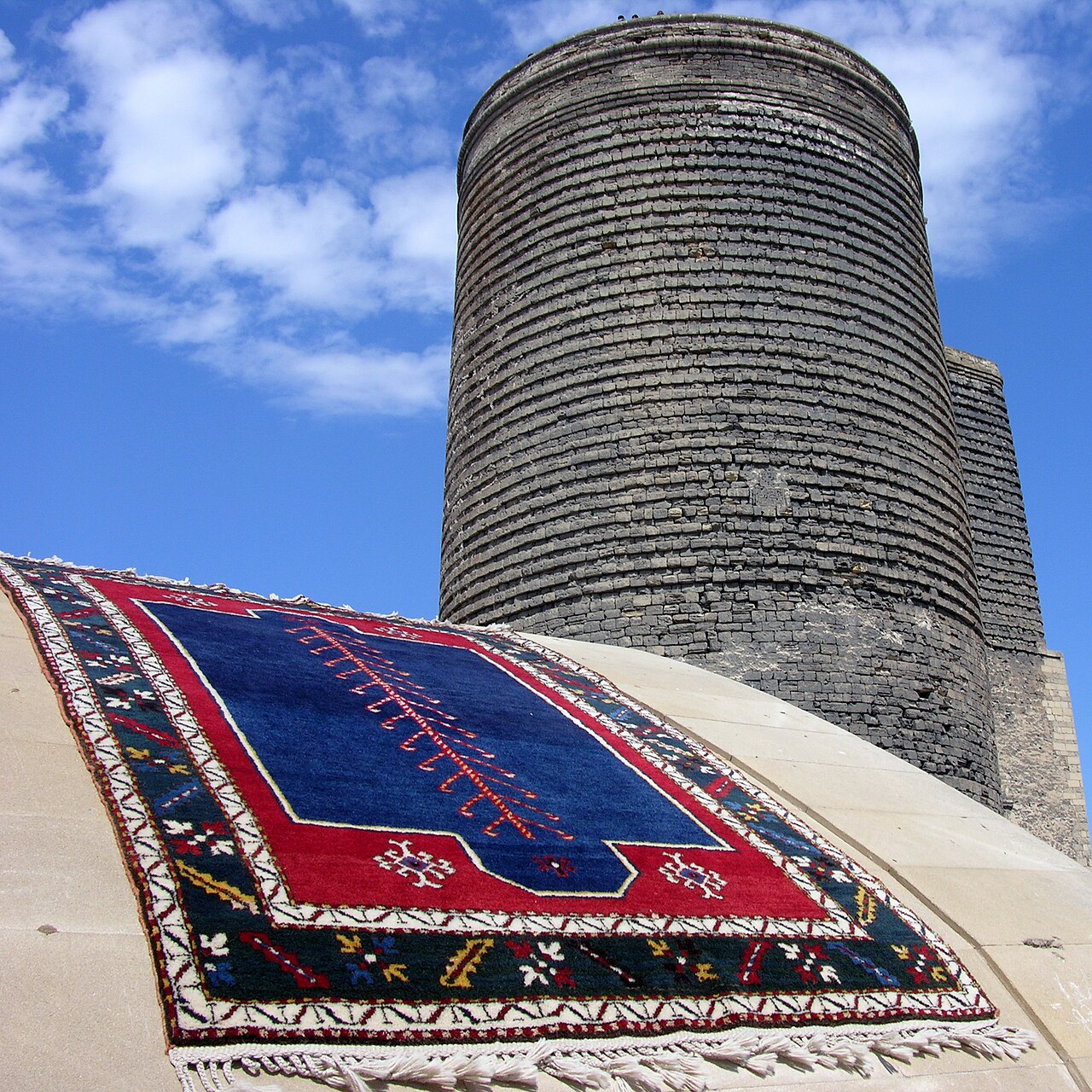
The Azerbaijan Carpet Museum is one of the easiest buildings in Baku to recognise. Its curved, rolled-up form sits on the Boulevard close to the water, and from outside it looks like a giant carpet that has been loosely rolled and set down beside the Caspian. Inside, the galleries hold a collection of woven pieces from the main weaving schools of the country, with carpets grouped by region and period rather than by price or size. Azerbaijani carpet weaving is recognised as intangible cultural heritage by UNESCO, and the museum is the best single place to understand why. You can see the differences between the pile carpets of the Quba and Shirvan areas, the bold geometric patterns of the Karabakh and Gazakh schools, and the finer, more floral work associated with Tabriz and the south. Smaller cases hold felt rugs, saddle bags, embroidery and traditional dress, and there are displays about the wool, the dyes made from plants and insects, and the tools used at the loom.
Why go with a guide
A carpet gallery can feel repetitive if nobody tells you what you are looking at. A guided visit slows you down in front of a handful of pieces and explains how to read them: the medallion at the centre, the border bands, the small motifs that stand for water, birds, the evil eye or the tree of life, and the way a village's palette was shaped by the plants that grew around it. The single-museum tour offered for this attraction is built around exactly that kind of interpretation, and it suits visitors who want more than a quick walk through.
Planning the visit
Most people need between one and two hours. The museum is a short stroll from the Boulevard promenade, so it pairs naturally with a walk along the seafront and a late lunch. Many museums in Baku close on one weekday, so check opening days with the museum or when you book. Photography rules can vary by gallery, and fragile textiles are kept in low light, so give your eyes a minute to adjust.
If you plan to buy a carpet, visit the museum first: you will know the difference between a machine-made rug and a hand-knotted piece, and you will be able to ask sensible questions about knot density, dyes and origin.
Good to know
Export rules apply to older or valuable carpets, and a reputable seller will explain the paperwork and issue a document with a purchase. For hands-on interest, some operators also run short weaving workshops in the city, which are a different experience from the museum visit. The building has lifts and ramps for much of the visitor route, though it is worth checking before you go if you use a wheelchair. The nearby Boulevard has benches, cafes and toilets, which makes this an easy stop for a mixed-age group.
More ways to enjoy it
If the weather is hot, the museum makes a cool break between the seafront and lunch, and if it rains it is one of the best indoor options in the city. Look for the labels that name the weaving region, then compare two carpets from different areas side by side; the difference in drawing, colour and pile becomes obvious within minutes.
Children can turn the visit into a game by hunting for animals and flowers in the patterns. Afterwards, the shops and workshops of the Old City are a short taxi ride away if you would like to see how a loom works.
What to expect
The experience
A guided or self-paced walk through galleries of regional carpets, felts, embroidery and costume, with explanations of patterns, dyes and weaving techniques.
Best time
Mid-morning or early afternoon, then a stroll on the Boulevard afterwards. It is a good wet-weather or hot-afternoon choice.
How long
One to two hours, depending on how much you want to read and whether you join a guided visit.
Tips
Check the weekly closing day, keep your voice low in the dim galleries and ask about export paperwork before buying a carpet anywhere in the city.
Quick picks
- Best for
- Anyone curious about Azerbaijani craft, and a rainy-day or midday-heat refuge on the seafront.
- Families
- The building is fun for children, and the colourful patterns hold attention for a short visit. Keep it to an hour with younger ones.
- Couples
- Pair it with a sunset walk along the Boulevard and dinner nearby.
- Pair with
- The Baku Boulevard, a boat or waterfront stroll and Highland Park by funicular.
- Time needed
- Allow one to two hours.
Good questions
Why is the building shaped like a carpet?+
The architect designed the museum as a rolled-up carpet so that the building itself announces what is inside. The curved form is one of the most photographed shapes on the Baku seafront.
Do I need a guide?+
It is not required, but a guide makes a big difference. Patterns, regional styles and symbols are hard to decode on your own, and a guided visit gives the collection a story.
Can I buy a carpet at the museum?+
The museum is a collection, not a shop. Dealers in the Old City and elsewhere sell carpets, so visit the museum first to learn what to look for.
Is it open every day?+
Most museums in Baku close one day a week, so confirm the current schedule with the museum or when you book. Opening hours can also change by season.
Is it suitable for children?+
Yes for a short visit. The colours and animal motifs appeal to many children, though the quiet galleries and the many glass cases suit older children best.