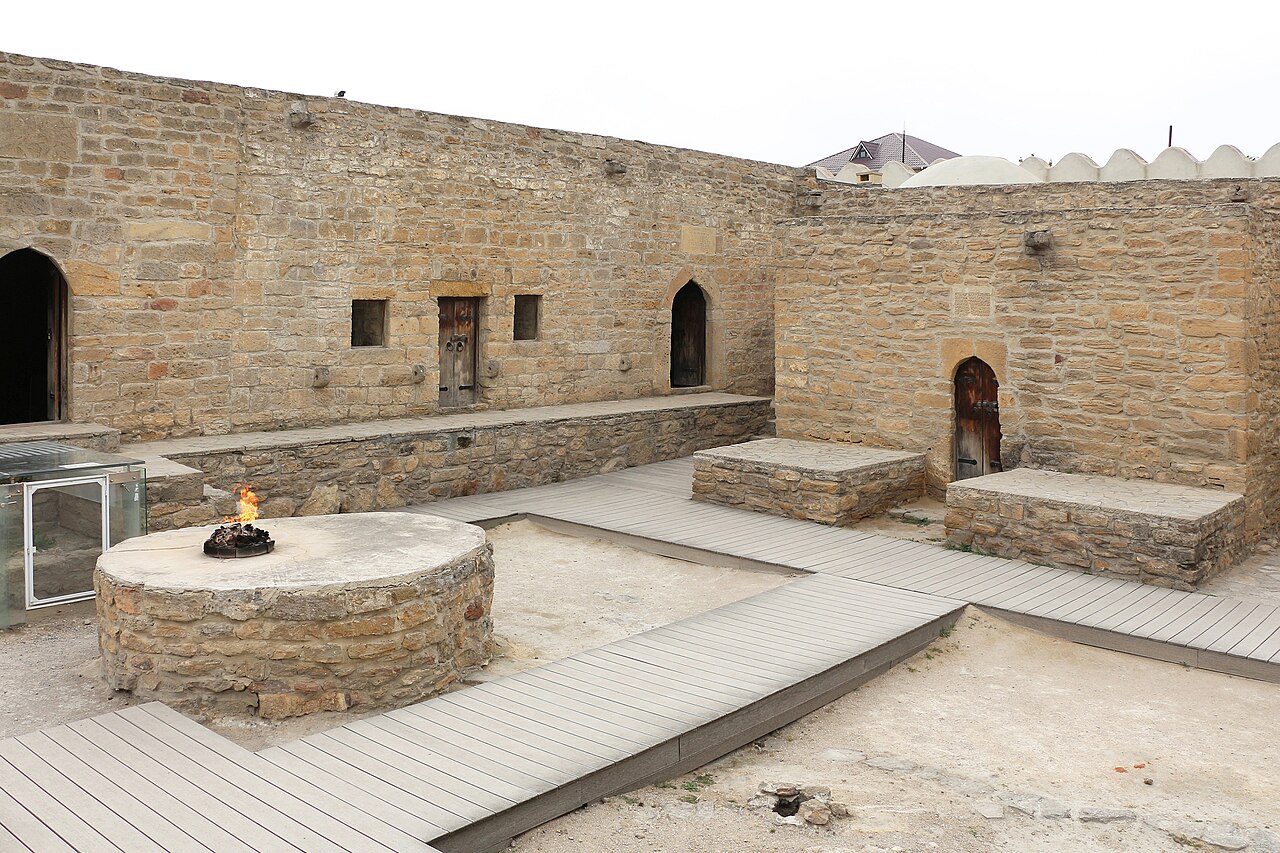
Yanar Dag, the burning mountain, is a stretch of hillside on the Absheron Peninsula, near Mammadli village, where natural gas escapes through the porous rock and burns continuously. The flames sometimes reach around ten metres, and they have been burning for as long as anyone remembers; Marco Polo described the flames of this region in his thirteenth-century memoirs. A small modern museum complex on site covers the history of the area, and the reserve around it includes a cave known as the Wolf's Den, medicinal sulphur springs, the Kirmaki mud volcano, a sacred site called Alidashi Pir and ancient burial mounds. The fire is most dramatic at dusk and in cool weather, when the flame stands out against the dark hillside and you can feel the heat from the benches. It is a simple but memorable stop: you walk along a platform by the burning wall, take photos and drink tea from a nearby stand. Together with the Ateshgah, it explains why Baku has been associated with fire for centuries.
When to see it: the flame is on all day, but its drama grows as the light fades, so aim for late afternoon or early evening and expect it to feel more like a campfire than a bonfire. In cold or damp weather the contrast with the cool air is stronger. It is quite small, so most visitors stay 20 to 30 minutes and then continue to the museum or the Ateshgah.
Getting there: Yanar Dag lies on the Absheron Peninsula, north of central Baku, and is difficult to reach without a car, so most visitors go on a half-day Absheron tour, which links it with the Ateshgah, or on a full-day tour with Gobustan. Combined tickets for the two sites have been sold, but prices and arrangements vary by source and season, so treat any fee you read as a guide and check with your operator.
Good to know: dress for wind and chill in the evening, because the hillside is exposed. Keep a safe distance from the flame and follow the barriers. The site has a cafe and facilities, and the paths are short and easy. If you are travelling in winter, the site is quieter, and the flame against the dark sky is arguably at its best.
What to expect
The experience
A short stop at the burning hillside on a guided Absheron tour, with a platform to walk along and a small museum complex on site.
Best time
Dusk or cool evenings, when the flame stands out against the dark.
How long
About 30 minutes on site, or three to four hours as part of the Absheron tour.
Tips
Wear a warm layer, stay behind the barriers and ask your operator to time the stop for dusk.
Quick picks
- Best for
- Anyone who wants to see why Azerbaijan is called the Land of Fire.
- Families
- A quick, safe stop with a wow factor, though children must stay behind the barriers.
- Couples
- Dusk by the flame wall makes for a memorable and cosy photo stop.
- Pair with
- The Ateshgah fire temple, plus Gobustan for a full-day tour.
- Time needed
- Half an hour on site, a half day with the Ateshgah.
Good questions
Is Yanar Dag always burning?+
Yes, the natural gas seeps through the rock and the flames burn continuously. They look strongest at dusk or in cold weather.
How tall are the flames?+
They sometimes reach about ten metres, though most of the time the wall of flame is lower. Visitors watch from a platform at a safe distance.
What else is on site?+
A small museum complex covers the history of the area, and the reserve around it includes a cave, sulphur springs and a mud volcano. Most visitors only stay for the flames and a tea.
How do I get there from Baku?+
It is a drive of some distance north of the city centre, and a taxi, tour or driver is the easiest way. Most travellers join a half-day Absheron tour with the Ateshgah.
Is it worth visiting in winter?+
Yes, the flame is vivid on a cold evening and the site is quieter. Bring warm clothes because the hillside is exposed to the wind.