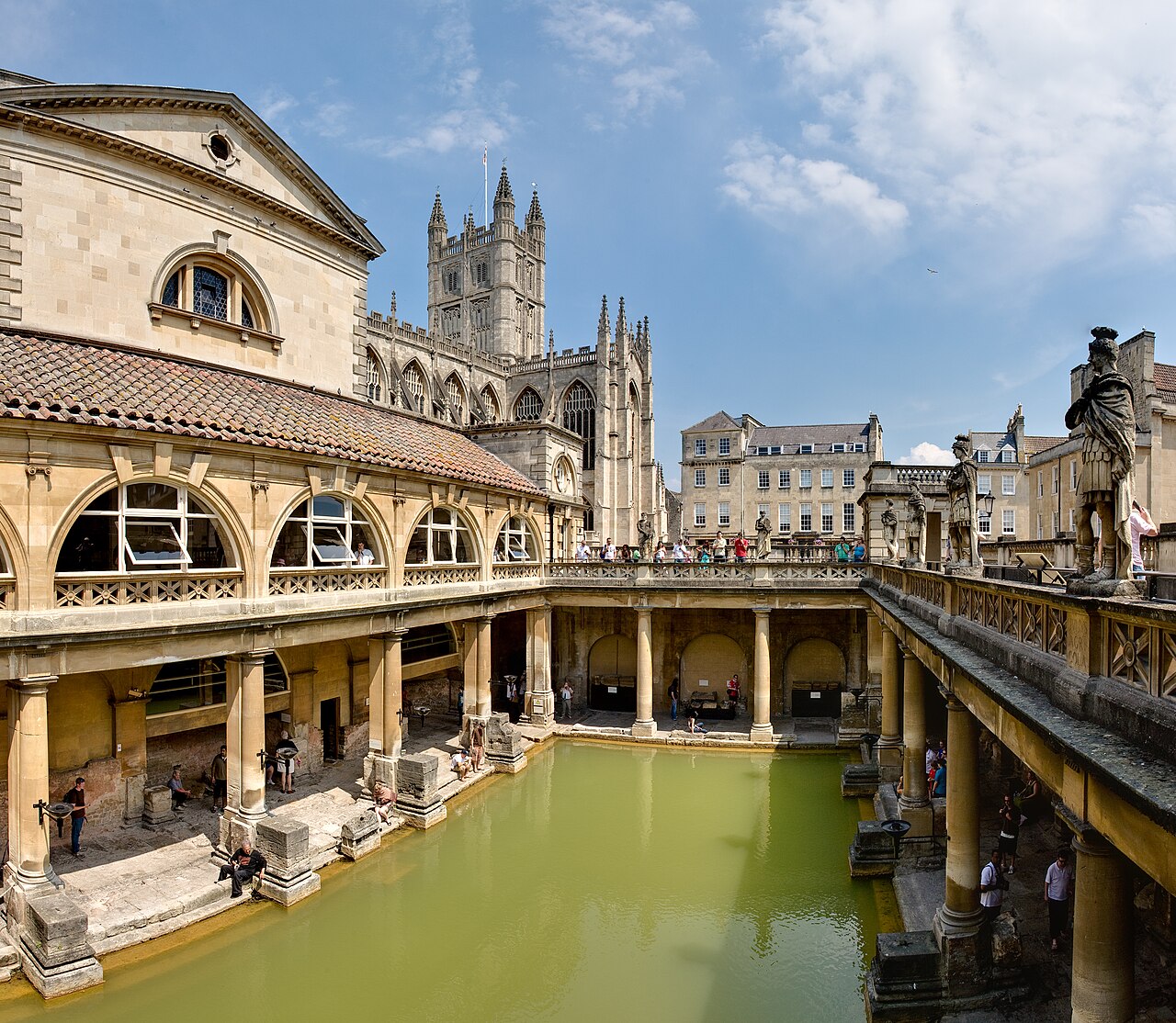
The Roman Baths are the heart of Bath and the single sight most visitors build a trip around. The Romans founded the town of Aquae Sulis here in the first century, drawn by hot water rising from the ground, and over the following centuries they raised a temple to the goddess Sulis Minerva and a grand bathing complex around the spring. Today you walk down from the Georgian streets into the excavated Roman level, passing the open-air Great Bath with its green water and Victorian terrace, the Sacred Spring where the hot water still bubbles up, the remains of the temple courtyard and the heated rooms beneath, and a museum that displays carved stonework, curse tablets and coins thrown in as offerings. An audio guide is part of the standard visit and tells the story well. For a first trip the most useful way to book is a guided combination: the Blue Badge walking tour with Roman Baths entry on Viator pairs a short orientation walk through Georgian Bath with skip-the-line admission, so you arrive at the Baths already knowing what you are looking at.
What you are actually seeing is a layered site. The Georgian town was built on top of the Roman one, and the Victorians then excavated and rebuilt parts of it, so the Great Bath you photograph is a mixture of original Roman floor and lead lining with Victorian stonework above. The spring itself is real and remarkable: hot mineral water rises here every day and has done for thousands of years, and the Romans channelled it into the baths, treated it as sacred and left offerings to it. The museum is where the detail lives, from the gilded bronze head of Sulis Minerva to the curse tablets scratched on lead by people who wanted a thief punished, and these small human objects are what make the place memorable rather than just old.
Visiting well: book a timed ticket ahead, because the Baths are among the busiest sights in England and tickets are priced and dated online. Early in the day is calmer than the middle, and weekday mornings are the easiest. Allow about ninety minutes inside, more if you listen to everything on the audio guide. Many visitors finish at the Pump Room, the Georgian tea room attached to the complex, where you can taste the spa water if you are curious; it is warm and mineral-flavoured, and opinions are divided. Bathing in the Roman Baths is not possible, so for a real soak plan a separate session at Thermae Bath Spa a few minutes away.
Is the guided option worth it? If you like context, yes. The Viator entry-and-walking-tour product is led by a Blue Badge guide, includes the entry ticket and audio guide at the Baths and starts from the Abbey Churchyard, right beside the entrance, so it fits neatly into a first morning in the city. If you prefer to go at your own pace, buy standard admission from the official site and read up beforehand. Either way, pair the visit with Bath Abbey next door and keep an hour spare to wander the streets around Stall Street.
What to expect
The experience
A self-paced walk through the Roman temple and bath complex with an audio guide, finishing in the museum galleries and optionally at the Pump Room for tea.
Best time
A weekday morning soon after opening is the calmest; late afternoon can also be quieter outside school holidays.
How long
About ninety minutes to two hours, or roughly two and a half hours with a walking tour first.
Tips
Book a dated ticket online, use the audio guide, and keep tickets on your phone. You cannot bathe here, so book Thermae Bath Spa separately if you want a soak.
Quick picks
- Best for
- First-time visitors, history lovers and anyone who wants the story of why Bath exists.
- Families
- Children enjoy the steaming water and the coins and curse tablets; a family audio option and the hands-on displays help keep them engaged.
- Couples
- Go early, finish with tea in the Pump Room, then walk to Pulteney Bridge for the river view.
- Pair with
- Bath Abbey next door, Thermae Bath Spa for a real soak, and a Georgian walking tour.
- Time needed
- Half a morning, plus the walking tour if you book the combination.
Good questions
Can you swim or bathe in the Roman Baths?+
No. The Great Bath is for viewing only, and the water is not open for bathing. For a hot soak, book a session at Thermae Bath Spa, which uses the same natural spring water.
Do I need to book Roman Baths tickets in advance?+
It is strongly advised. Tickets are dated and busy times sell out, and booking ahead usually costs a little less than paying on the day.
How long does a visit take?+
Most people spend between ninety minutes and two hours, including the museum. Add time if you stop at the Pump Room.
Is the guided tour worth booking?+
If you want context, yes. The Blue Badge combination on Viator includes entry and an audio guide at the Baths, and starts beside the entrance.
Is it accessible?+
Parts of the site are step-free but others involve ramps, steps and uneven historic floors. Check the official accessibility notes and call ahead for specific needs.