Fantoft Stave Church is the most atmospheric short trip from central Bergen for anyone who wants to see a Norwegian stave church without travelling to the fjords. It stands in a pine forest on a hillside south of the city, a stack of dark, tarred timber with steep shingled roofs, carved dragon heads on the gables and a quiet, slightly eerie setting. The original church was built around 1150 in Fortun, in the Sogn region, and was moved to Bergen in 1883 to save it from demolition. In June 1992 it was destroyed by arson, and it was carefully rebuilt as a replica that reopened in 1997. That history is part of the interest, because it shows how much effort Norwegians put into the survival of their stave churches, and how the craft of building them is still alive. The small interior can be seen in the summer season, and the grounds, the carvings and the setting are enjoyable in themselves.
Be realistic about the season. Fantoft is a summer sight, and the church interior is normally open to visitors from about mid-May to mid-September, with limited or no opening outside that window. Check the current dates before you travel, and if you go in the colder months, treat it as a forest walk to see the outside of the church rather than a guaranteed visit. The surroundings are pretty in spring and autumn, and the church is photogenic in mist, but you should not plan a trip around entering it out of season.
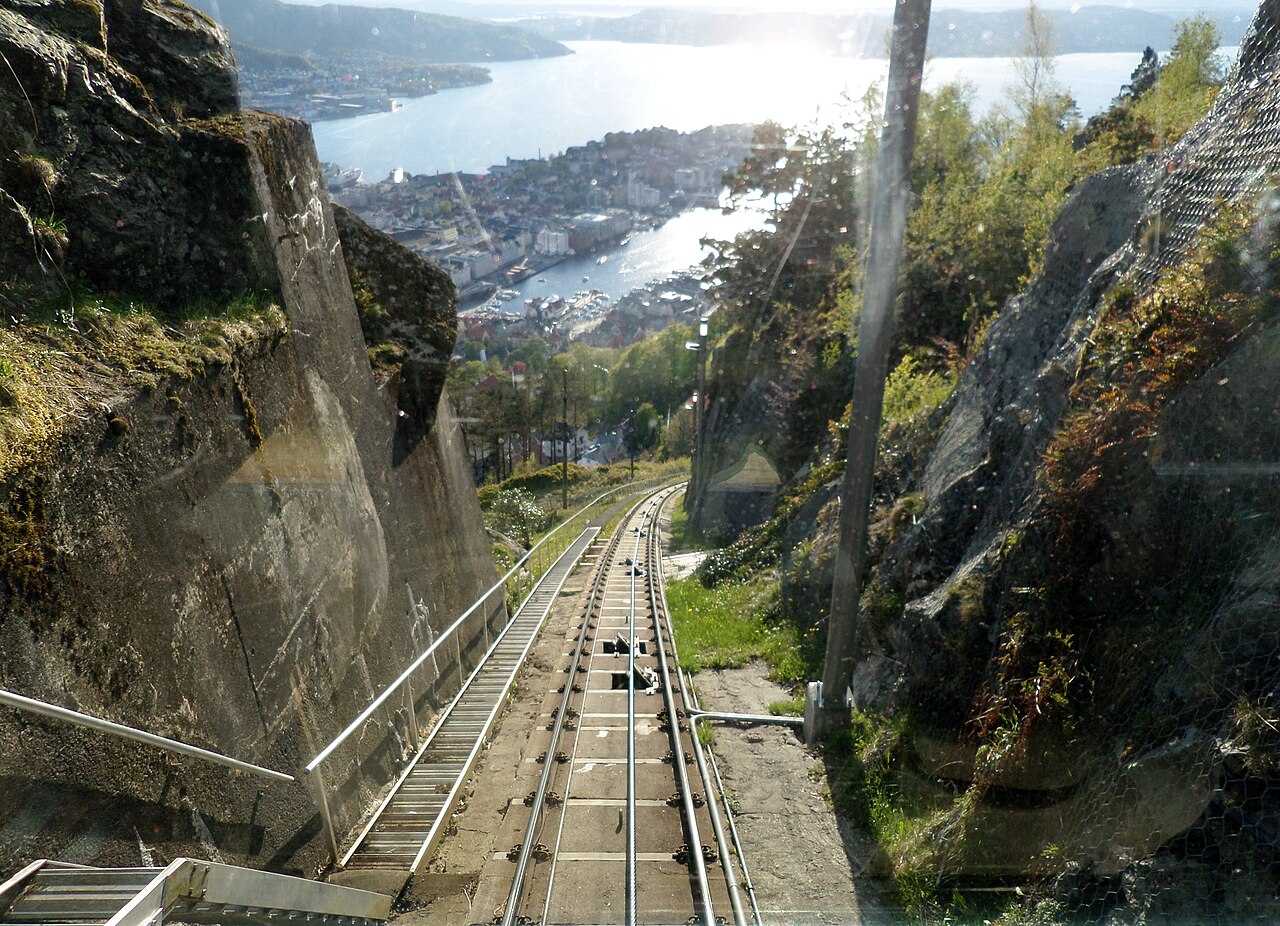
The small-group tour linked here combines Fantoft with Mount Fløyen, so it makes a half-day of heritage and views in one go, with transport arranged by the operator. Check the inclusions, the pickup point and the duration when you book, and ask whether the funicular ticket is included. If you would rather go on your own, the Bybanen light rail runs south from the centre towards the airport and has a stop at Fantoft, from which the church is a short uphill walk through the trees.
The walk is easy but can be damp underfoot, and shoes with grip are a good idea.
What should you expect inside? The interior is small and dark, and the main pleasure is in the details: the timber structure, the carved portals, the dragon-head gables and the tarred wood that gives stave churches their distinctive look and smell. Stave churches are among Norway's most important contributions to medieval architecture, and only a small number of the original ones survive, mostly in the fjord country.
Fantoft is a replica, so it is not an original medieval building, but it gives an excellent idea of the style, and it is far easier to visit than churches in remote valleys.
An hour is enough, and it fits neatly into a morning with the funicular or an afternoon after the Fish Market. Photographers should bring a wide lens for the roofline and a zoom for the carved heads, and visitors who like to read about what they see will find that the church sets up a good conversation about Norwegian craft traditions. Combined with Fløyen, it makes one of the best short heritage-and-views days in the city, and it is easy to fit in even if you only have an afternoon free.
What to expect
The experience
A short visit to a rebuilt stave church in a forest, on a small-group tour that also takes in Mount Fløyen, or on your own by light rail and a short walk.
Best time
The summer season, when the church interior is normally open; a misty autumn morning for atmosphere from outside.
How long
About an hour at the church; two to four hours with Fløyen on the tour.
Tips
The interior opens in the summer season only, so check dates. Wear shoes with grip for the damp path through the trees.
Quick picks
- Best for
- Heritage fans who want a stave church close to the city.
- Families
- Children enjoy the dragon heads and the forest path, but the interior is small and dark.
- Couples
- A quiet, atmospheric stop before a view from Fløyen.
- Pair with
- Fløibanen and Mount Fløyen, or the KODE art museums on a wet day.
- Time needed
- An hour at the church, or half a day with a tour.
Good questions
Is Fantoft Stave Church original?+
No. The original was built around 1150 in Fortun and moved to Bergen in 1883. It was destroyed by arson in 1992 and rebuilt as a replica that reopened in 1997.
When is it open?+
The interior is normally open in the summer season, roughly mid-May to mid-September. Check the current dates before you go.
How do I get there?+
Take the Bybanen light rail south from the centre to the Fantoft stop, then walk a short way up through the forest. A small-group tour is the easy alternative.
How long should I allow?+
An hour at the church itself, or two to four hours on a tour that also visits Mount Fløyen.
Is it worth a visit if it is closed?+
The setting and the exterior are still worth a short walk, but do not plan a trip around seeing the interior outside the summer season.