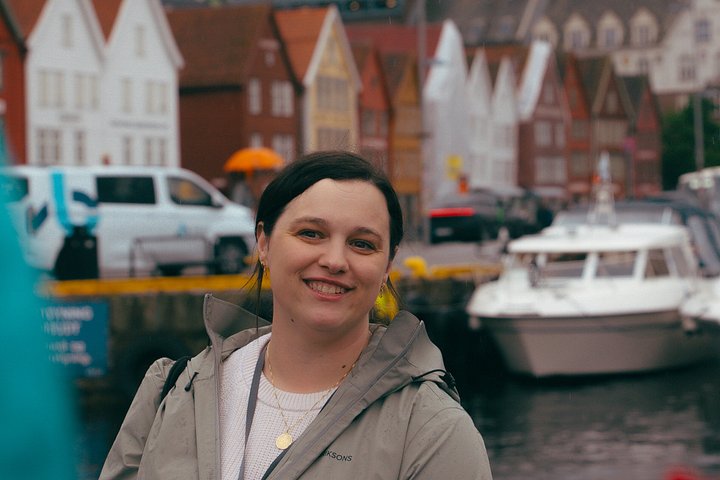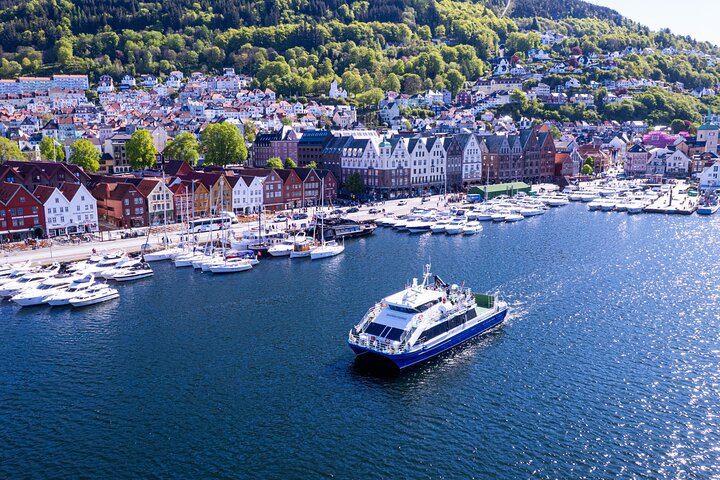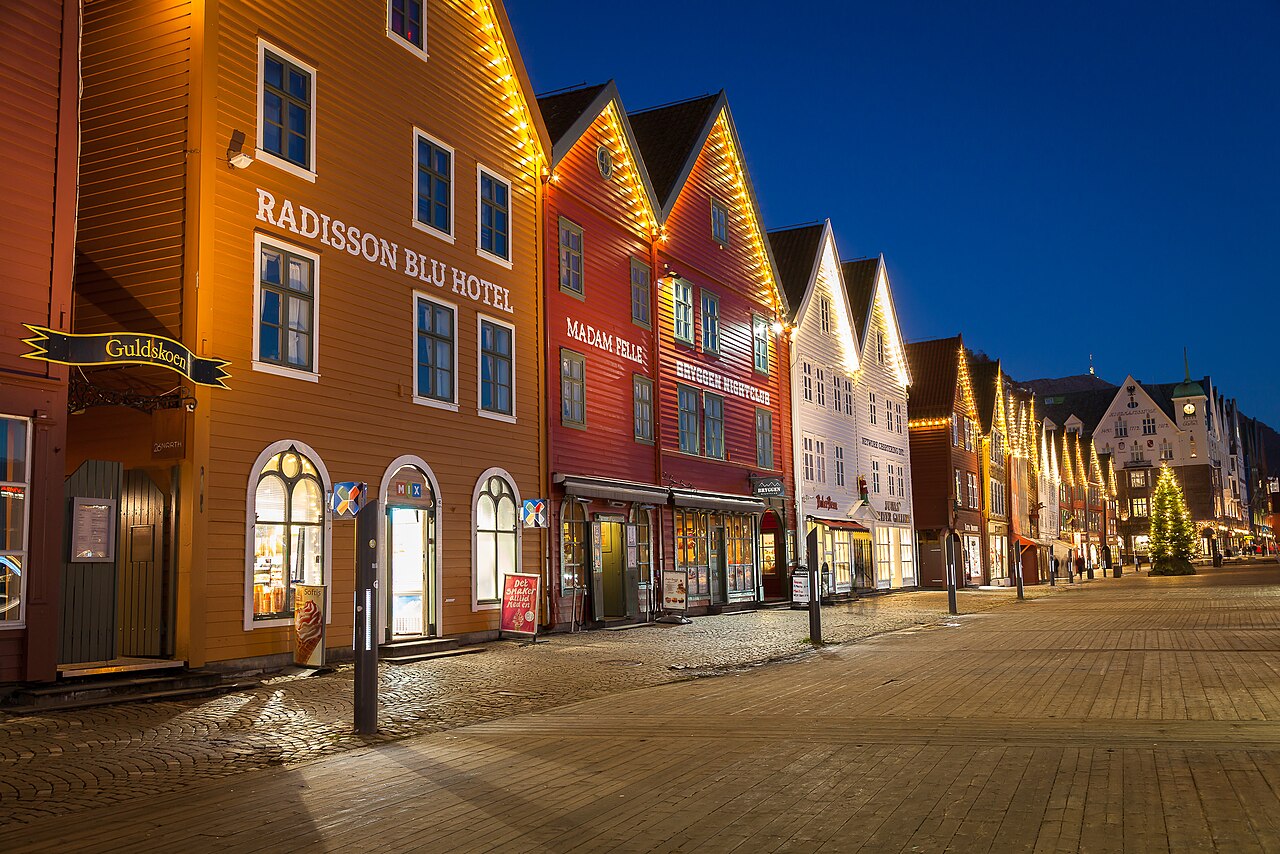
The Hanseatic Museum and Schøtstuene is the place to understand what Bryggen was actually for. Northern German merchants began to arrive in Bergen in the thirteenth century, trading grain from the continent for stockfish, the dried cod that came down from northern Norway, and for roughly four hundred years the wharf was the hub of that trade. The museum stands at Øvregaten 50, a short walk behind the waterfront, in timber buildings that belong to the Bryggen World Heritage Site, inscribed in 1979. What sets it apart is that it is a set of rooms you walk through rather than a gallery of objects behind glass. The Schøtstuene are the old assembly rooms where the merchants met, ate and talked business, and they are described as the last Hanseatic assembly rooms in the world. They were the heated rooms in a quarter where open fires were forbidden because of the constant danger of fire, which tells you a great deal about how people lived and worked here. Alongside them are exhibitions on the trading network, daily life on the wharf and the apprentices who lived under strict rules, with sound installations and smell boxes that bring the stockfish trade back into your nose. Under a glass floor you can see the remains of a medieval ruin from around 1280, a reminder of how much of old Bergen lies beneath today's street level.
Most people visit the museum after walking the front of Bryggen, because it turns the picturesque facades into something with a purpose. Inside, the sloping floors, low ceilings and dark timber show how cramped and cold the merchants' working lives were, and the painted decoration in the assembly rooms shows what they did to make the place feel like home. Guided tours cover the trading network, daily life at Bryggen and the history of the buildings, and in the colder months they usually run at set times, often at weekends, so check the schedule if you want a guide.
The museum is described as having universal design, which is welcome news on a wharf where most other buildings are difficult for wheelchairs and pushchairs. A Bergen Card gives a reduced entrance, and children and young people generally pay less, so check the ticket page for the current terms.
One of the exhibitions covers the restoration of Finnegården 1a, the museum's largest object, and it is worth a few minutes because it explains why conserving a timber heritage site is a never-ending job. Fires swept through Bryggen repeatedly, most seriously in 1702 and 1955, and the rebuilt wharf follows its medieval plan, so what you see is a careful reconstruction on historic foundations rather than a single unbroken medieval survivor. The museum garden and the neighbouring St Mary's Church, the oldest surviving building in Bergen, make a pleasant addition if the weather allows, and the museum shop on Bryggen is a convenient stop for books and gifts.
Opening is usually daily from 10:00 to 16:00, but in some winter periods the museum opens at weekends only, so look at the ticket page before you plan. Allow about an hour for a self-guided visit and a little longer with a guide. It pairs naturally with the Bryggen wharf walk, the Fish Market and a guided old town walk, and it is an excellent wet-weather choice because nearly all of it is indoors.
If you only have time for one museum in Bergen and you are interested in how the city became rich, this is the one to choose.
What to expect
The experience
A self-guided walk through preserved merchant rooms and the Schøtstuene assembly rooms, with exhibitions, sound installations and smell boxes, and guided tours at set times.
Best time
Early in the day, or on a wet afternoon when the wharf outside is at its least inviting.
How long
About an hour on your own; a little longer with a guided tour.
Tips
Opening can be weekends only in some winter periods, so check the ticket page. Tours run at set times. The museum has universal design, unlike most of Bryggen.
Quick picks
- Best for
- Anyone curious about why Bergen existed and how the Hanseatic merchants lived.
- Families
- Older children enjoy the smell boxes and the cramped rooms; younger ones may tire of reading, so keep the visit short.
- Couples
- A quiet hour before dinner, followed by a walk along the lit-up front of Bryggen.
- Pair with
- The Bryggen wharf walk, St Mary's Church, the Fish Market and a guided old town walk.
- Time needed
- About an hour, or ninety minutes with a guide.
Good questions
What is the Schøtstuene?+
The Schøtstuene are the old assembly rooms of the Hanseatic merchants, where they met for meals and meetings. They were the heated rooms in a district where fires were otherwise banned, and they are described as the last Hanseatic assembly rooms in the world.
Is the Hanseatic Museum accessible?+
The museum is described as having universal design, which makes it much easier to visit than most of the buildings along Bryggen. Check with the museum if you have specific access needs.
Is the museum open in winter?+
It is usually open daily from 10:00 to 16:00, but in some winter periods it opens at weekends only. Check the ticket page for the dates that matter to you.
Are there guided tours?+
Yes. Guided tours cover the Hanseatic trading network, daily life at Bryggen and the history of the buildings. In the colder months they usually run at set times, often at weekends.
Where is it?+
At Øvregaten 50, a short walk behind Bryggen and beside St Mary's Church, the oldest building in Bergen. It is easy to reach on foot from the Fish Market.