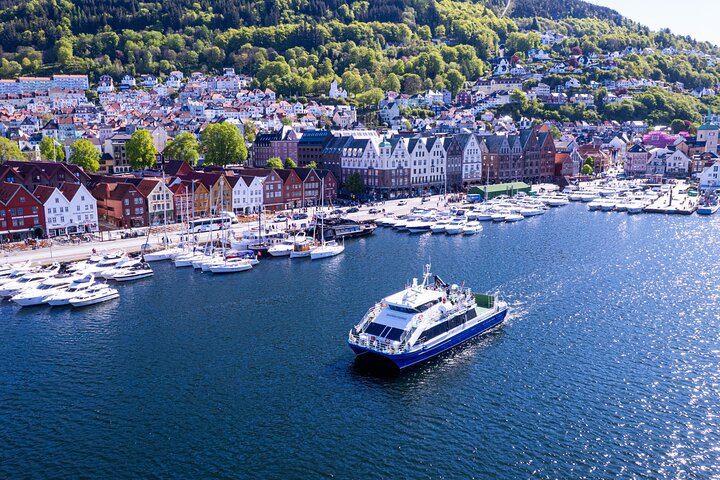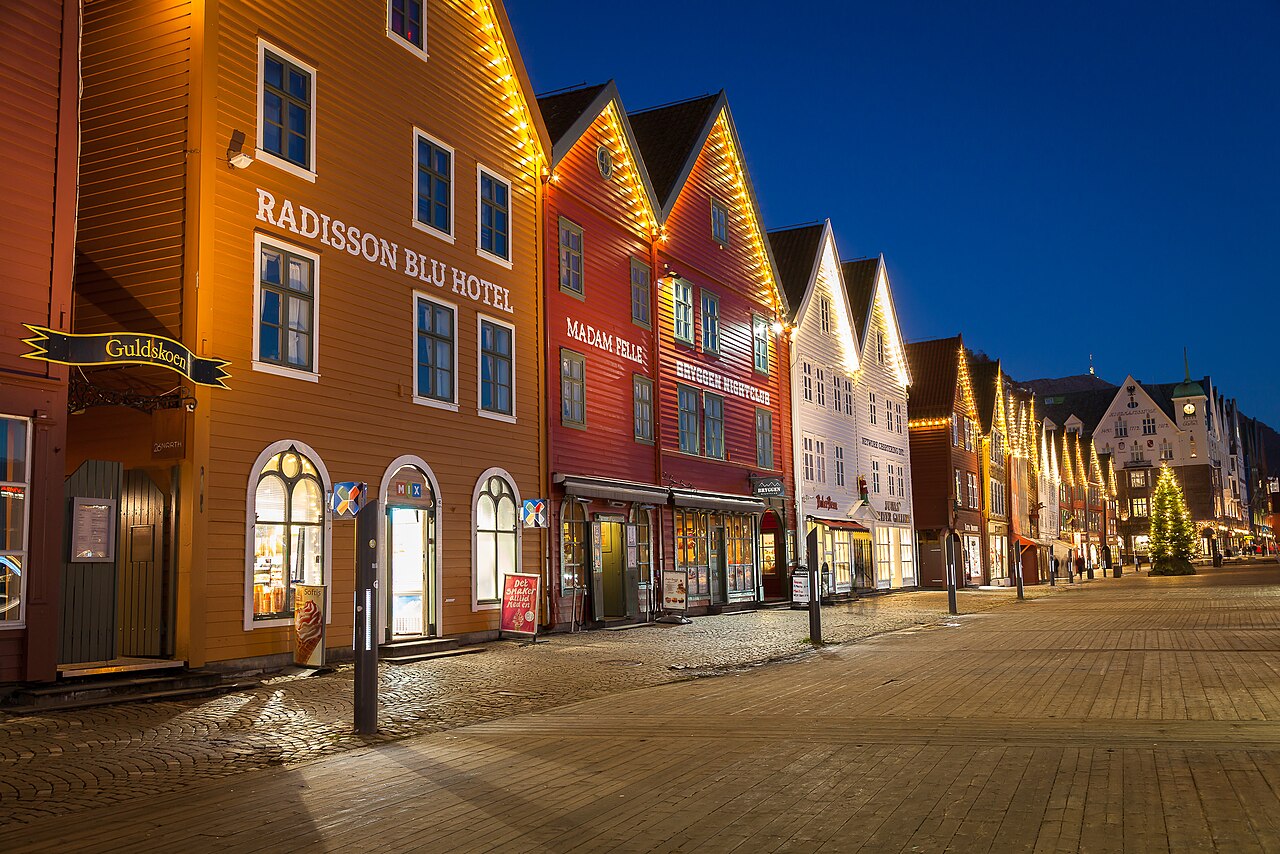
Bergen is small, wet, beautiful and easy. The historic centre sits around a single harbour, the Vågen, with Bryggen on one side, the Fish Market at the head and seven mountains behind. Almost everything worth seeing is within a twenty-minute walk, which means a first visit is less about logistics and more about choosing the right weather for the right sight. This guide covers what to book, how to get around, how long to stay and how to make the most of a November trip.
How many days
Two full days is the minimum, three is comfortable. Day one is the compact centre: the Fish Market, Bryggen and the Hanseatic Museum, and a guided old town walk if you like context. Day two is a fjord, either the half-day Mostraumen cruise from the Fish Market or the full-day Nærøyfjord and Flåm tour. A third day adds the mountains, an art museum, the aquarium or simply slack time for a rainy afternoon, because Bergen is one of the wettest cities in Europe and flexibility is your friend.
What to book ahead
Very little in Bergen needs booking weeks in advance, but a few things deserve a reservation. Fjord tours, especially the full-day Nærøyfjord trip, are best booked a few days ahead in any season, and earlier in holiday weeks. If you want dinner at the Ulriken summit restaurant, Skyskraperen, it takes reservations only. Tickets for the Fløibanen funicular can be bought in the app to skip the queue, and the aquarium and museums are fine to buy on the day, although online tickets make weekends easier.
Getting around
The centre is walkable, and you will do most of your sightseeing on foot, so bring shoes with grip because the cobbles are wet more often than not. The Bybanen light rail runs from the centre out to the airport, and Bergen's buses cover the rest, including the route to the Ulriken cable car and the Nordnes peninsula where the aquarium sits. Taxis are expensive, so use them sparingly. Fjord tours leave from the harbour and the station area, so check each departure point before you go, and allow time to arrive.
Where the headline sights fit
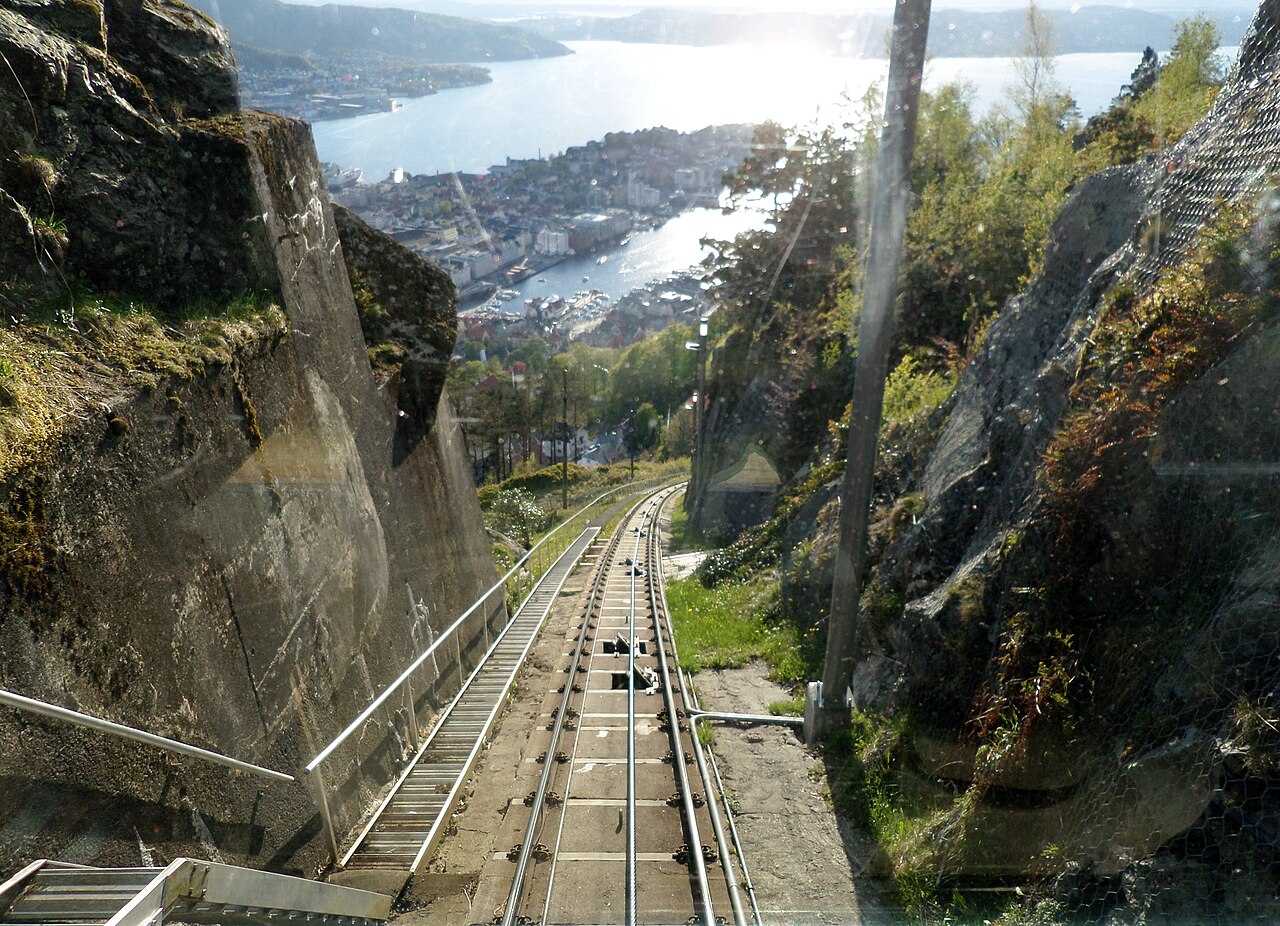
Bryggen is the city's postcard and is free to walk, and the Hanseatic Museum, open daily in the November to December season, explains it. The Fish Market is the place to eat, though in winter the outdoor stalls are closed and the indoor Mathallen carries the day. The Fløibanen funicular lifts you to Mount Fløyen for the view, a troll forest and a playground, and runs until midnight. The Ulriken643 cable car goes higher but is closed on Mondays in winter and shuts for the whole of January 2027. The KODE art museums are open on winter hours, with Lysverket reopening on 21 November. The Bergen Aquarium is open daily from 10:00 to 18:00.
Fjords in November
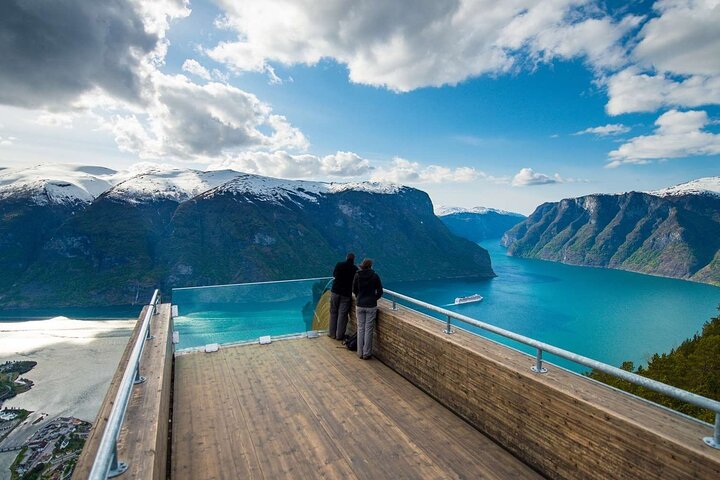
Seasons matter. The Mostraumen cruise runs on a winter schedule through 31 December 2026, and the operator warns that the inner fjord can freeze and the route can change. The guided Nærøyfjord, Flåm and Stegastein tour runs through April 2027 with an early start. Hardangerfjord day tours are mostly summer products, with a Hardangerfjord Express boat to Rosendal listed from October to December on Visit Bergen. Fantoft Stave Church and the Troldhaugen villa are closed for the winter, so do not plan around them in November, and the Troll Museum's listed season ends on 30 November.
Daylight and weather
In early November you get a little over eight hours of daylight, and by Christmas it falls below six. Plan outdoor sights for late morning and early afternoon, and keep museums and the aquarium for the dark hours. Pack a waterproof jacket, a warm layer, a hat and gloves, and do not rely on an umbrella, since the harbour is windy. A grey day is not a failure in Bergen, because mist on the fjord and rain on the wooden houses is the classic look.
A simple plan
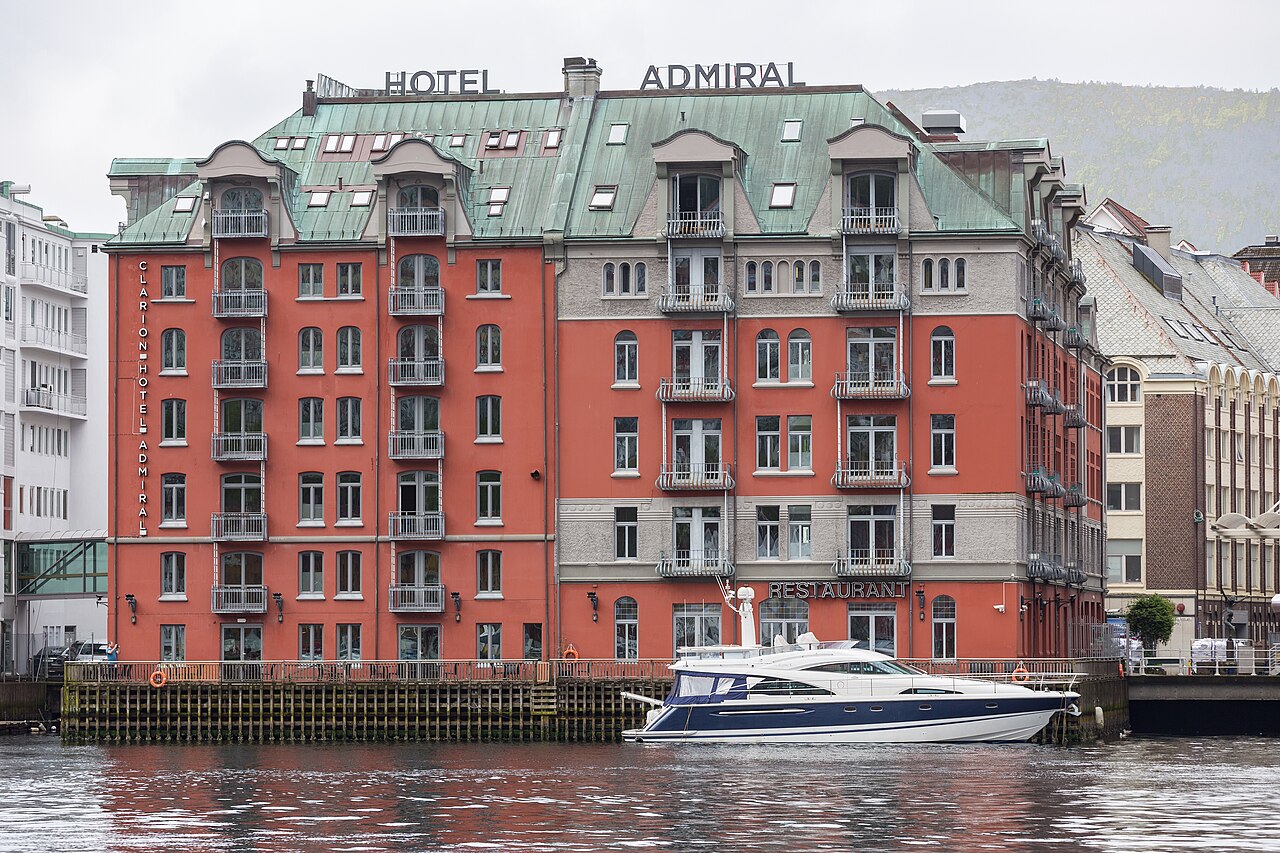
Morning of day one: Fish Market, then Bryggen and the Hanseatic Museum. Afternoon: ride the Fløibanen for the view, and walk back down if the path is dry. Day two: a fjord. Day three: Ulriken on a clear day, or the art museums and aquarium if it rains. For where to base yourself, see our guide to where to stay, which covers the harbour front, the old wharf and the station area.