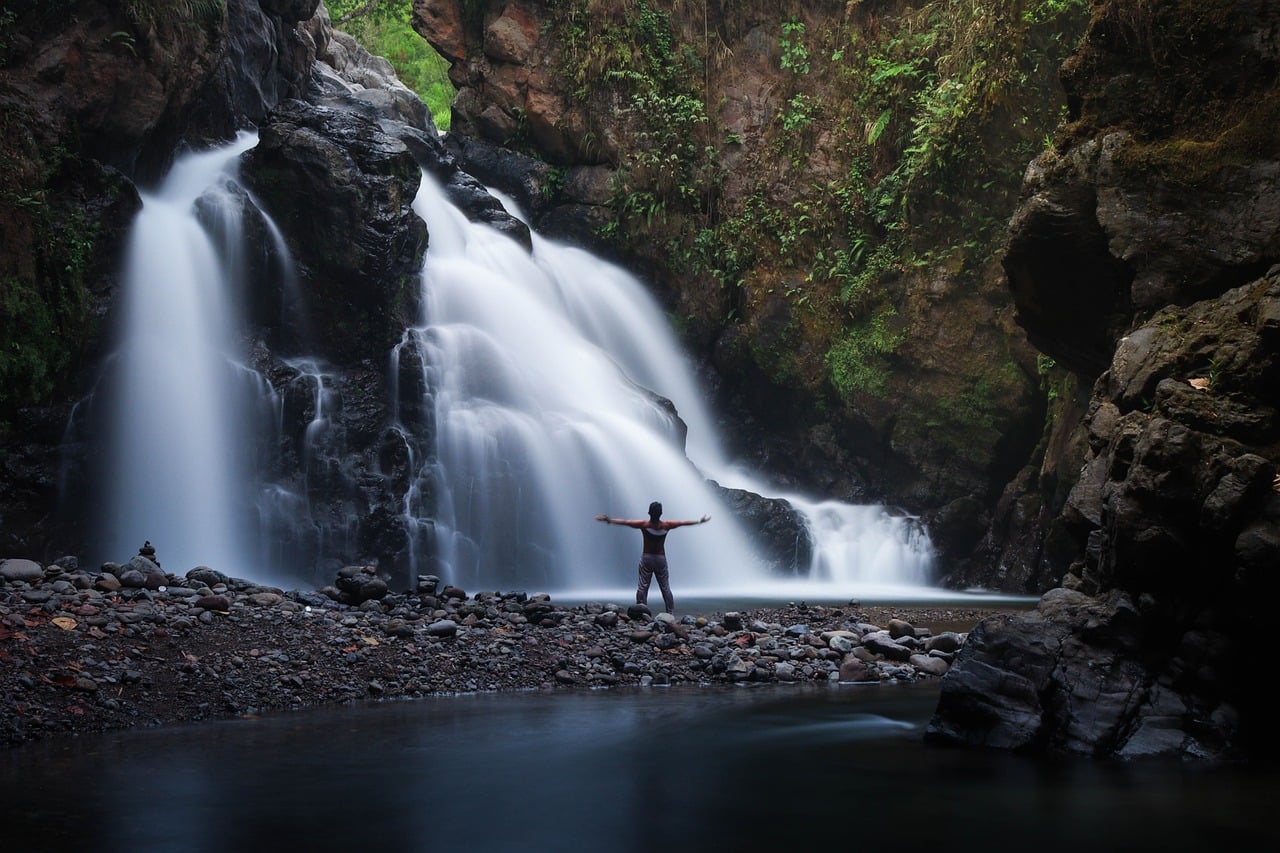
The east side of the Big Island is the opposite of the resort coast: green, wet and unhurried. Hilo, the main town, sits on a crescent bay with a historic downtown, and north of it the Hamakua coast unfolds in a series of gulches, waterfalls and old plantation towns. This guide covers the best of it.
Hilo
Start with a morning at the farmers market, busiest on Wednesday and Saturday, then walk downtown to see murals, shops and heritage buildings. A guided walk adds depth. Visit the bayfront, Liliuokalani Gardens and Coconut Island. In the evening, a ghost walk gives a different view of the town. Rain is common, so carry a jacket and enjoy the green.
Waterfalls near Hilo
Rainbow Falls is a few minutes from town, with a viewing platform and the best light in the morning. Upstream, the Boiling Pots add a second stop. Neither is safe for swimming, and you should avoid the area after heavy rain. For a swimmable option, Kulaniapia Falls allows day visitors on a private estate.
Akaka Falls
North of Hilo, Akaka Falls State Park has a short paved loop through rainforest to a 442-foot waterfall. It is one of the island's most photogenic and easily accessible sights. Combine it with the Hamakua scenic route and the village of Honomu for snacks.
Hamakua coast drive
The highway north of Hilo follows the coast through gulches and bridges, with sugar-era towns such as Laupahoehoe and Honokaa. Take your time, with stops at lookouts, small cafes and galleries. Adventure options include a zipline near Akaka Falls and farm tours.
Waipio Valley
At the end of the coast road, a lookout offers a sweeping view into the Valley of the Kings, with black sand, taro fields and Hiilawe Falls. Vehicle access into the valley is restricted, so consider a guided horseback tour or enjoy the view from above. The valley is sacred and still home to residents, so be respectful.
Gardens and culture
Hilo has botanical gardens, the Imiloa Astronomy Center and the Lyman Museum, all good wet-weather options. Lava Tree State Monument in Puna is another short stop for those with time.
The volcano connection
Hilo is about 45 minutes from Hawaii Volcanoes National Park, so many visitors base here for the volcano. A typical day might be morning at the park, afternoon at the falls and dinner in town.
Practical notes
Rain is frequent, so pack a rain jacket, quick-dry clothes and insect repellent. Roads are narrow and winding, and some bridges are one lane. Fill your tank in Hilo, and check weather before heading to waterfalls. Mornings tend to be clearer than afternoons.
Where to stay
The Hilo Hawaiian Hotel sits on Banyan Drive with bay views, and Kilauea Lodge offers a cozy stay near the volcano. Many visitors do a day trip from Kona, but staying overnight gives you time to explore without rushing.
A sample day
Begin with a market breakfast in Hilo, drive to Rainbow Falls for morning rainbows, then continue up the Hamakua coast to Akaka Falls. Stop in Honomu for a snack, continue to Honokaa for lunch and finish with the view into Waipio Valley in the afternoon light. Return along the same road, or take the inland route through Waimea if you are heading to the Kohala side. The loop is long but rewarding, and starting early makes it comfortable.
Food and shopping
Hilo's bakeries, saimin shops and plate lunch counters are among the best on the island, and local fruit stands sell lychee, rambutan and apple bananas in season. The Hamakua coast has bakeries, cafes and small galleries in old plantation buildings. Bring cash for roadside stands, and be prepared for limited hours outside of tourist season.
Culture and etiquette
This part of the island has a strong sense of community, with many multigenerational families. Greet people warmly, drive politely and respect private property signs. Waterfalls and valleys are often sacred places, so stay on trails, avoid trespassing and leave no trace. Hawaiian words you may hear include mauka, toward the mountain, and makai, toward the sea, which locals use for directions. Learning a few phrases, and using them sincerely, goes a long way.
Weather planning
Showers pass quickly, and the best waterfall viewing is often right after rain. Keep flexible plans, and check river and road conditions before you go. If a flash flood warning is in effect, avoid streams and low-lying areas entirely.