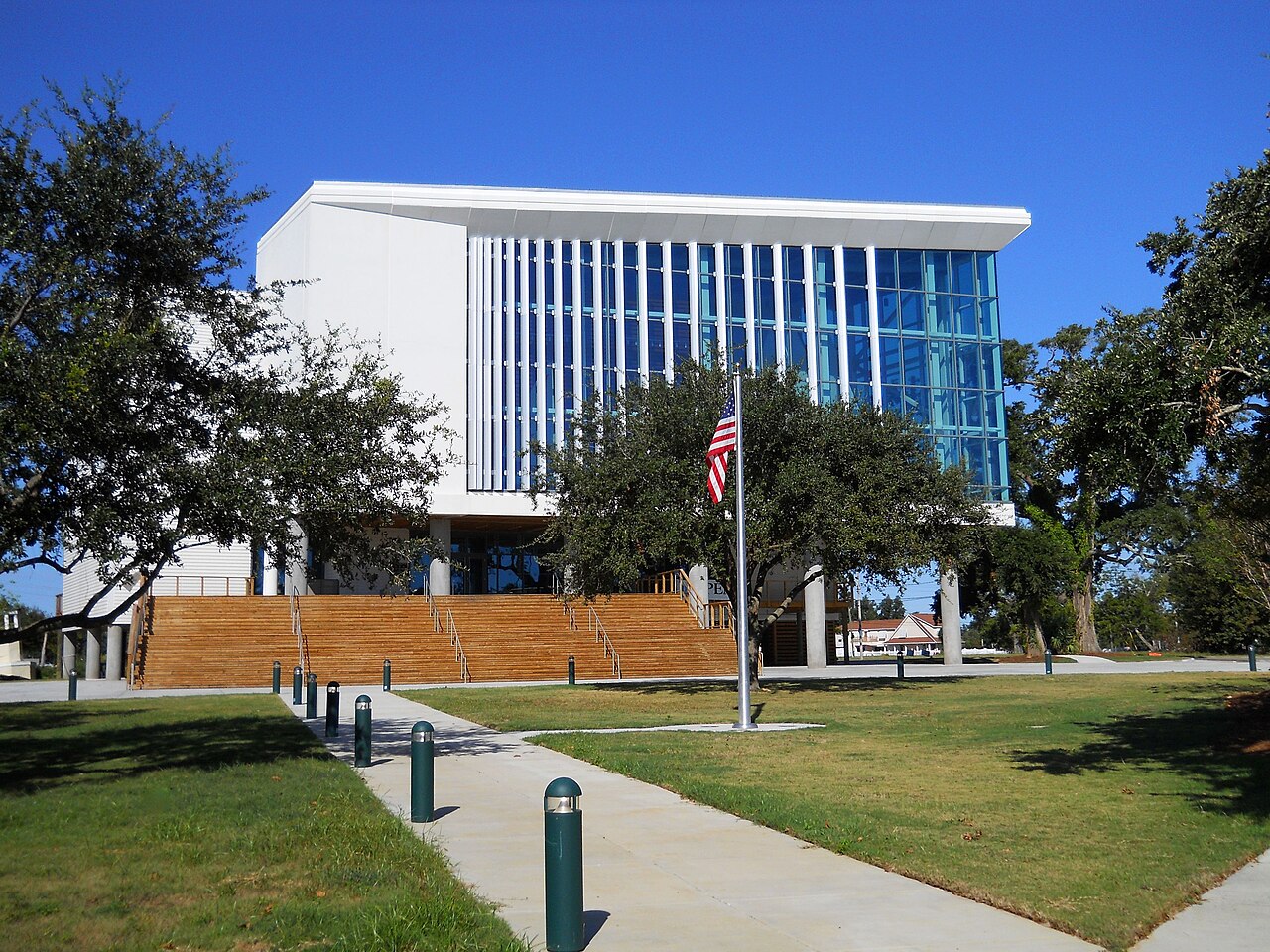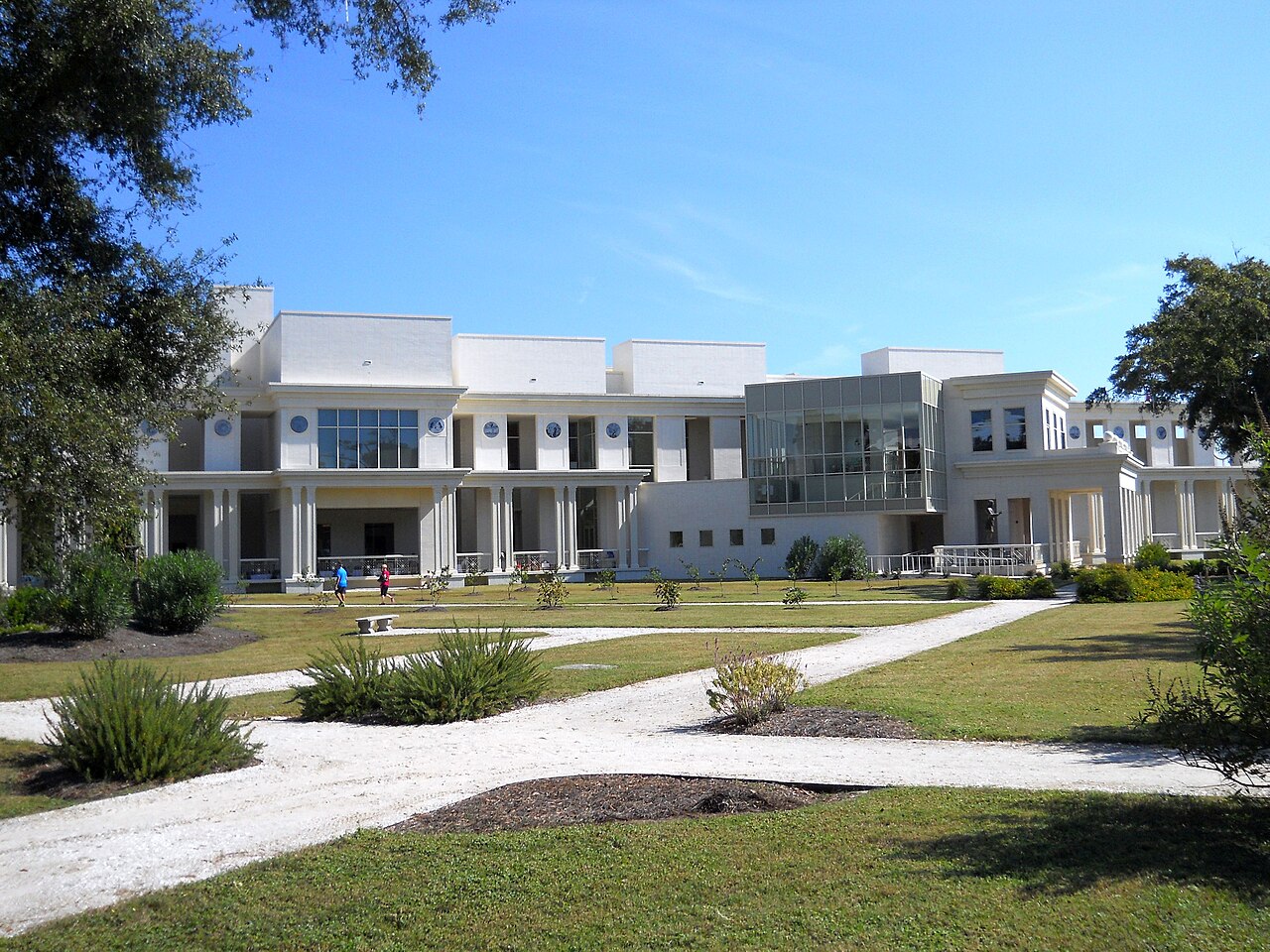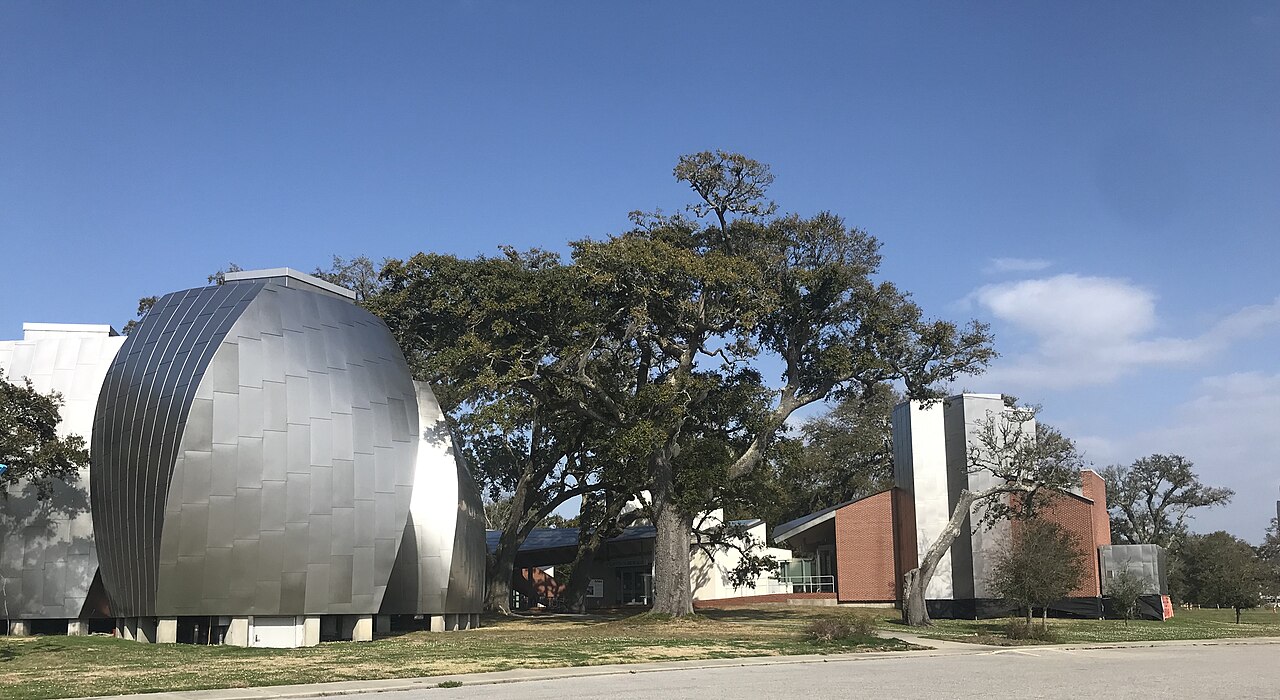
The Ohr-O'Keefe Museum of Art is the single best reason to put art on a Biloxi itinerary. It is built around the work of George E. Ohr (1857 to 1918), who called himself the Mad Potter of Biloxi and spent his life throwing clay vessels so thin, so twisted and so playful that his neighbors dismissed him as a crank. He kept thousands of pieces in his family's collection after failing to sell them, and it was only decades after his death that the art world recognized him as a forerunner of American abstract expressionism and studio ceramics. Today his folded, crumpled, ribboned pots hang in major museums, and Biloxi holds the largest public collection of his work in the world. The museum campus is an attraction in its own right. The architect Frank Gehry designed a cluster of curving, metal-clad and brick buildings shaped to feel like a grove of oak-like pavilions, set among live oaks on the Biloxi waterfront. The project was reworked and delayed by Hurricane Katrina, which damaged the area and destroyed an earlier building, and the finished campus now stands as a bold, sculptural statement of the city's recovery. Alongside the Ohr galleries, the museum presents changing exhibitions of regional and national work and keeps the history of the Gulf Coast's own artists in view, including the Pleasant Reed house, a restored home connected to a formerly enslaved man who became a prominent Biloxi builder and landowner.
Going in with a plan helps. Start in the galleries that show Ohr's pottery, because the experience is about looking closely: the walls of some pots are barely thicker than eggshell, and he would crush, pinch and fold them while still wet so that each one became a small piece of sculpture. Wall text and labels explain his glazes, his stunt-like self-promotion, including his famous mustache and his stationery, and the way he predicted that his work would be treasured only after his death.
Allow around ninety minutes for the Ohr material and a first look at whatever exhibition is installed; add time if you want to stroll the grounds and read the architecture from outside.
The setting adds a lot. The campus sits on Beach Boulevard just a short walk from the Biloxi Schooner pier and the Maritime and Seafood Industry Museum, so a morning of art can lead straight into a boat or history stop. The grounds are shaded by old live oaks that survived the storm, and the building shapes reward a slow walk around the perimeter, which is free to do even if you do not buy a ticket. Photographers should note that the facades catch strong light mid-morning and late afternoon.
Practical tips
The museum generally keeps closed days on a regular weekly pattern and opens in the daytime, so confirm current days and hours before you drive in. Children are welcome and often enjoy the pots because they look so unlike traditional pottery; the museum sometimes offers family activities and workshops, so ask what is on. For couples and solo travelers, this is one of the Gulf Coast's most rewarding rainy-day options, since you can spend a couple of dry, air-conditioned hours with a truly original American artist.
For first-time visitors, it adds a layer of depth to a coast better known for casinos and beaches, and it makes clear that Biloxi has been producing eccentric, memorable culture for well over a century.
What to expect
The experience
A self-guided visit to a Gehry-designed museum campus anchored by the world's largest public collection of George Ohr's pottery, plus changing exhibitions and a historic house.
Best time
Weekday mornings are quiet, and the museum is a strong rainy-day or midsummer-afternoon choice. Check the weekly closed days before you go.
How long
Allow 90 minutes to 2 hours inside, plus time for the grounds.
Tips
Look closely at the thin walls and folded rims, since photographs flatten them. Walk the live-oak grounds and architecture for free. Pair it with the schooner pier and Maritime Museum on foot.
Quick picks
- Best for
- Art and architecture fans, rainy days and anyone who likes a genuine local eccentric.
- Families
- Kids tend to love the twisted, impossible-looking pots; ask about family activities and keep the visit to about an hour.
- Couples
- A calm, air-conditioned culture stop followed by a sunset stroll along Beach Boulevard.
- Pair with
- The Maritime and Seafood Industry Museum, the Biloxi schooner pier and the lighthouse.
- Time needed
- Two hours is comfortable; a half-day if you add the nearby sights.
Good questions
Who was George Ohr?+
George E. Ohr (1857 to 1918) was a Biloxi potter who called himself the Mad Potter of Biloxi. His thin, crumpled and folded vessels went largely unsold in his lifetime but are now celebrated as precursors of modern American art ceramics.
Who designed the museum buildings?+
Architect Frank Gehry designed the campus, a cluster of curving pavilions arranged among the live oaks on the Biloxi waterfront.
Is the museum good for kids?+
Yes, in moderation. The pots are quirky and visual, and children often enjoy them for an hour or so, especially if you point out the folds and ribbons.
Does it have a collection beyond Ohr?+
Yes. The museum shows changing exhibitions and also tells local history, including the restored Pleasant Reed house on the campus.
How do I find current hours?+
Check the museum's website before you visit, since closed days and hours follow a weekly pattern that can shift by season.