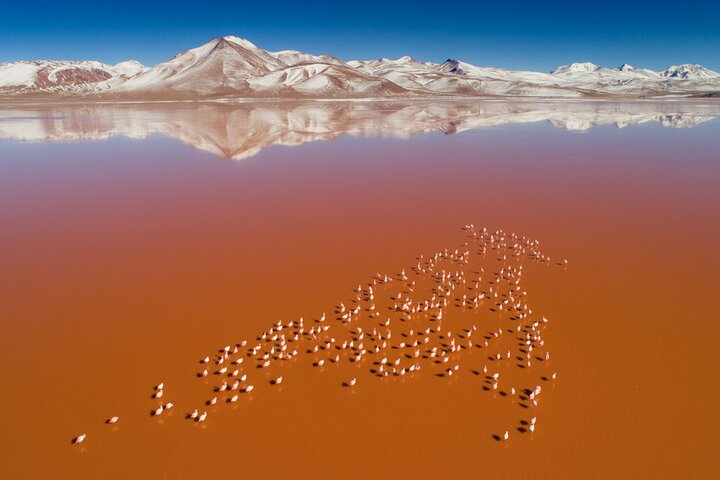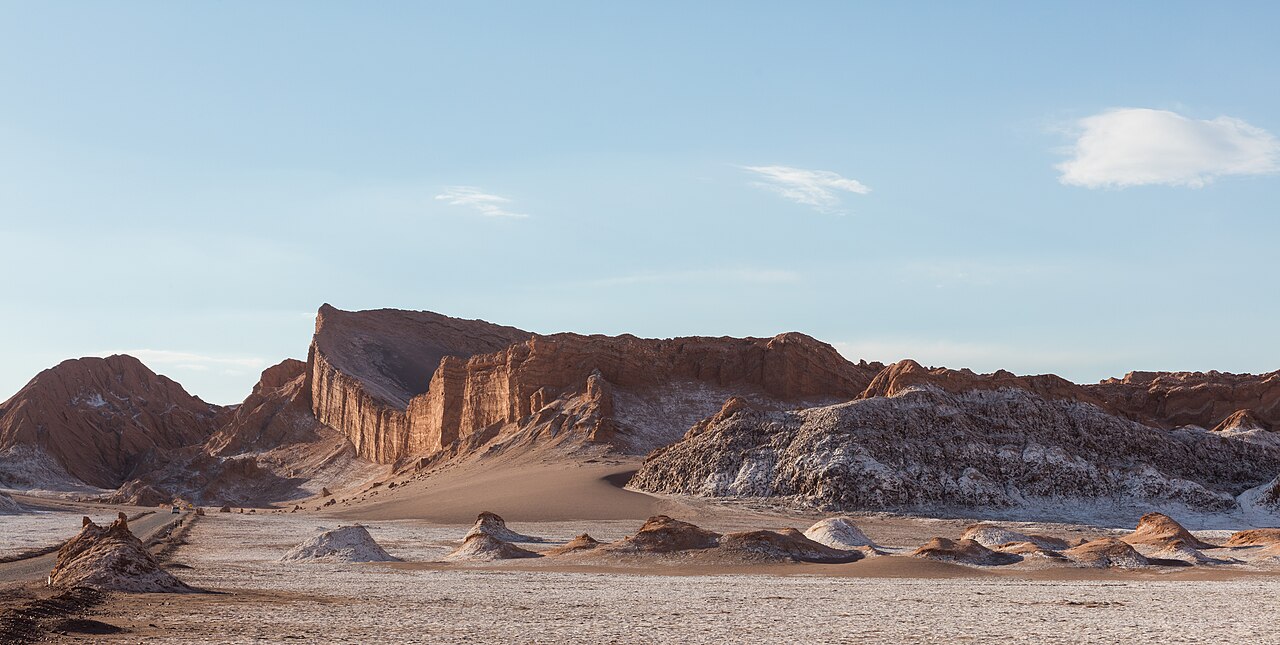
The Eduardo Avaroa Andean Fauna National Reserve covers a vast area of the southwestern altiplano, close to the borders with Chile and Argentina. It is a land of extremes: volcanoes, rust-colored deserts, geysers, hot springs and a string of lagoons at altitudes of more than 4,000 meters. The best known is Laguna Colorada, a shallow lake stained deep red by algae and minerals and ringed with white borax islands, where thousands of flamingos feed. Nearby are the Sol de Mañana geysers, where steam and boiling mud erupt from the ground in the thin cold air, the green-tinted Laguna Verde beneath the volcano Licancabur, and a bizarre wind-carved rock known as the Árbol de Piedra.
Most visitors reach the reserve on the classic three-day jeep trip from Uyuni, which starts on the salt flat and then heads south into the reserve on the second day. A day of driving covers several lagoons, desert landscapes and viewpoints, with a night in a very basic refuge near Laguna Colorada.
The third day usually begins before dawn with a visit to the geysers and ends at the hot springs and Laguna Verde, after which some tours continue to the Chilean border for a transfer to San Pedro de Atacama while others return to Uyuni. Check the route and the end point when you book.
This part of Bolivia is among the highest and most remote that tourists can visit. The geysers are at nearly 5,000 meters, and nights in the refuges are cold enough to need several layers and a good sleeping bag. Altitude sickness is a real risk, so talk to your doctor before the trip, take the first day slowly and drink plenty of water.
Facilities are simple
Shared rooms, limited heating, short hot water, and little or no phone signal. In return you get some of the clearest night skies on Earth and a landscape that few places can match.
Wildlife is a highlight. Three species of flamingo feed on the lagoons, and on the desert plain you may see vicuñas, viscachas and foxes. The flamingos are most numerous in the warmer months, and numbers change with the season and the weather. Keep a respectful distance and do not walk toward birds or near the geysers, where the ground can be unstable and the water scalding.
Guides know the safe points. A park entry fee is usually paid separately in cash in bolivianos, so carry enough for the reserve and for any hot-spring access, and keep small notes for toilets and snacks.
The dry season from about May to October is the most dependable time for road conditions, although the nights are bitterly cold. In the wet season, roughly December to March, rain and snow can close tracks and tours may change route. Travelers who want a more comfortable trip can choose a private or higher-end version with better lodging, and those with limited time can do a long single day from Uyuni to Laguna Colorada, though this means many hours in a vehicle.
The cold also affects batteries, so keep phones and cameras warm inside your jacket. Whichever style you choose, pick an operator with good vehicles, a spare tire and a driver-guide who knows the route, and bring warm clothing, sunglasses and sunscreen.
What to expect
The experience
A multi-day 4x4 journey through a high desert reserve, with stops at lagoons, geysers, hot springs and rock formations and nights in simple refuges.
Best time
The dry season from about May to October for firmer tracks, though nights are very cold.
How long
Two days inside the reserve as part of a three-day tour from Uyuni.
Tips
Bring warm layers, a sleeping bag if the operator does not supply one, cash for the park fee, sunglasses and sunscreen, and take the altitude seriously.
Quick picks
- Best for
- Adventurous travelers who want wildlife, geysers and remote scenery beyond the salt flat.
- Families
- Possible with older children, but the altitude, cold and long drives are demanding.
- Couples
- Starry skies and a hot spring soak at sunrise, with a private tour for more comfort.
- Pair with
- The Salar de Uyuni, Isla Incahuasi and the train cemetery on day one.
- Time needed
- Three days from Uyuni.
Good questions
What is Laguna Colorada?+
It is a shallow lake colored red by algae and minerals, dotted with white borax islands and home to thousands of flamingos in season.
How high is the reserve?+
Most of it lies above 4,000 meters and the Sol de Mañana geysers are close to 5,000 meters, so altitude sickness is a risk.
Is there an entry fee?+
Yes, a reserve fee is normally paid separately in cash. Ask your operator what the tour price includes.
Can I do it in one day?+
Some private tours reach Laguna Colorada in a long day from Uyuni, but it means many hours driving. The three-day route is more relaxed.
Can the tour end in Chile?+
Yes, many three-day trips finish at the Chilean border with a transfer to San Pedro de Atacama. Confirm the end point when you book.