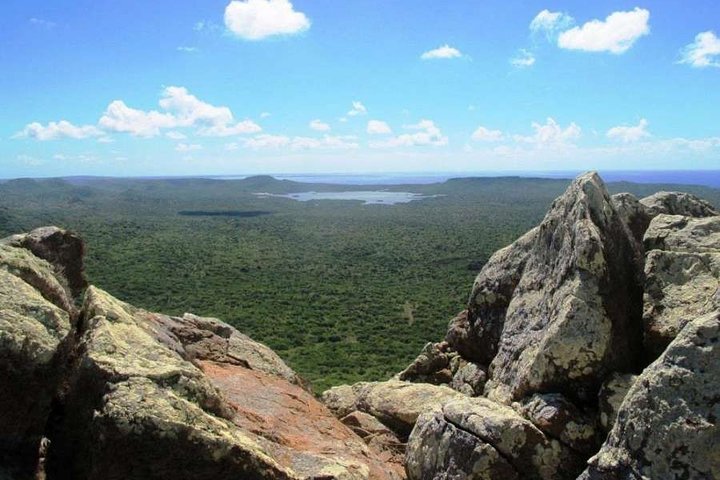
At the far southern end of Bonaire, where the road runs close to the coast and the trade winds blow straight off the ocean, stands the Willemstoren Lighthouse. Built in 1837, it is the first lighthouse on the island and a reminder that this dry, low-lying coast was once a hazard for ships. The tower is the focus, but the surroundings are the real reward. The shoreline here is very different from the sheltered leeward side, with waves breaking on a rocky coast, long stretches of beach scattered with driftwood and a wide sense of space. Visitors often walk along the shore collecting unusually shaped pieces of driftwood and stacking objects washed up by the sea into small, informal sculptures, a habit that has become a quiet tradition. The lighthouse is a free, open-air sight with no ticket or schedule, so it is easy to fit into a drive along the southern road. You can reach it by rental car, scooter or as part of a guided island tour, and it makes an excellent pairing with the salt pans, the slave huts and the flamingo viewing areas that lie not far away. Sunrise and late afternoon are especially photogenic times to visit.
Why it works
It gives you the other face of Bonaire. Most photographs of the island show turquoise water and calm bays, while the south and east coasts show wind, surf and open horizon. Standing near the lighthouse, you feel how exposed this part of the island is and understand why windsurfers and kiteboarders gravitate to nearby Lac Bay, where the reef shelters the water. The simple structure and its setting also make a satisfying subject for photographers, especially at golden hour.
What to expect
This is not a museum or a staffed attraction. There is no admission, and the experience is about the landscape, the history and a short walk. Wear sturdy shoes for rocky ground, bring a hat and water, and expect strong wind and sun with little shade.
Swimming on the exposed shore is not advisable because of waves and currents, so keep your swim for the sheltered bays. Take care not to disturb nesting birds or sensitive vegetation, and carry out any litter you bring. Roads and access can change with weather, so check conditions locally.
Making a southern loop
A good day combines the lighthouse with the salt pans and flamingo area, the slave huts along the shore and a lunch or paddle at Lac Bay on the east side. Families with older children enjoy the open space and the driftwood, and couples often come for the light. If you are short on time, ask a guide on an island tour to include it. The lighthouse is a small stop with a big sense of place, and it rounds out a day devoted to the island’s salt, wind and sea.
Good to know
The area is exposed, so hold on to hats and light items, and keep a firm grip on your camera in strong gusts. Driftwood and washed-up objects are part of the landscape, so enjoy them as photographs and leave natural material in place. Respect any fencing, signs or closures, and stay on existing tracks to protect vegetation and nesting birds. Because there are no facilities on site, bring water and sun protection, and plan restroom stops in town or at Lac Bay.
What to expect
The experience
A free, open-air visit to the 1837 lighthouse and the rugged southern shoreline, with a walk along the driftwood beach.
Best time
Early morning or late afternoon, for softer light and less heat.
How long
Thirty to sixty minutes is enough for most visitors.
Tips
Bring a hat and water, wear sturdy shoes and do not swim on the exposed shore.
Quick picks
- Best for
- Photographers and anyone building a southern loop who wants a free, scenic stop.
- Families
- Open space and driftwood to explore; keep children away from the waves.
- Couples
- A wild, windswept backdrop for sunrise or late-afternoon photos.
- Pair with
- The salt pans, slave huts and a paddle or lunch at Lac Bay.
- Time needed
- Allow up to an hour including the drive from the salt pans.
Good questions
When was the lighthouse built?+
It was built in 1837 and is the first lighthouse on Bonaire, according to the Tourism Corporation Bonaire.
Is there an entry fee?+
The tourism board page gives no fee or hours. It is an open-air site in the landscape, but check locally for any changes.
Can I climb the lighthouse?+
Do not assume that you can. Treat it as a sight to view from outside, and follow any signs on site.
Can I swim there?+
The shoreline is exposed to waves and currents, so swimming is better at sheltered bays such as Lac Bay.
What else is nearby?+
The southern salt pans, flamingo viewing areas and the slave huts are all within a short drive.