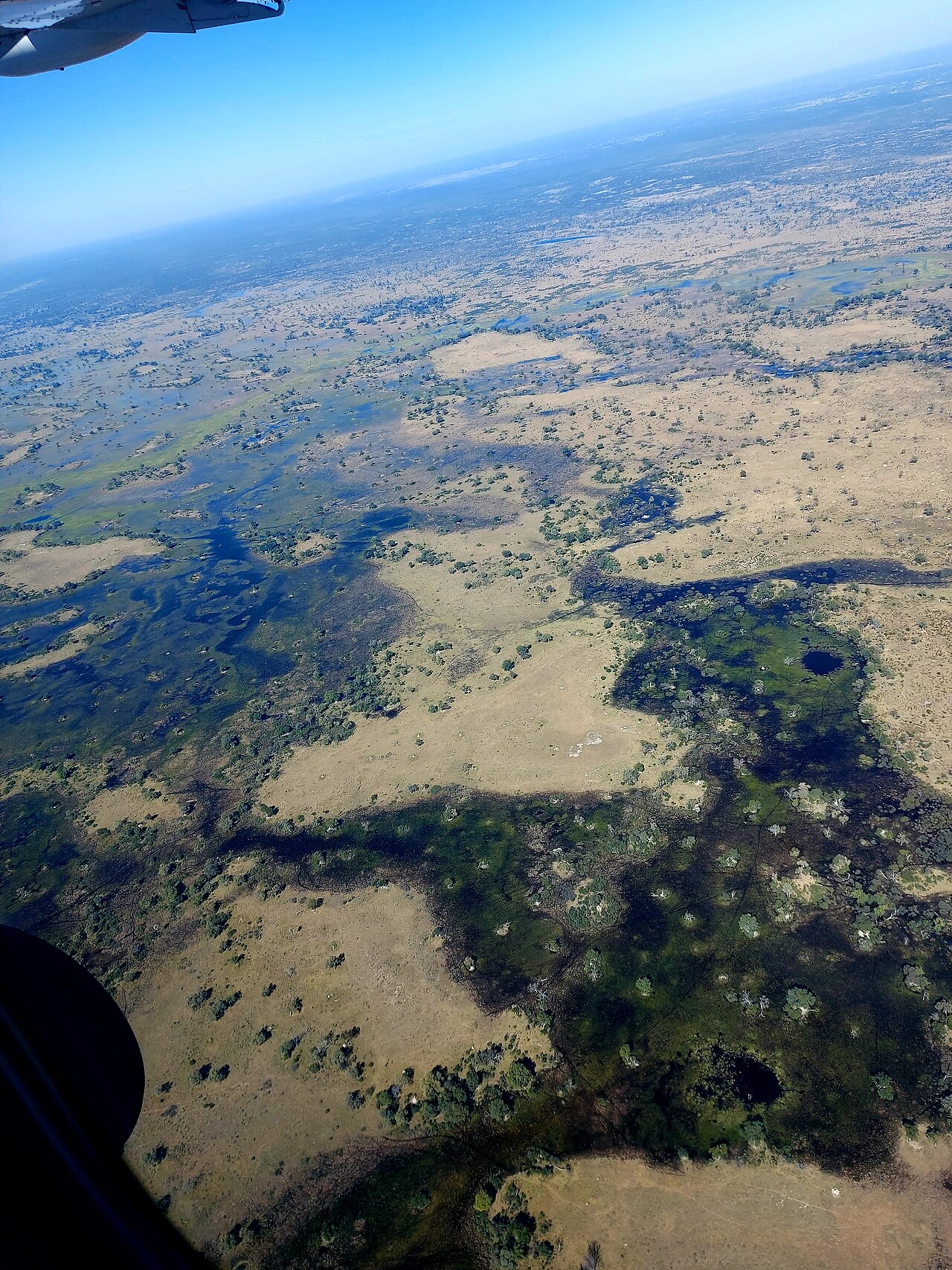
South-east of the Okavango, the Kalahari does something completely different. The Makgadikgadi and Nxai Pans cover about 12,000 square kilometres of the Kalahari Basin and, according to the Botswana Tourism Organisation, include one of the world's largest salt pans. The terrain is flat and stark, with few people and, for most of the year, almost no water. The two biggest pans, Sowa to the east and Ntwetwe to the west, sit among a scatter of smaller ones, with sand dunes, rocky islands, peninsulas and desert scrub in between. Nothing grows on the salty pan surfaces themselves, and the fringes are rimmed by grassland. It is a landscape that rewards people who like space and silence: the horizon is dead straight, the sky is enormous, and after dark the stars are extraordinary. The pans are what remains of a gigantic prehistoric lake that once covered much of northern Botswana, and in years of good rain the water briefly returns.
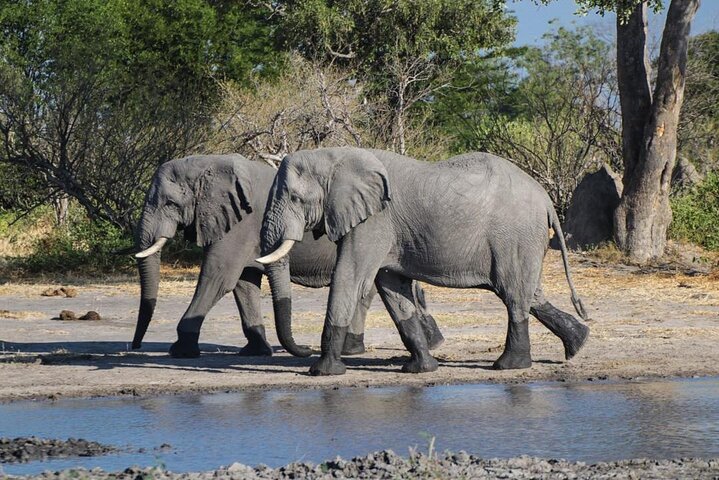
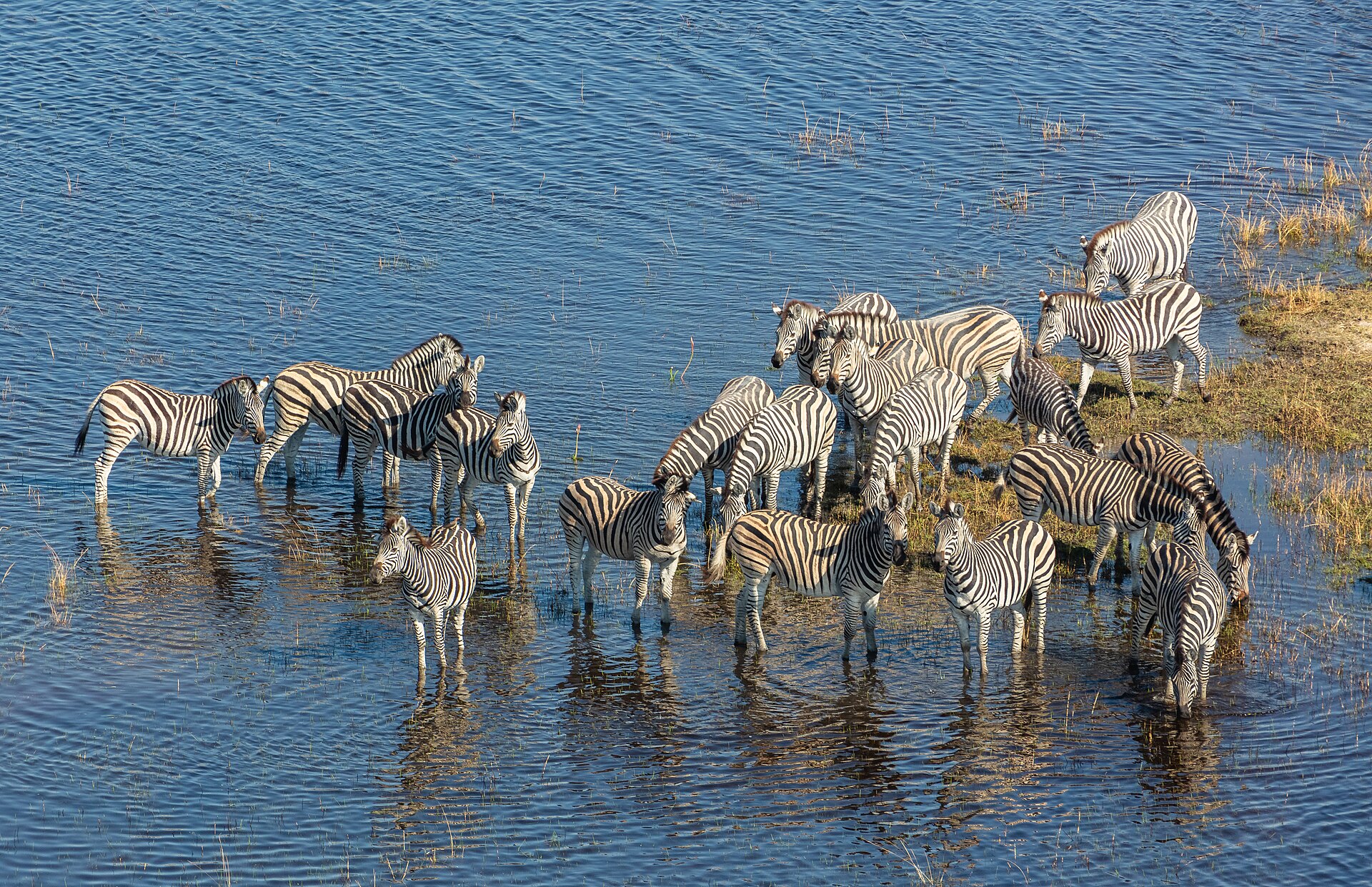
The flood changes everything. Heavy summer downpours, with longer wet spells in February and March, swell rivers in the east, and in exceptional years floodwater also reaches the pans from the Okavango by way of the Boteti River in the west. When that happens, the pans turn into vast pale-blue lakes. Zebra and wildebeest gather on the grassy plains, and flamingos arrive in remarkable numbers, especially at Sowa and Nata Sanctuary, where they can reach tens or even hundreds of thousands.
In dry periods, by contrast, large mammals are almost absent, and the experience is about emptiness, light and silence. Neither is better; they are different trips, so ask your operator what the pans are doing before you commit.
Baobabs and history
Massive baobab trees grow on parts of the fringes, and their silhouettes at sunset are among the most photographed images in Botswana. The tourism board highlights Chapman's Tree, a baobab thought to be three to four thousand years old, which the explorer David Livingstone is said to have used as a landmark in the nineteenth century because it was the only fixed point for hundreds of miles. Visitors can also try quad biking across the dry pan surface, sleep out under the stars on a bedroll, and spend time with habituated meerkats on some guided trips, though these activities are offered by individual operators and vary by season, so confirm what is available.
Planning from Maun
The pans are a long day's drive from Maun on the Nata road, so most travellers combine them with Nxai Pan National Park and a night or two in a camp or lodge. Tour operators in Maun run day trips and multi-day itineraries that tie the pans to the Okavango Delta and Moremi, which gives a striking contrast between water-rich and desert Botswana. The wetter months, roughly December to April when the rains are good, bring the wildlife and flamingos but also mud and hot days; the dry months give clearer skies and the classic emptiness.
Take sun protection, a hat, warm layers for nights, plenty of water and a good camera. There is little shade, no services on the pans themselves and very limited phone signal, so go with a reputable operator and follow their safety instructions, especially on the pan surface after rain.
What to expect
The experience
A planning overview of the pans: what they are, why they flood, and how they pair with the Delta on a longer northern Botswana trip.
Best time
December to April in years of good rain for zebra, wildebeest and flamingos; the dry months for clear skies, stars and silence.
How long
Two to three days including the drive from Maun.
Tips
Ask your operator what the pans are doing this year, avoid driving on wet pan surfaces, and carry plenty of water, sun protection and warm layers for the night.
Quick picks
- Best for
- Travellers who want a stark desert contrast to the Delta and big-sky photography.
- Families
- Works for older children who enjoy open spaces and stargazing; days are long and hot.
- Couples
- A night under the stars on the pans is a memorable romantic extra.
- Pair with
- Nxai Pan National Park, the Delta and a few nights in Maun.
- Time needed
- Two to three days.
Good questions
What are the Makgadikgadi Pans?+
A group of huge salt pans in the Kalahari Basin, covering about 12,000 square kilometres. They are the remains of a vast prehistoric lake.
Do the pans have water?+
Only in wet years. When it floods, the pans become pale-blue lakes that draw zebra, wildebeest and large flocks of flamingos.
Why are baobabs famous here?+
Baobabs on the fringes make dramatic sunset silhouettes. Chapman's Tree is thought to be three to four thousand years old.
How far are the pans from Maun?+
A long day's drive along the Nata road, so most visitors plan an overnight stay and combine the pans with Nxai Pan.
When is the best time to go?+
December to April in good rain years for wildlife and flamingos; the dry months for clearer skies and stargazing.