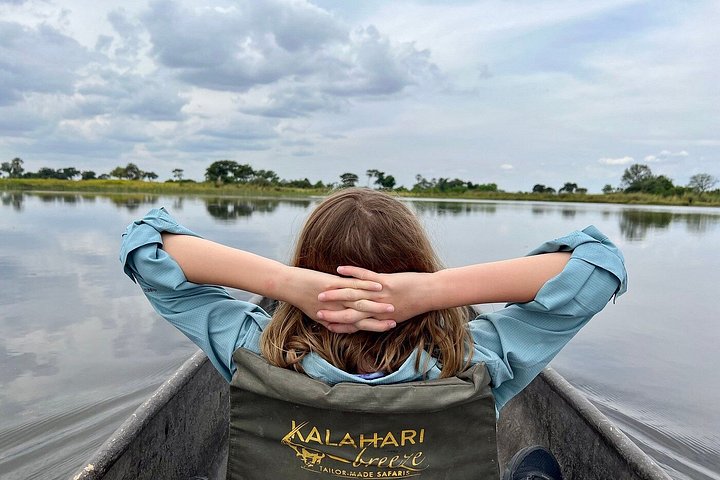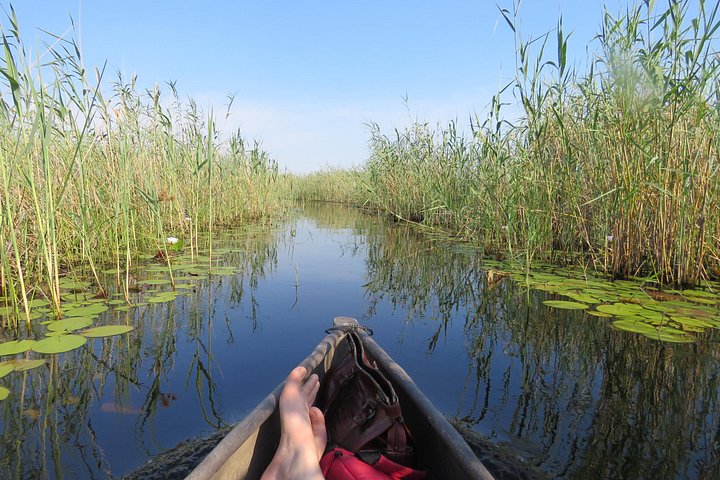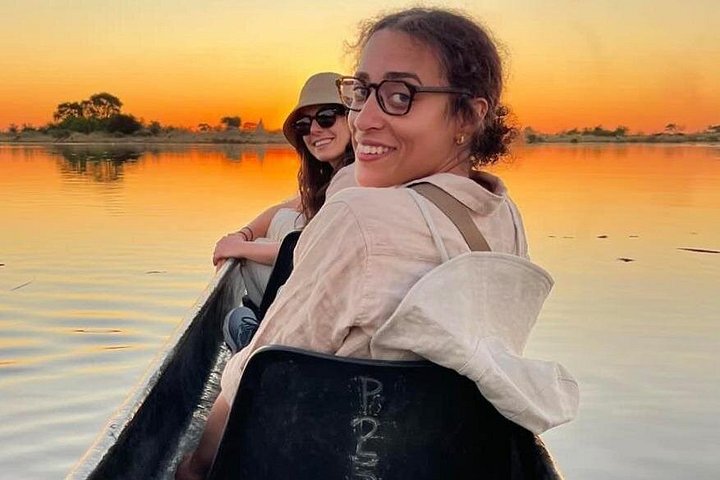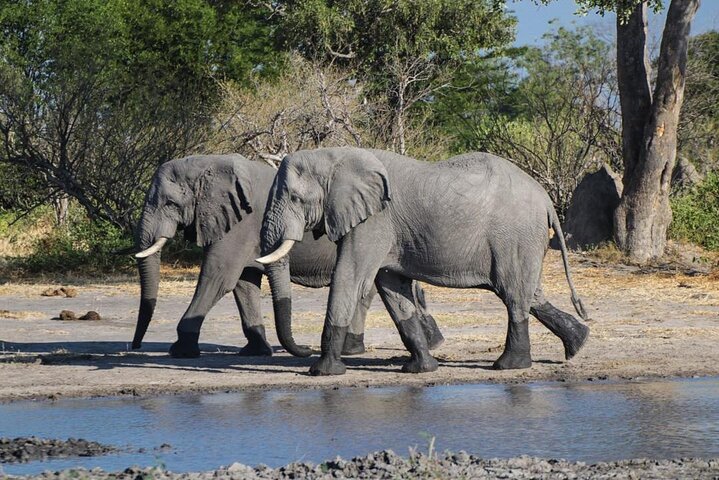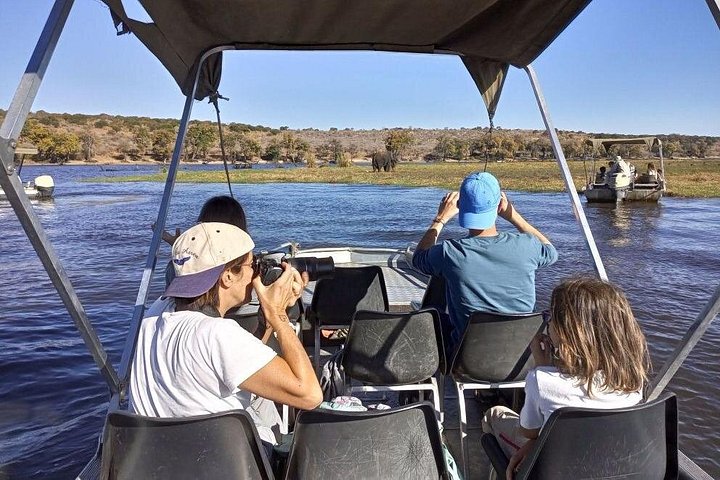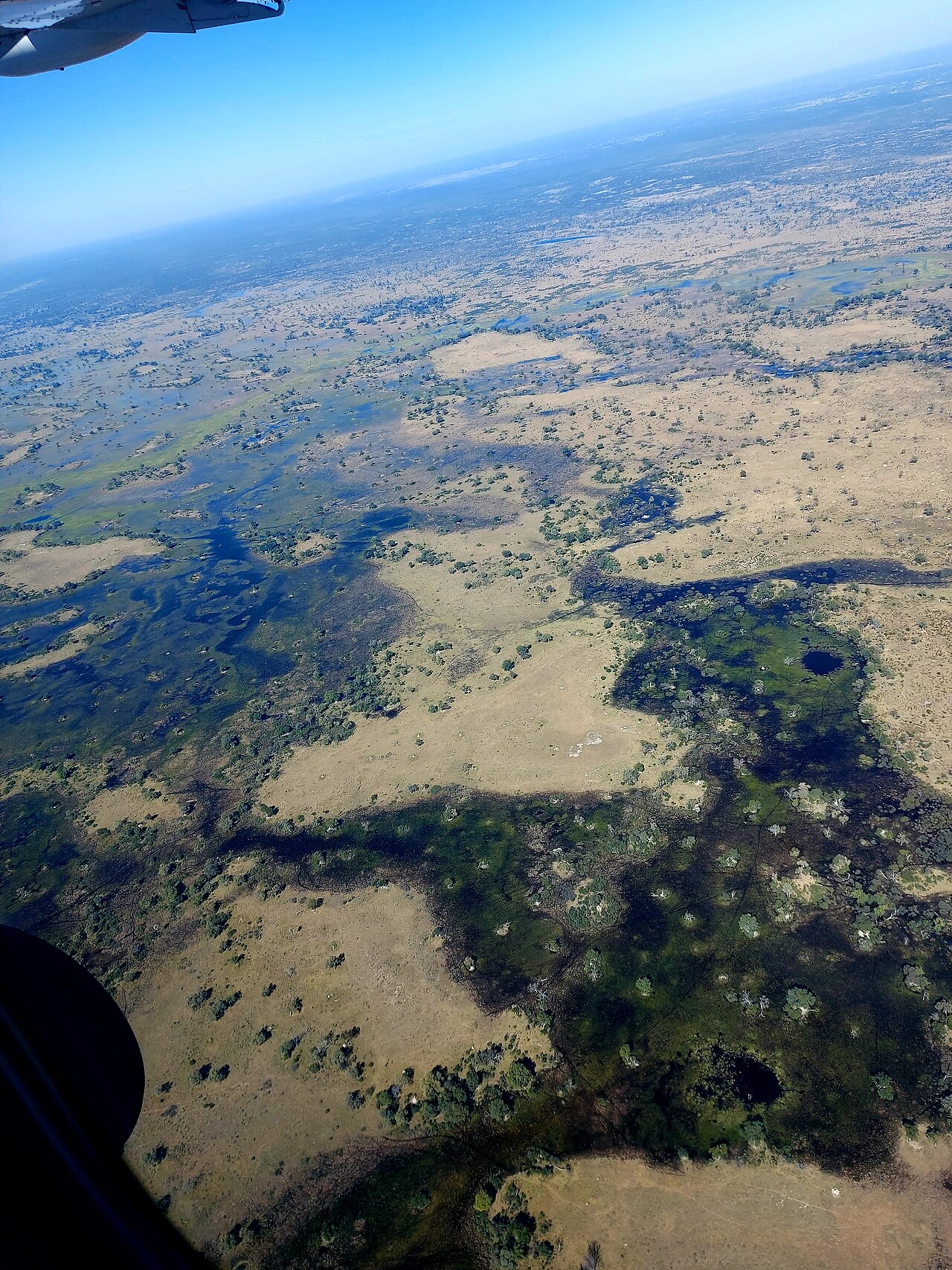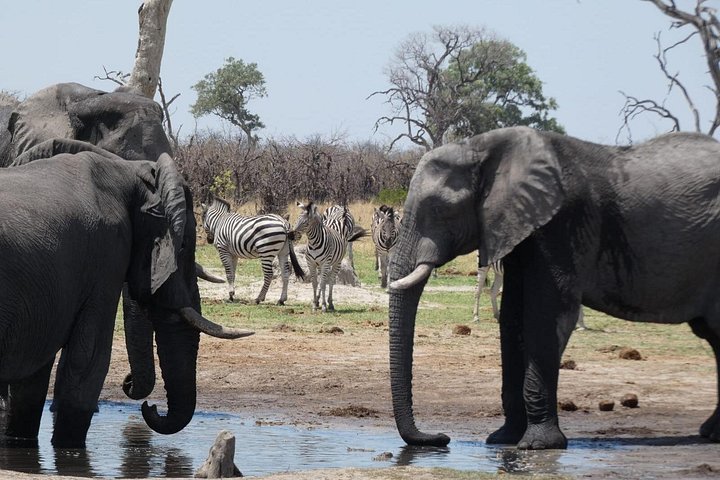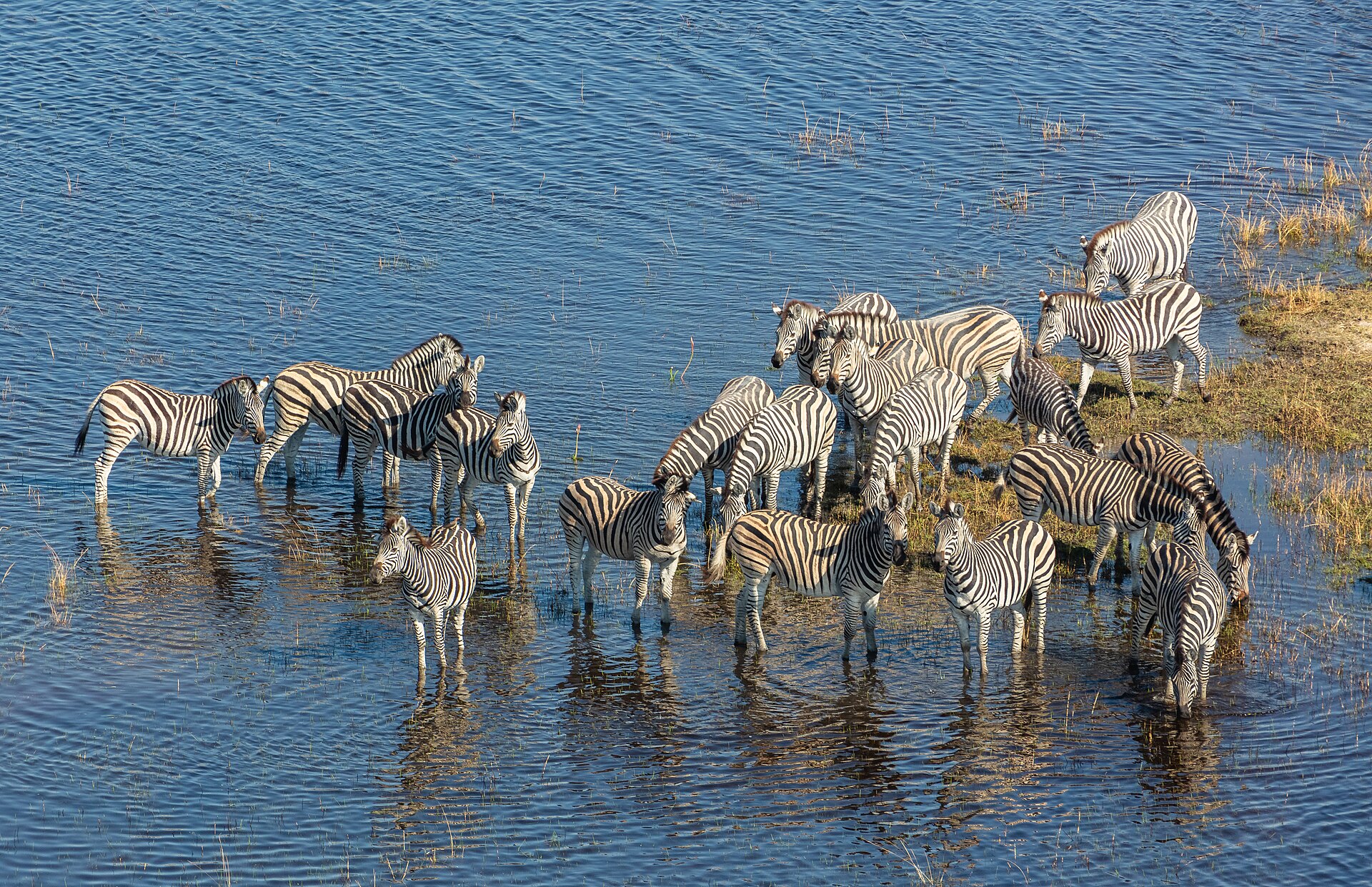
This trip is for travellers who want to spend real time in the Delta, not just a day on the water. It is a three-day, two-night overnight mokoro trail from Maun: you travel to a community station on the edge of the Delta, transfer to hand-poled mokoros and glide into the channels, then camp on an island, usually with island walks and mokoro journeys through the days and evenings. It has a 4.9 rating from 17 reviews, one of the stronger scores among Maun's overnight products. A mokoro trail is the Delta at its most intimate. You sit low in a narrow canoe while a poler glides you through reeds and papyrus; at camp, you cook, eat and sleep close to nature, with the sounds of hippos, frogs and birds around you. Island walks usually introduce tracks, plants and the possibility of encountering antelope and elephant on foot with a guide who knows the rules of the wild.
How it works
Overnight trips differ in the details, such as where you camp, whether equipment is provided, what food is included and how large the group is. Typically, you travel light, carrying a small bag, and tents, sleeping gear, food and water are brought by the polers and guides. Camps are basic: expect a simple tent, a bush toilet, limited washing and meals prepared over a fire.
That simplicity is part of the appeal, but ask the operator exactly what is supplied before you book, particularly sleeping bags, mattresses and drinking water. Compare it with the other two-night mokoro camping trip in this guide to decide which operator and style suit you.
Water levels and seasons
The Delta changes with the flood, which reaches the Maun area in the dry winter and peaks around June to August. During these months channels are full, and mokoro journeys are longer and smoother, while the surrounding land is dry. Later in the year, water can run low and stations may change, and in the wet season from roughly November to March, storms and heat are likely.
Nights in winter can be cold, so bring a warm layer, while summer nights are hot and humid. Pack insect repellent, sun protection, a hat, comfortable walking shoes and a headlamp. Malaria is a risk in the north, so speak to a travel clinic before you go.
Who it suits
Adventurous, moderately fit travellers who are comfortable with basic camping and with sitting still in a narrow boat for long stretches. It is generally not suitable for very young children, people with mobility problems or anyone expecting lodge-level comfort, and operators set their own age and health limits. Tips for the polers and guides are customary and appreciated. If you only have one day, the mokoro day trip is the gentle introduction; if you want big game as well, consider the three-day Delta safari or a Moremi trip.
This trail is for travellers who want the sense of disappearing into the Delta, of waking at dawn to the sound of birds and watching the channels turn gold, and who are happy to trade a bed and a shower for that feeling.
What to expect
The experience
A three-day, two-night camping trip into the Okavango Delta from Maun, travelling by hand-poled mokoro with island walks and simple bush camps.
Best time
June to October for higher water and cooler days; November to March for green scenery and birds, with heat and storms likely.
How long
Three days and two nights from Maun.
Tips
Pack light in a soft bag, bring a warm layer for winter nights and a headlamp, and confirm what bedding, food and water are supplied.
Quick picks
- Best for
- Adventurous travellers who want to sleep in the Delta without paying for a lodge.
- Families
- Best for teenagers and adults; check age limits with the operator.
- Couples
- Quiet channels, big skies and a campfire under the stars.
- Pair with
- A Moremi day trip and nights at a Maun hotel on either side.
- Time needed
- Three days.
Good questions
How many nights is the trip?+
Two nights and three days from Maun, with nights spent camping in the Delta.
Is camping equipment provided?+
Operators vary. Confirm exactly what bedding, tents, food and water are supplied before you book.
Will I see big game?+
Possibly, on island walks and from the mokoro, but the trip is about the Delta itself. For big game, add a Moremi trip.
When is the water highest?+
The flood peaks around June to August in the Maun area, in the dry winter.
Is it suitable for children?+
Operators set age limits and camping is basic. Check before you book.