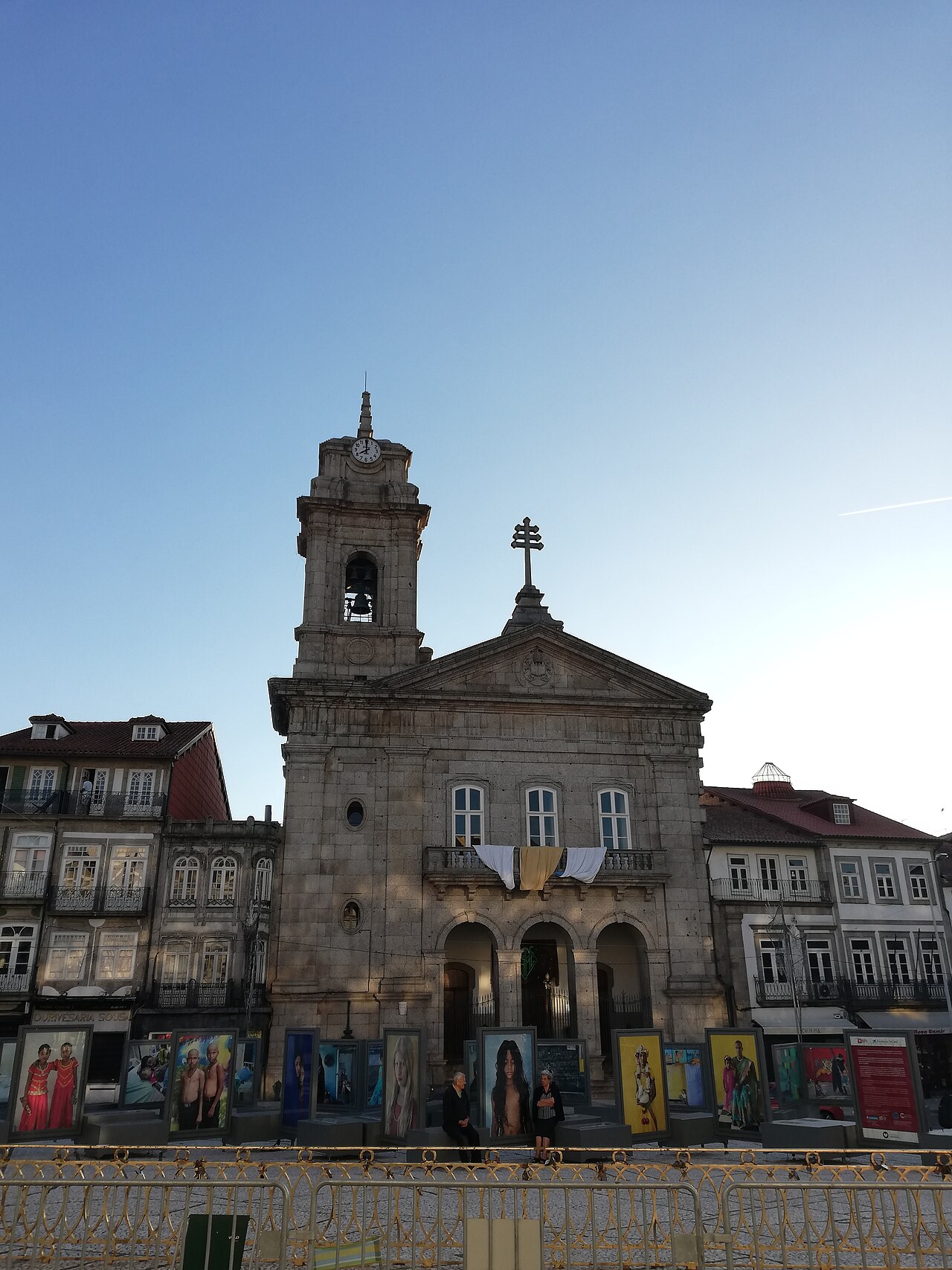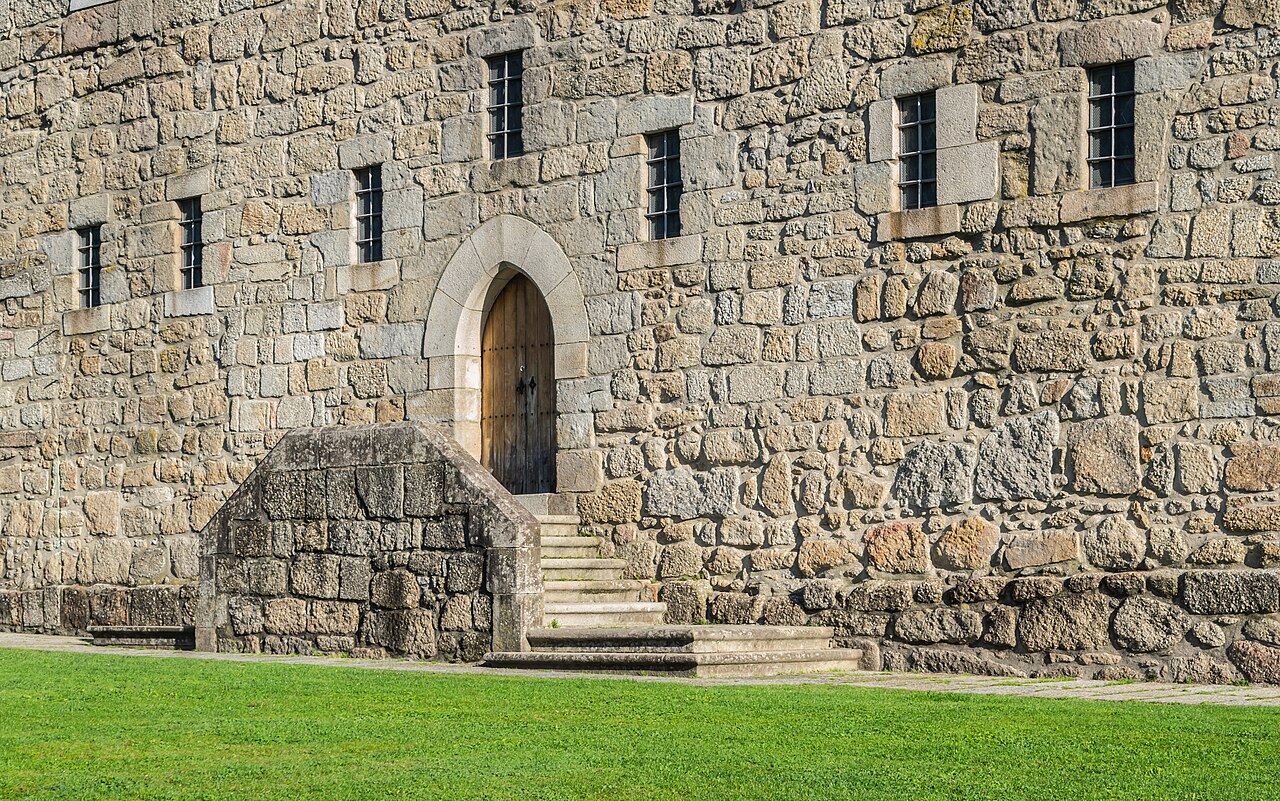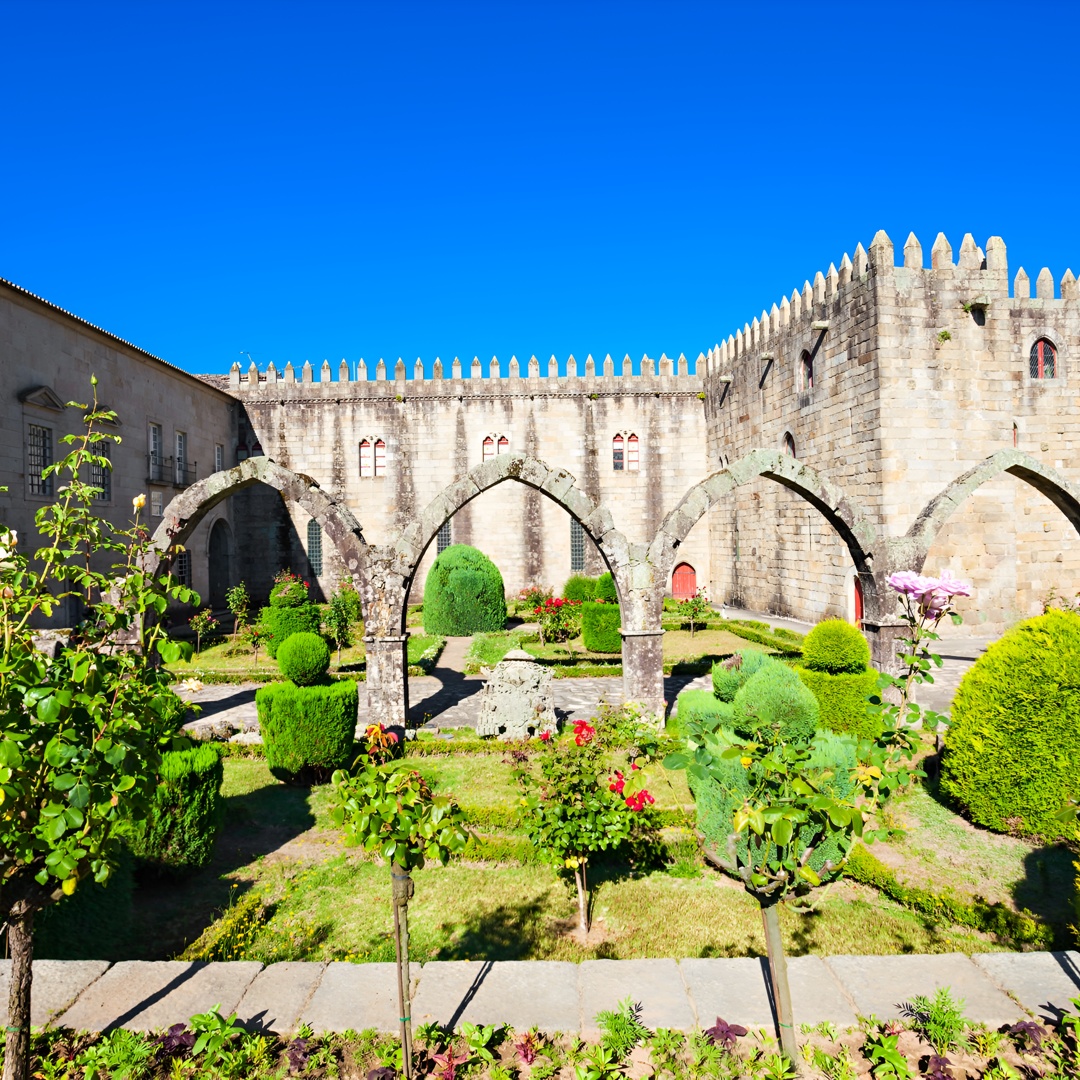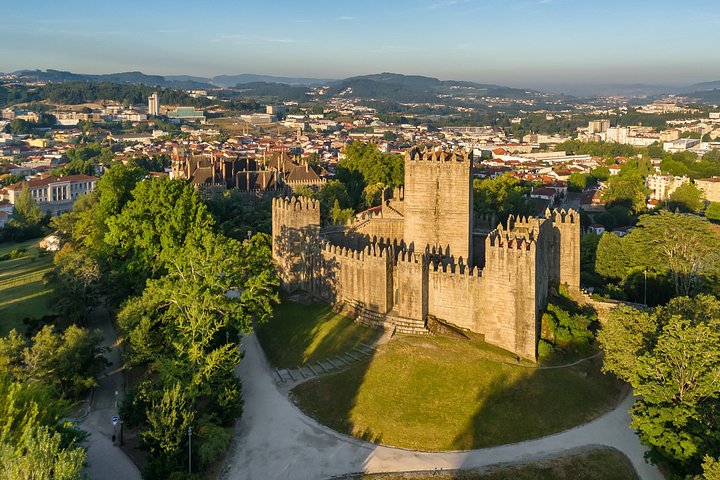
Guimaraes Castle stands on a granite outcrop above the old town, and it has a place in the Portuguese story that few buildings match. A fortress was begun here in the tenth century to protect a monastery from raiders, and it grew into the stronghold of the counts of Portucale, whose lands became the heart of the new kingdom. Tradition places the birth of Afonso Henriques, the first king of Portugal, in or near the castle around 1109, and the nearby Battle of Sao Mamede in 1128, in which he took control of the county, is regarded as the first step towards independence. That is why you see the phrase Aqui nasceu Portugal, here Portugal was born, painted along the walls of the city. The castle itself is a compact medieval fortress with a square keep, crenellated walls and eight towers, built of local stone, and it is simple and strong rather than ornate. Walking through the gate and up to the walls you see the old town roofs and the green hills beyond. Inside there is little decoration, but the climb up the keep rewards you with the view, and the rooms and walkways give a sense of how a medieval garrison lived. Next to the castle, the small Romanesque chapel of Sao Miguel do Castelo, where the first king is said to have been baptised, adds to the atmosphere.
The visit is short and best combined with the Palace of the Dukes of Braganca across the park, and with a walk down into the old town. Allow about an hour for the castle and chapel, longer if you linger in the surrounding gardens or the nearby museum. The approach is by a gentle path through a park with big old trees, and the climb to the top involves steps and a narrow stair, which is not suitable for those with limited mobility; check the arrangements if you need step-free access.
The best light is in the morning and late afternoon, when the stone glows and the shadows are long, and the quietest time is early in the day. Children usually enjoy the castle because it looks like a castle, with walls to walk and towers to climb, and they often prefer it to indoor museums. Bring water in summer, because shade on the walls is limited, and wear shoes with grip.
Entry tickets can be bought online in advance, which saves time at peak season, and the castle usually has a weekly closing day, so check before you go. Pair the visit with the historic centre, the Largo da Oliveira and the Santa Maria church for a rounded half-day, then have lunch in one of the small restaurants around the squares. For those who want more context, a guided tour of the old town explains how a small medieval town became the symbolic cradle of the nation.
The castle and palace are the two big paid sights; the town itself is largely free, with squares, streets and viewpoints to enjoy. Because the castle is small, it pairs naturally with a longer walk: continue through the park to the palace, then descend to the old town by a different street, and stop at a viewpoint or terrace for a drink. On windy days the battlements are exposed, so bring a light jacket even in spring.
What to expect
The experience
A self-guided visit of the castle walls, keep and the neighbouring Romanesque chapel, with views over Guimaraes.
Best time
Morning or late afternoon for soft light and fewer visitors.
How long
About an hour, or two with the palace and park.
Tips
Wear shoes with grip, bring water in summer, and check the weekly closing day.
Quick picks
- Best for
- History lovers and first-timers; this is the most symbolic building in Portugal.
- Families
- Children enjoy the towers and walls; supervise on the stairs.
- Couples
- Sunset light on the old town from the keep.
- Pair with
- The Palace of the Dukes of Braganca and the historic centre.
- Time needed
- About an hour.
Good questions
Why is the castle famous?+
It is tied to the birth of Afonso Henriques, the first king of Portugal, and the events that led to Portuguese independence, which is why Guimaraes is called the birthplace of the nation.
How long does a visit take?+
About an hour for the castle and chapel, longer with the palace and park.
Can I buy tickets online?+
Yes, entry tickets are available in advance, which is handy in peak season.
Is it suitable for children?+
Yes, most children enjoy the walls and towers, but the stairs are steep, so supervise them.
Is it accessible for wheelchairs?+
Access to the keep and walls involves steps. Check the current arrangements with the operator if you need step-free access.