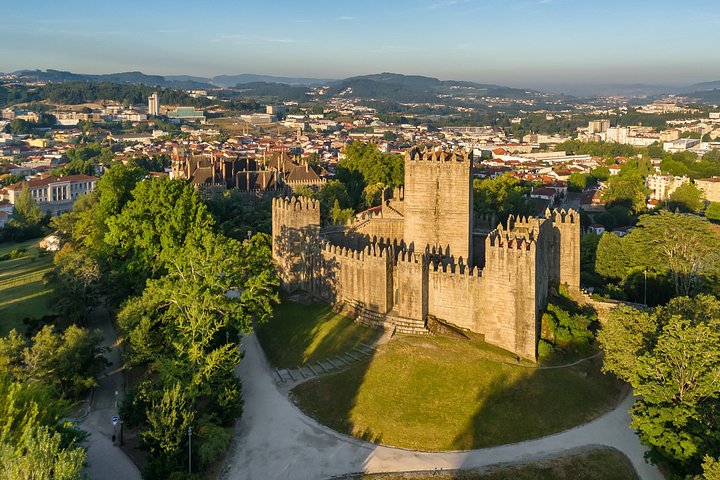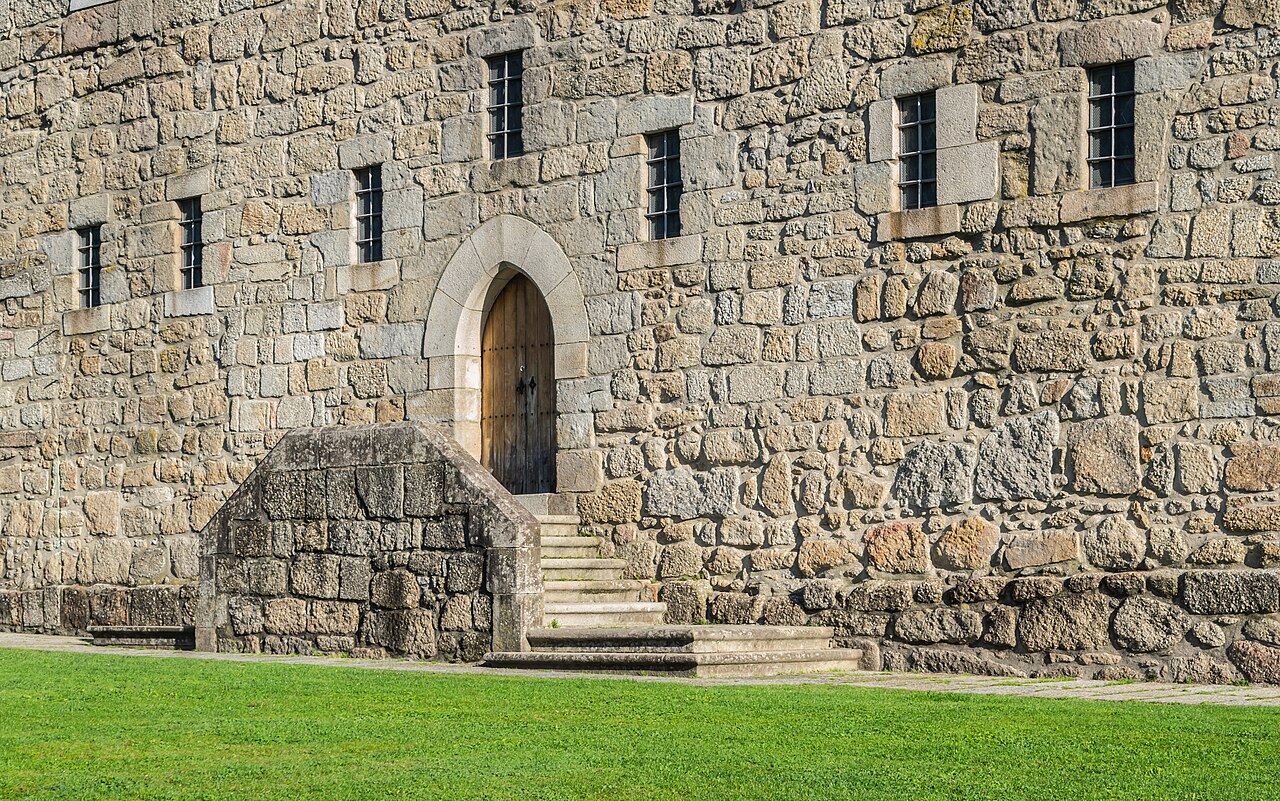
Beside the castle on the hill, the Palace of the Dukes of Braganca looks more like a northern European manor than a Portuguese palace, with its steep roofs, brick walls and forest of tall conical chimneys. It was begun in the early fifteenth century by Afonso, first Duke of Braganca and an illegitimate son of King John I, who had travelled in France and Burgundy and wanted a residence in that style. Later dukes preferred other seats, and the palace fell into ruin until it was restored in the twentieth century and opened as a museum. Parts of it are still used for ceremonies. Inside, the rooms are laid out as a series of large halls with timber ceilings and stone fireplaces, furnished with tapestries from Flanders and Portugal, Portuguese and imported furniture, porcelain, weapons and portraits. The great halls give a sense of scale, and the views from the windows look over the castle, the park and the roofs of the old town. Compared with the castle, the palace is richer in objects and decoration, and together they show two sides of medieval power: defence and display.
Visits are usually self-guided with audio or printed information, and guided tours may be offered at set times, so check the schedule. Allow an hour to an hour and a half. The route involves stairs and can be tiring in summer, although the thick walls keep the rooms cool. Highlights include the Banqueting Hall with its chestnut ceiling shaped like an upturned ship, the tapestry rooms with scenes of conquest in North Africa, and the chapel.
Photography rules vary, so ask at the entrance. Do not expect Versailles: the palace is more austere than the modern restoration might suggest, and its charm comes from scale and atmosphere rather than ornate decoration.
The restoration in the 1930s is itself a subject of debate among historians, since some of the details reflect the taste of the period rather than strict historical accuracy, but this does not spoil the experience for visitors. The best way to see it is in combination with the castle and the park, taking a slow morning to climb from the old town, enter the castle first and then walk across to the palace.
Combined tickets are sometimes available, so ask. The palace is closed one day a week and on some holidays, and last entry is before the posted closing time, so do not arrive late. Children may find long guided tours dull, but the chimneys, armour and great halls usually hold their interest.
After the visit, descend to the old town for lunch in the Largo da Oliveira, and consider the Alberto Sampaio museum afterwards for medieval sculpture and silver. Take a moment at the windows and terraces to compare the view with the castle, because from here you can see how the two buildings guard the same hillside.
The park between them is a pleasant place to rest, and shaded benches make a good stop before you head back into town for lunch. If you are visiting with a guide, ask about the 1930s restoration and the debates around it, which add an interesting layer to the tapestries and the great halls. A short visit to the castle chapel before or after completes the picture of medieval Guimaraes in a single morning on the hill.
What to expect
The experience
A self-guided or guided walk through the palace's great halls, with tapestries, furniture, arms and portraits.
Best time
Mornings are cooler and quieter; late afternoon is gentle.
How long
One to one and a half hours.
Tips
Check the weekly closing day and last entry time, and wear shoes suitable for stairs.
Quick picks
- Best for
- History lovers who want a counterpoint to the castle.
- Families
- Armour and chimneys keep children interested for a short visit.
- Couples
- A slow, atmospheric look at medieval grandeur.
- Pair with
- Guimaraes Castle and the historic centre.
- Time needed
- About an hour and a half.
Good questions
Who built the palace?+
Afonso, first Duke of Braganca, in the early fifteenth century, inspired by residences he had seen elsewhere in Europe.
Is it connected to the castle?+
They stand beside each other on the hill and are usually visited together, though they have separate tickets.
How long should I allow?+
About an hour to an hour and a half.
Are tours available?+
Guided visits may run at set times, and self-guided visits are common. Check at the entrance.
Is the palace accessible?+
It has stairs and uneven floors. Ask about assistance if you need it.