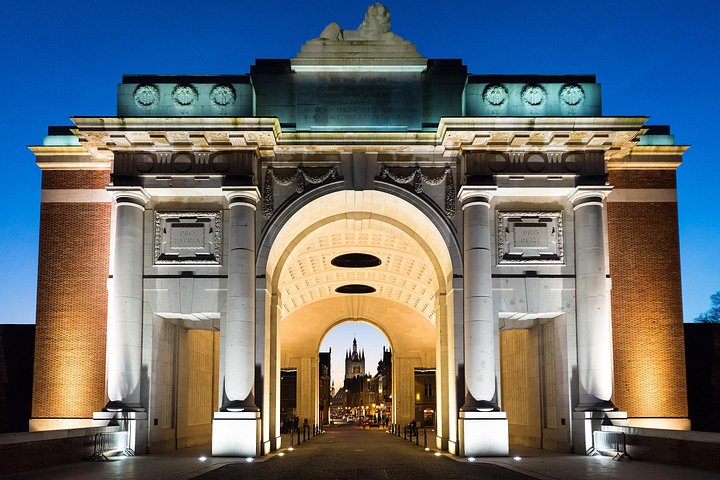
West Flanders was the front line of the First World War for four years, and the countryside around Ypres still holds the cemeteries, trenches and memorials of that conflict. This guided day trip from Bruges is the most straightforward way to see them without a car. Over about ten and a half hours, a guide takes you to the German military cemetery at Vladslo, where Käthe Kollwitz’s sculpture of grieving parents stands, to the preserved trench lines and the Brooding Soldier memorial near Diksmuide, and to Ypres for lunch, the Flanders Fields Museum and the Hill 60 tunnels. Further stops include Essex Farm, where the Canadian doctor John McCrae wrote the poem In Flanders Fields, and Passchendaele, where the scale of the losses is hard to take in. The day ends at the Menin Gate for the Last Post ceremony, sounded by buglers every evening since the 1920s. It is a serious, sobering excursion and one of the most rewarding ways to spend a day beyond Bruges.
How it works
The tour leaves from a meeting point near the Bargeplein in Bruges, with hotel pickup arranged for many bookings, and returns to the same place. The day is long, around ten and a half hours, with a lunch break in Ypres, so it is best treated as a full day. Book well ahead, because the tour is popular and dates fill early, and check the departure time on your voucher, because the schedule is built around the evening ceremony.
What to expect
A mix of driving, short walks and longer visits. Some stops, such as Tyne Cot and Hill 60, may be passed or seen briefly depending on the route and the season, so confirm the itinerary when you book. The cemeteries are places of remembrance, so expect to walk quietly and to dress sensibly. The guide’s commentary is the heart of the day, with the personal stories of soldiers adding emotional weight to the landscape. The Last Post ceremony is brief and moving, and the crowd falls silent under the arch.
Making the most of it
Wear comfortable shoes and weather-appropriate layers, because the fields are exposed, and bring a little cash for lunch and any museum extras. The tour suits adults and teenagers with an interest in history, but it may be too long and too sombre for young children. If you have time, it pairs well with the Ghent day trip as a contrast, but not on the same day.
Many visitors say this is the part of their Belgian trip they remember longest. Bring a rain jacket in any season, snacks for the road and a charged phone for photographs, though respect is expected at the memorials.
Many visitors find it helpful to read a little about the war beforehand, or to bring the names of relatives who served so that the guide can point them to the right cemetery or memorial. The day is emotionally heavy, so plan something light for the evening in Bruges. Because the tour is operated with a guide and a vehicle, you do not need to drive or navigate the rural roads, which is a real advantage on a day with so many separate stops.
Ask the operator about luggage, pickup points and dietary needs for the lunch stop when you book, and keep your voucher handy on the morning of departure.
What to expect
The experience
A guided full-day excursion by vehicle to Great War cemeteries, trenches and museums around Ypres, ending at the Menin Gate ceremony.
Best time
Any season, though daylight is short in winter and routes can be adjusted, so book early and confirm the itinerary.
How long
About ten and a half hours from the Bruges meeting point and back.
Tips
Wear comfortable shoes and layers, bring cash for lunch and treat the cemeteries with quiet respect.
Quick picks
- Best for
- History lovers and families tracing relatives who served in the Great War.
- Families
- Best for teenagers and adults. The day is long and sombre for young children.
- Couples
- A meaningful shared day for couples with an interest in history.
- Pair with
- A quiet evening in Bruges, and the Ghent day trip on another day for contrast.
- Time needed
- A full day, about ten and a half hours.
Good questions
How long is the Flanders Fields tour from Bruges?+
It takes about ten and a half hours, including a lunch break in Ypres and the evening Last Post ceremony.
What does the tour visit?+
Stops include the German cemetery at Vladslo, the Trench of Death and the Brooding Soldier memorial, Ypres with the Flanders Fields Museum and Hill 60, Essex Farm, Passchendaele and the Menin Gate.
What is the Last Post ceremony?+
It is a short ceremony at the Menin Gate in Ypres in which buglers sound the Last Post, held every evening to honour the fallen.
Is the tour suitable for children?+
It suits teenagers and adults best. The day is long and the subject is sombre.
Where does the tour start?+
It starts from a meeting point near the Bargeplein in Bruges, and hotel pickup is offered with many bookings.