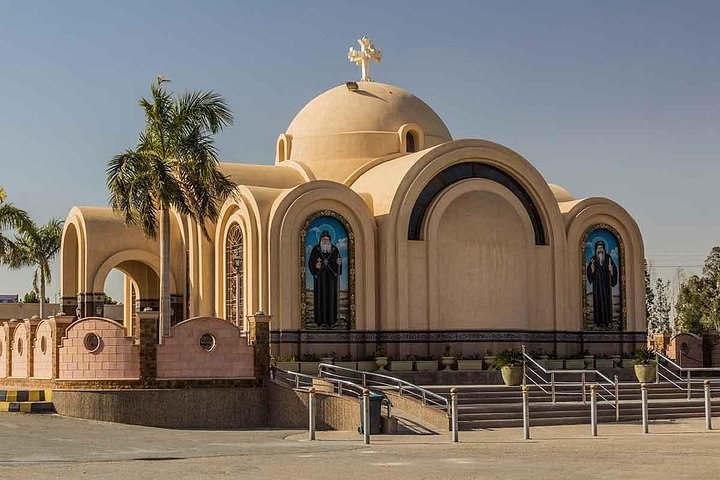
Wadi El Natrun is a desert valley about ninety kilometres north-west of Cairo, on the road to Alexandria, and it is one of the cradles of Christian monasticism. From the fourth century onwards, hermits and communities settled here, and the monasteries that survive, among them the Monastery of Saint Bishoy and the Syrian Monastery, are still home to monks. Their walls shelter churches with ancient wall paintings, libraries of manuscripts, fortified towers built as refuges and gardens that seem improbable in the desert. For visitors interested in the Coptic Christian heritage of Egypt, a day here adds a rural, spiritual layer that complements Coptic Cairo and offers a view of Egypt very different from the Pharaonic sites.
How it works
A day tour from Cairo takes you by road to the valley, with visits to several monasteries accompanied by a guide, who explains the history of the desert fathers and the Coptic tradition. Itineraries vary, so check which monasteries are included and whether lunch is provided. Monasteries have their own visiting hours and sometimes close during fasts or events, so a local guide is helpful.
What to expect
Quiet courtyards, whitewashed walls, old churches with icons and wall paintings, and monks in black robes who may greet visitors. Dress modestly, with shoulders and knees covered, and women should carry a scarf. The atmosphere is that of a working religious community rather than a museum, so speak softly and ask before taking photographs inside churches. Some monasteries have shops selling honey, icons and handmade items.
Making the most of it
Combine the monasteries with a stop at the salt lakes or a lunch on the road, and start early to avoid the heat. The trip pairs well with an Alexandria day or with Coptic Cairo for those who want to follow the Christian story across Egypt. If you are visiting at a time of religious fasting or festival, expect extra visitors and shortened access. Carry small notes for donations or purchases, and keep the day relaxed rather than rushed.
Good to know
The name Wadi El Natrun comes from the natron salts found in the valley’s lakes, which the ancient Egyptians used in mummification and cleansing. Later, the same remote setting drew early Christian hermits, among them followers of Saint Macarius, and the monasteries became centres of learning and Coptic language. Several of the communities have grown again in recent decades and farm the surrounding land, producing vegetables, dates and honey.
Visiting hours and access to specific churches change, especially during Lent and around major feasts, so ask your guide about conditions on the day. Some monasteries do not admit visitors at certain times, and photography inside churches is restricted. The valley is quiet and the visits are slow, so avoid cramming too much into one day. Bringing a scarf, modest clothing and a little cash for the monastery shops is all the preparation you need.
Who it suits
Visitors drawn to religious history, quiet places and rural Egypt. If you prefer museums and monuments, Coptic Cairo gives a shorter introduction to Christian Egypt, while this trip rewards those willing to spend a day in motion for a more contemplative experience.
What to expect
The experience
A guided day tour by road from Cairo to several working monasteries in the Wadi El Natrun valley.
Best time
Morning start, cooler months preferred.
How long
A full day including the drive of about an hour and a half each way.
Tips
Dress modestly, carry a scarf, ask before photographing inside churches and check opening hours.
Quick picks
- Best for
- Visitors interested in Christian history and quiet, spiritual places.
- Families
- Suitable for older children who can behave respectfully in religious sites.
- Couples
- A reflective, unusual day trip.
- Pair with
- Coptic Cairo or a day in Alexandria.
- Time needed
- A full day.
Good questions
Where is Wadi El Natrun?+
In the desert about ninety kilometres north-west of Cairo, along the road to Alexandria.
Are the monasteries open to visitors?+
Several are, during set visiting hours, but access can change during fasts and religious events, so use a guide who knows the current arrangements.
What should I wear?+
Modest clothing with shoulders and knees covered. Women should carry a scarf.
Can I take photographs?+
Usually outside, but ask before photographing inside churches or of monks.
Can I combine it with Alexandria?+
Yes, the valley lies on the way, and some itineraries combine them.