Westgate Towers is the grandest survivor of Canterbury's medieval defences and the largest surviving medieval gateway in England. It was built in the late fourteenth century, in the years when fear of French raids made walled towns nervous, and its two drum towers and battlements still straddle the road in from London just as they were meant to. For centuries the gateway also served as the city gaol, and that grim past is part of the visit. Inside, small museum rooms cover city wars, crime and punishment, the long story of the gate itself and a collection of Magna Carta maquettes, while restored police cells hint at later uses. At the top, a battlemented viewpoint gives sweeping views over rooftops, the cathedral and the River Stour below. It is compact, atmospheric and quick to see, which makes it an easy add-on to a morning in the old centre.
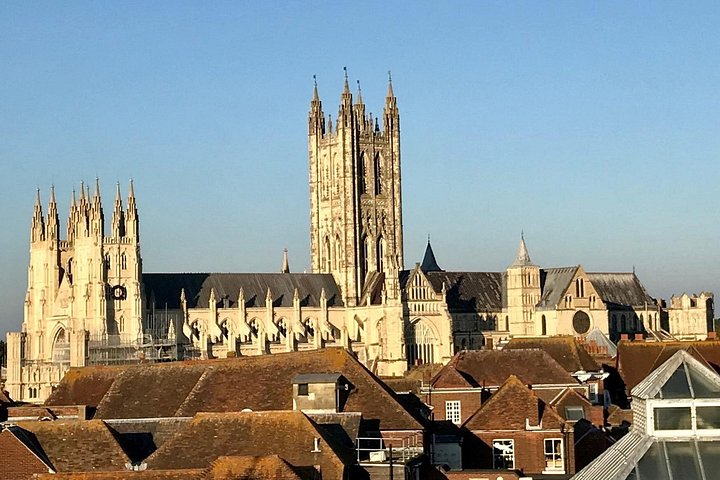
Expect a climb. The route up goes through narrow stone stairways and low doorways, and there are plenty of steps, so it is not suited to anyone who struggles with stairs, and it is worth leaving pushchairs and large bags at the bottom. The effort pays off at the top, where the view stretches from the Westgate Gardens and the river, along the line of the High Street and across to the towers of the cathedral.
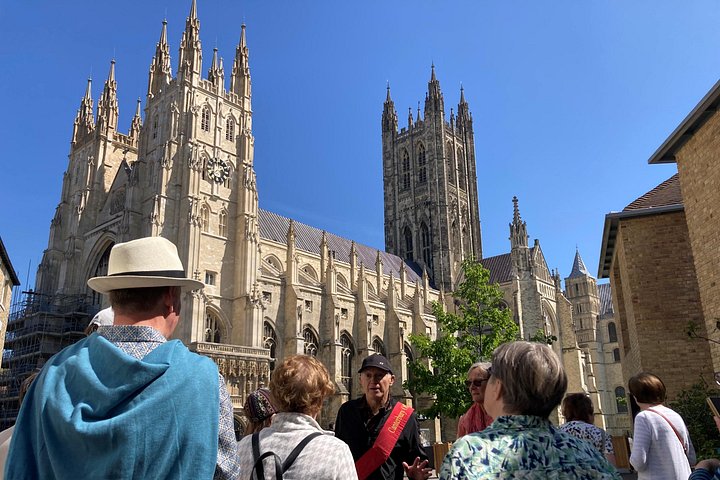
On a clear day it is the best way to see how small and tightly packed the medieval city really was, and it makes a good first stop before a walking tour because the geography suddenly makes sense.
The museum rooms below are modest but well judged. You can read how Canterbury defended itself, why the gate was rebuilt in stone, and how prisoners were held and tried when the building served as a gaol. Allow about forty-five minutes to an hour for the whole visit, a little longer if you read every display or linger on the battlements.
Opening days and hours follow a seasonal pattern and the museum can close for private events, so check the current days when you book rather than assuming a daily schedule. Tickets are modestly priced, and children usually enjoy the climb and the cells.
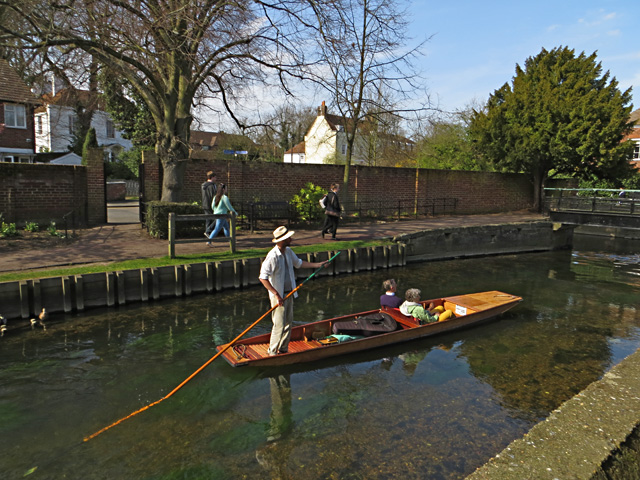
The gateway sits beside the river and the Westgate Gardens, so it combines naturally with a punt trip or a stroll along the water. The Pound, the bar in the building, has a terrace overlooking the Stour and is a pleasant place for a drink or a bite after the climb, particularly in the warmer months. Most visitors approach on foot along the High Street from the cathedral end, which takes about ten minutes and passes shops and medieval timber-framed houses.
The towers stand close to Canterbury West station, so they are also one of the first historic sights you meet if you arrive by train. Wear shoes with grip, as the old steps can be uneven and worn.
Think about timing as well as season. Early in the day the stairs are quietest and the light on the stone is soft, while late afternoon in summer brings golden light across the roofs. In wet or windy weather the battlements are exposed, so a waterproof is wise, and it is sensible to keep hold of the handrails on the worn steps.
The gateway is also a useful orientation point for the rest of the day: from the top you can pick out the cathedral, the river bends and the line of the old walls, and that picture makes every later stop easier to place.
What to expect
The experience
A self-paced climb through small museum rooms and former cells to a rooftop viewpoint over the city.
Best time
A clear morning for the best views, before a punt trip or walking tour.
How long
About 45 minutes to an hour.
Tips
Wear shoes with grip, travel light for the narrow stairs and check seasonal opening days when you book.
Quick picks
- Best for
- Anyone who wants the best view of the old city and a quick taste of its defensive past.
- Families
- Children enjoy the stairs, the battlements and the cells, but the climb is steep and unsuitable for pushchairs.
- Couples
- Climb for the view, then have a drink on the river terrace.
- Pair with
- Punting on the Stour or a stroll through Westgate Gardens next door.
- Time needed
- Allow about an hour.
Good questions
Why is Westgate Towers famous?+
It is the largest surviving medieval gateway in England, built in the late fourteenth century as part of Canterbury's defences. It later served as the city gaol.
Can I go to the top of Westgate Towers?+
Yes, the visit ends at a battlemented viewpoint with views over the city and the cathedral. The route involves many narrow steps.
Is Westgate Towers suitable for wheelchairs or pushchairs?+
No, the stairs are narrow and numerous, so the upper levels are not suitable for wheelchairs or pushchairs. Check with the venue about what can be seen at ground level.
How long does a visit take?+
Most visitors need 45 minutes to an hour. Allow longer if you want a drink on the terrace afterwards.
Is there a cafe or bar?+
Yes, The Pound is a bar in the building with a terrace overlooking the river. Opening depends on the season and on events.