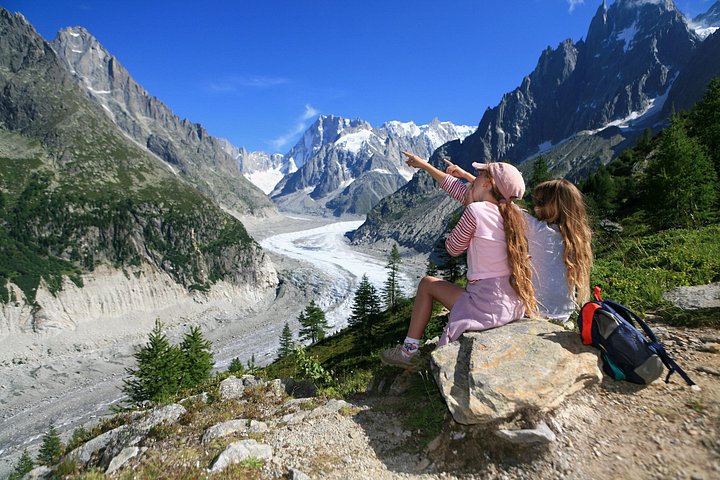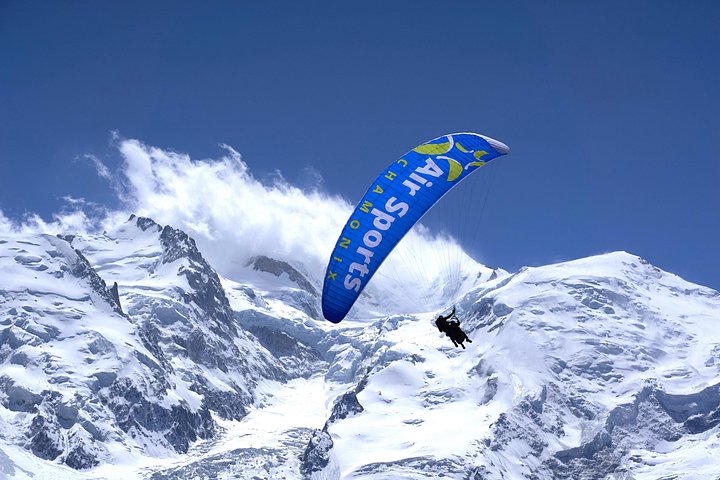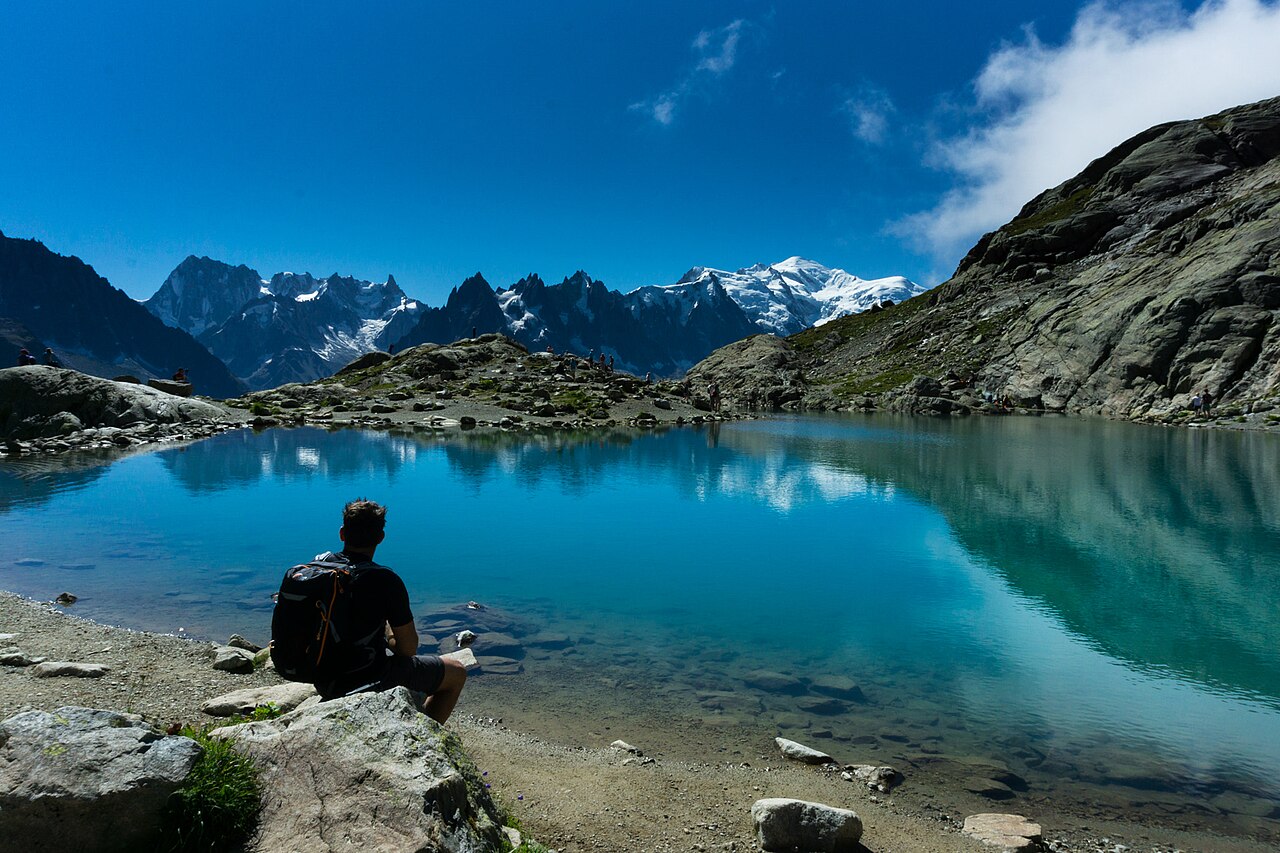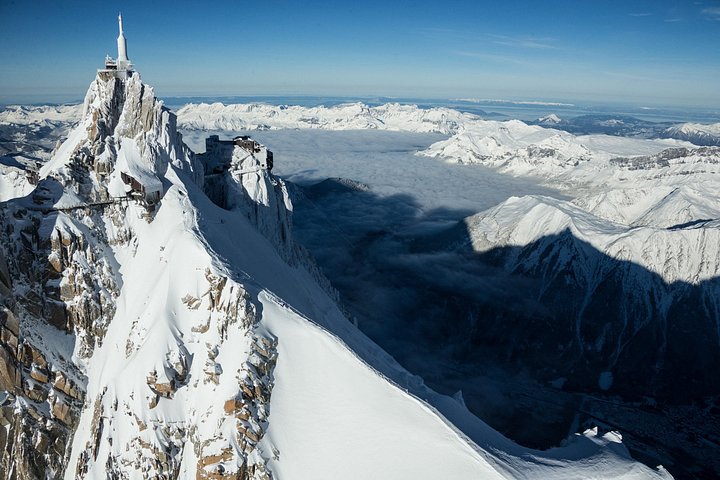
Chamonix town is the base for everything else, and it is a pleasant destination in itself. The centre is compact and largely pedestrian, with the Arve river running through, flower-filled streets in summer, and views up to snow and rock from almost any corner. The town is the birthplace of mountaineering: the statue of Horace-Bénédict de Saussure and Jacques Balmat points up toward Mont Blanc, which Balmat and Michel Paccard first climbed in 1786, and the whole town is steeped in climbing culture. Walk along the main streets and you pass outdoor shops, bakeries, cheese shops, cafes and restaurants serving Savoyard dishes such as fondue, raclette and tartiflette. There is a church, a small museum devoted to the history of the valley, and an active cultural calendar with markets and events. It costs nothing to enjoy, which makes it the best choice for a day when the lifts are closed.
This is the sight that is open right now. In November the lifts are shut and the valley is in between seasons, with some restaurants and shops on reduced hours or closed for a few weeks, but the town itself is quiet, atmospheric and easy to walk. It is a good moment to see Chamonix without the crowds, to browse the shops and to take the low-level walks that leave from the centre.
The weather can be anything from sunny autumn days to early snow, so carry layers and check the forecast. Many hotels and restaurants reopen in early December for the winter season, so check opening dates for the places you want to visit.
A sensible walking route starts at the Place Balmat, where the statue stands, and follows the main pedestrian streets to the church and the river. Continue along the Arve to the Parc Couttet, then loop back through the side streets for a bakery stop. If you want some history, the Alpine Museum tells the story of climbing and the valley and is usually a fine rainy-day choice, though it is a paid sight with its own hours.
Evening is when the restaurants fill, so book a table for fondue or raclette at weekends and during school holidays.
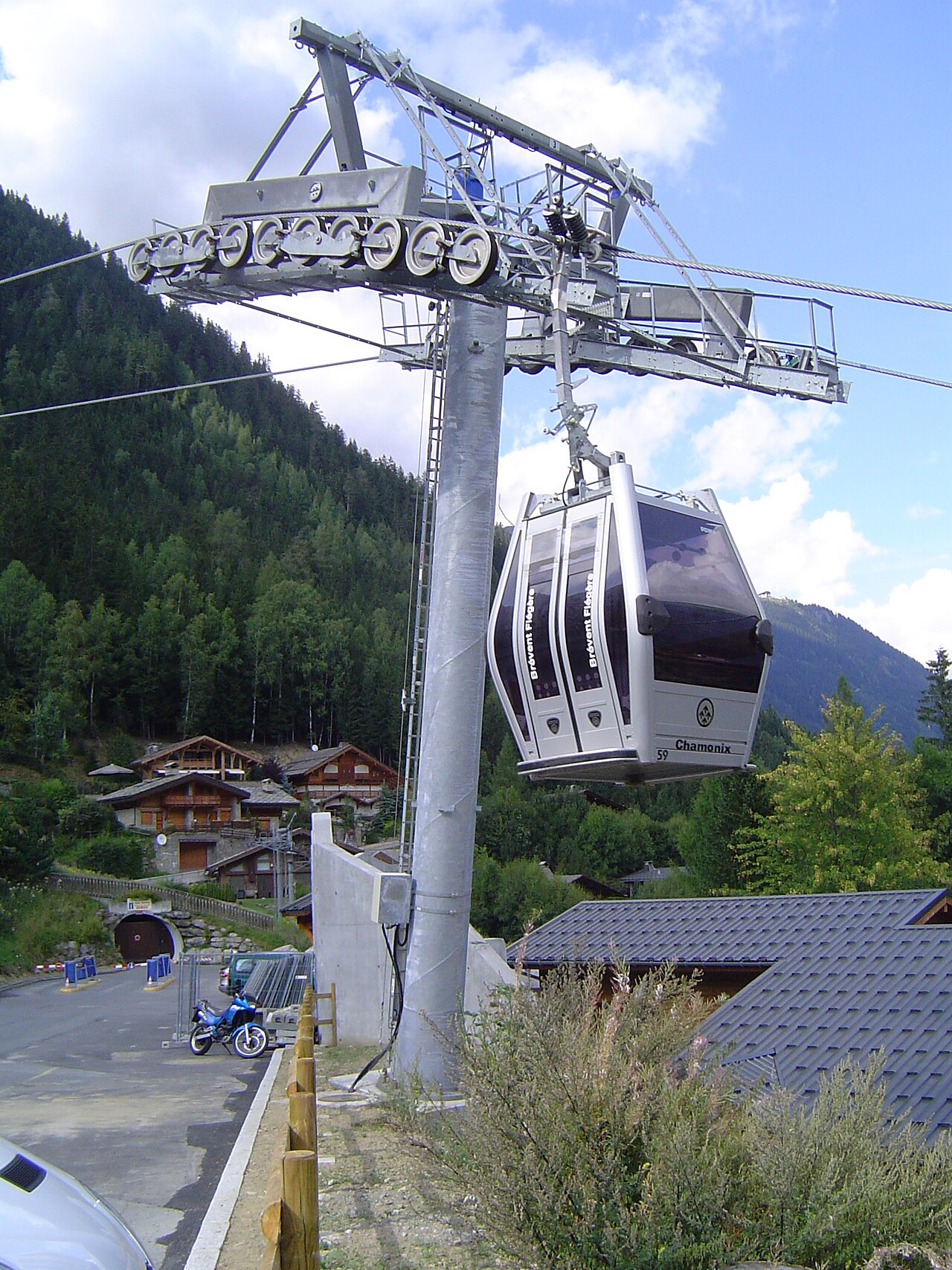
For getting around, the centre is very walkable, and the Mont-Blanc bus and the valley train link the other villages and lift stations. The railway station is at the edge of the centre, and the Montenvers train, the Aiguille du Midi cable car and the Brévent lift are all within a short walk.
A guided or self-guided walking tour is a nice way to learn the local stories and see the less obvious corners. Parking in the centre is limited and often paid, so if you are driving, use the car parks on the edge of town and walk in.
What to expect
The experience
A self-guided stroll through the pedestrian centre, along the Arve river and past the climbers' statue, cafes and shops.
Best time
Any time of year; in November it is quiet and a fine day for strolling while the lifts are closed.
How long
Two to three hours for a relaxed walk, longer with a museum or a long lunch.
Tips
Carry layers, check restaurant opening dates in the off season and book dinner ahead at weekends and in school holidays.
Quick picks
- Best for
- Anyone who wants an easy first day, a free activity or a plan B when the weather is poor.
- Families
- Flat, safe pedestrian streets and plenty of places for hot chocolate make it easy with children.
- Couples
- A late-afternoon stroll by the river followed by a fondue dinner is a classic Chamonix evening.
- Pair with
- The Montenvers train, the Alpine Museum and a short ride up the Brévent.
- Time needed
- Half a day.
Good questions
Is Chamonix worth visiting in November?+
Yes if you like quiet. The lifts are closed, but the town, its cafes and its low-level walks are open, and you see the valley without crowds.
Is Chamonix town free to visit?+
Yes, wandering the town and the river paths costs nothing. You pay only for museums, lifts and activities.
Who first climbed Mont Blanc?+
Jacques Balmat and Michel Paccard reached the summit in 1786. A statue of Balmat and Horace-Bénédict de Saussure stands in the centre.
How do I get around the valley?+
The centre is walkable, and the Mont-Blanc bus and the valley train link the villages and lift stations.
What should I eat?+
Savoyard dishes such as fondue, raclette and tartiflette are the local choice. Book ahead at weekends and in school holidays.