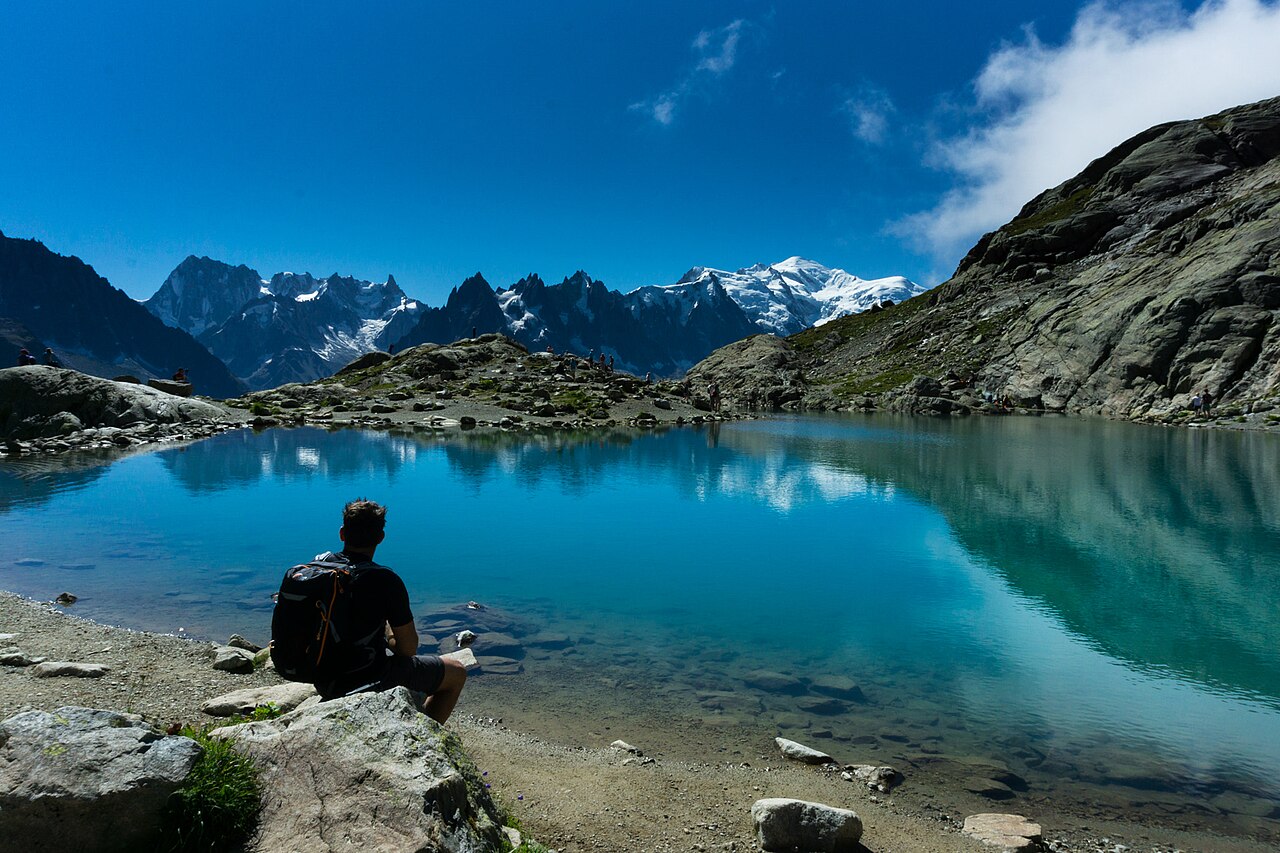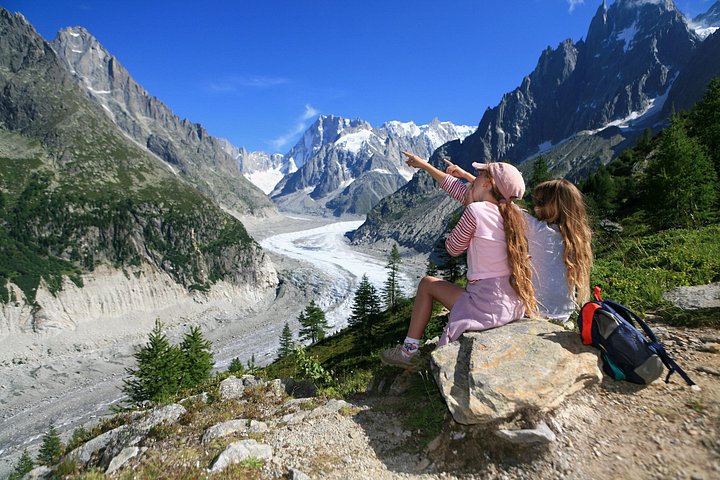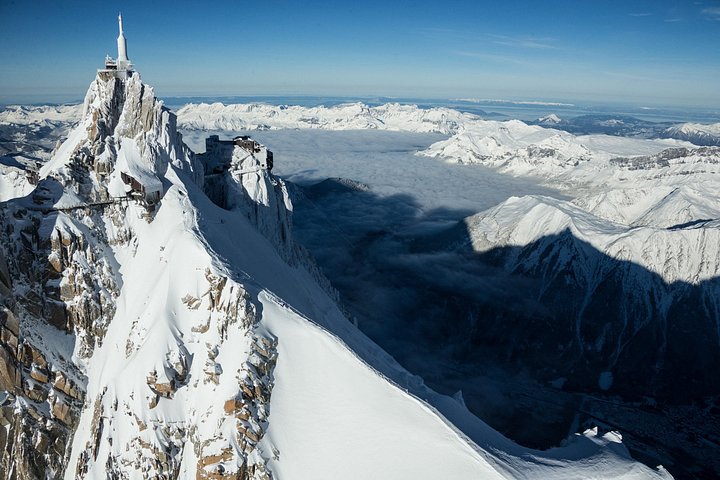
Vallon de Bérard is the valley that most Chamonix visitors never see, and that is exactly its appeal. It is a small nature reserve on the northern slopes of the Aiguilles Rouges, on the right bank of the Eau de Bérard stream, rising from about 1,700 metres in the valley floor to the Aiguille du Belvédère at 2,965 metres. The tourist office describes it as an ancient glacial cirque with four hanging glaciers, whose moraines feed scree, rockfalls and a patchwork of slope forms, and with a view across to the Mont Blanc massif. Avalanches sometimes sweep away the forest, which is replaced by rhododendron, moorland and alpine lawns, and green alder colonises the avalanche tracks. About twenty rare or protected plant species have been recorded here, six of them protected in France. Access is free and the reserve is open every day of the year.
The wildlife is the draw. The valley holds the typical high-mountain community of ibex, chamois, black grouse, golden eagle and the wallcreeper, a small crimson-winged bird that clings to rock faces, and the Bérard pass is an important migration corridor for birds. Binoculars and patience repay you here more than speed. Walkers come mainly in the snow-free months, and the valley is commonly approached from the village of Le Buet, on the Vallorcine side, along a path that follows the stream beneath the forest and then climbs to a mountain refuge and a waterfall.
Ask the tourist office or the reserve contact line, which the tourist office provides, about the route and the conditions before you set out, because published trail details are thin.
This is not a place for casual strolling in light shoes. The terrain is steep and rocky, the weather changes fast, and snow can lie on the upper path well into early summer. Carry water, food, a windproof jacket and a map, tell someone your route, and start early so that you are off the mountain before afternoon storms. In winter the valley is a place for experienced ski tourers and snowshoers, and avalanche risk is real, so go with a guide unless you have the training.
Treat the reserve with care. Keep to the paths, take your litter home, leave flowers where they grow and keep your distance from the animals, especially in early summer when young are on the ground. Pair a walk here with the Col des Montets visitor centre in the neighbouring Aiguilles Rouges reserve for a fuller picture of how the two protected areas fit together, and with a late lunch in Argentière or Vallorcine on the way back to the main valley.
Because trail details for the reserve are thin, treat the tourist office as your planning partner, and leave time to talk to staff, who know which paths are in good order. Consider the valley as a counterpoint to the busy Lac Blanc: it rewards walkers who prefer silence to a famous reflection.
Bring layers, because the shaded valley floor can feel cold even on a warm day, and keep an eye on the sky, as afternoon storms build quickly over the high ground. Leave early, return early and you will have the day's best light and the animals at their most active.
What to expect
The experience
A protected glacial valley explored on foot, with hanging glaciers, high-mountain wildlife and a stream-side approach path.
Best time
Summer and early autumn, in settled weather and after the snow has cleared from the path.
How long
Half a day to a full day depending on how far you walk.
Tips
Ask about conditions before you go, carry water and a windproof layer, start early and keep to the paths.
Quick picks
- Best for
- Experienced walkers and wildlife watchers who want solitude and big scenery.
- Families
- Better for older children used to long mountain walks; the terrain is steep and the weather changes fast.
- Couples
- A quiet day out with a picnic, a refuge stop and a very good chance of seeing ibex.
- Pair with
- The Col des Montets visitor centre and a late lunch in Argentière or Vallorcine.
- Time needed
- A full day for most walkers.
Good questions
Is Vallon de Bérard free to enter?+
Yes. Access is free and the reserve is open every day of the year.
What animals can I see?+
Ibex, chamois, black grouse, golden eagles and wallcreepers live here, and the Bérard pass is a bird migration corridor.
Where is it?+
On the northern slopes of the Aiguilles Rouges, near the head of the valley beyond Argentière. Walkers commonly approach from Le Buet.
When is the best time to go?+
Summer and early autumn, once the snow has cleared. In winter it is a place for experienced ski tourers and snowshoers with a guide.
Do I need a guide?+
Not for the main summer path in good weather if you are experienced, but check conditions first. A guide is wise for winter and for the high routes.