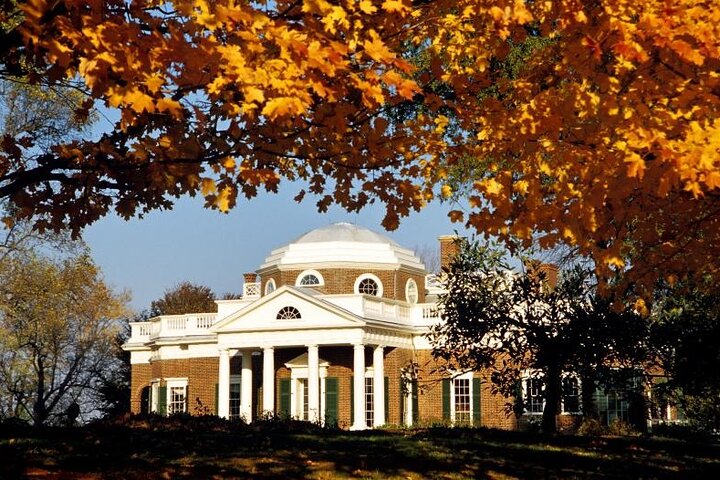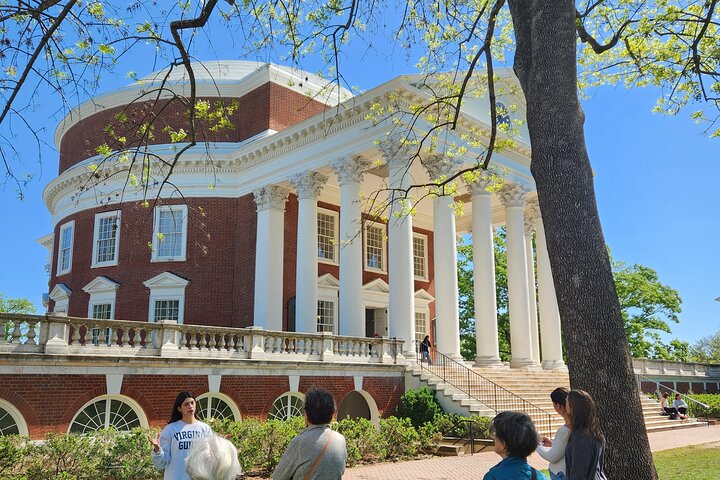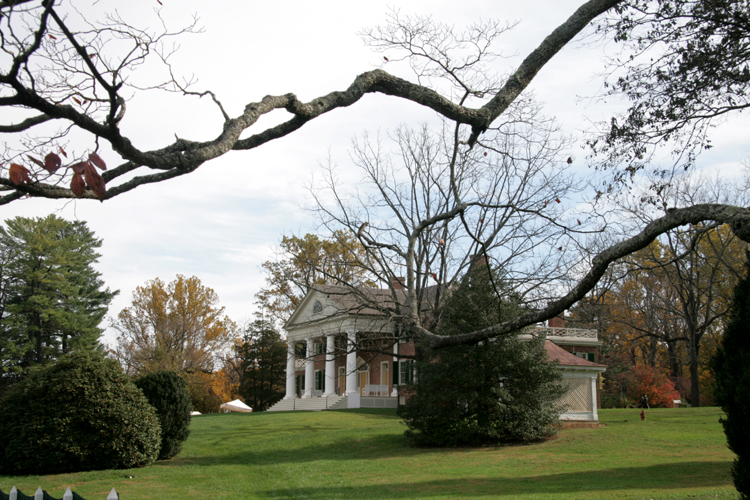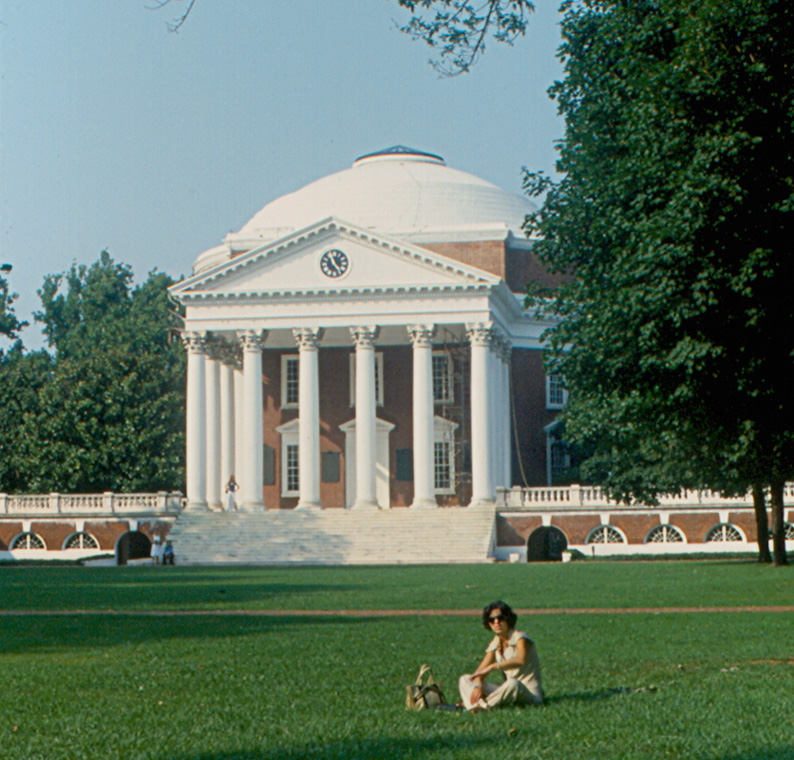
The University of Virginia was Thomas Jefferson's last great project, and he regarded it as a fitting capstone to his life. He designed the Academical Village as a living, working lesson in architecture and community: a long, terraced lawn with a library at the head, flanked by ten pavilions for professors and rows of student rooms, all joined by colonnades. Today the Rotunda, modeled on the Pantheon in Rome, and the Lawn are part of the same UNESCO World Heritage inscription as Monticello, and a walk through them is one of the best free hours you can spend in Charlottesville.
Start at the Rotunda, whose white dome and portico anchor the north end of the Lawn. The building has been rebuilt and restored more than once, most dramatically after a fire in 1895, and the interior today includes the Dome Room, a circular space of great calm that is used for ceremonies and events. Tours of the Rotunda are offered when the building is open, and student guides often lead walking tours of the grounds, so check the university's visitor information for the current schedule before you go.
The Lawn is the real prize. Walk down its length and you pass the pavilions, each designed in a different classical style as a teaching example, and the single-story student rooms that open onto the colonnade. A small number of rooms are still occupied by chosen fourth-year students, and you can recognize them by the rocking chairs and the quiet respect people show.
One preserved room, number 13 West Range, is associated with Edgar Allan Poe, who studied here briefly in 1826 and is remembered with a small display. Behind the pavilions lie the serpentine-walled gardens that Jefferson designed, a short, secluded stroll that surprises first-time visitors.
The campus also tells a more complete story than it once did. The Memorial to Enslaved Laborers, a ring of granite set into the ground near the Rotunda, honors the people who built and maintained the university and whose labor sustained its early years. Visiting it alongside the Rotunda is a useful complement to Monticello's interpretation and reflects how much of Jefferson's world rested on enslaved work. The university also has museums, including the Fralin Museum of Art and the Kluge-Ruhe collection, both worth adding to a longer day.
Practical advice is simple. The grounds are free to walk and are best in the morning or at sunset, when the brick glows and the Lawn empties. Parking near the Rotunda is limited, so use a garage on the campus edge or walk up from the Corner, the lively strip of cafes and shops across from the grounds. Graduation weekend in May and home football Saturdays are very busy, while summer is quieter and the campus is at its most relaxed. Wear comfortable shoes, because the Lawn slopes and the paths are brick.
What to expect
The experience
A self-guided walk down the Lawn, with optional Rotunda access and student-led tours when offered.
Best time
Mornings and late afternoons for soft light; spring for blossoms; avoid graduation weekend and football Saturdays.
How long
One to two hours on foot.
Tips
Check Rotunda opening hours before you go, walk the garden paths behind the pavilions, and add a coffee at the Corner.
Quick picks
- Best for
- Architecture fans and anyone curious about Jefferson beyond Monticello.
- Families
- Open space and a short, easy walk; keep children off the pavilion porches.
- Couples
- A late-afternoon stroll followed by dinner on the Corner or the Downtown Mall.
- Pair with
- Monticello, the Kluge-Ruhe collection and the Corner for lunch.
- Time needed
- Ninety minutes to two hours.
Good questions
Is it free to visit?+
Walking the grounds is free. Special tours or events may have their own arrangements.
Can I go inside the Rotunda?+
Usually, when it is open to visitors, but access varies with events and the academic calendar, so check before you go.
Is the campus the same as the Downtown Mall?+
No. The university sits a mile or two west of the Mall, connected by a short drive or bus ride.
Where do I park?+
Visitor parking is limited. A campus garage or a walk from the Corner is easier than looking for a spot near the Lawn.
Why is it a World Heritage Site?+
UNESCO inscribed the Academical Village together with Monticello in 1987 as an outstanding example of Jefferson's architecture and ideas.