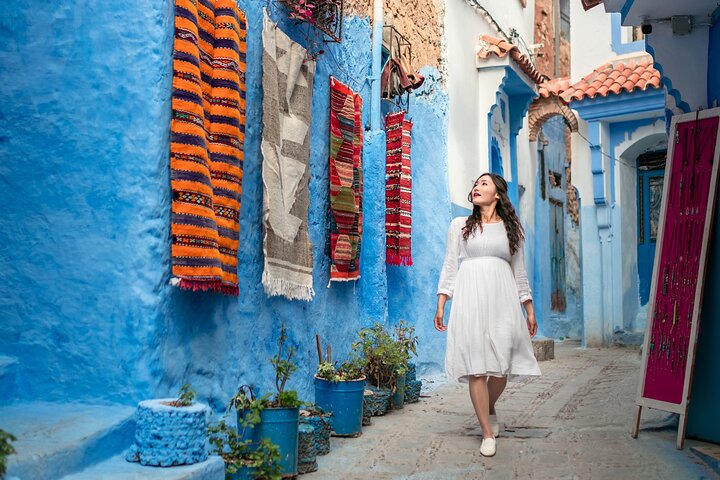
Plaza Uta el-Hammam is the living room of Chefchaouen, a cobbled square ringed by cafes, craft shops and the Grand Mosque, and the kasbah forms its northern edge. The fortress was founded in the mid-15th century by Moulay Ali Ben Rachid, and the medina grew up around it. Inside the walls you find a restored courtyard garden, a stout tower and a small ethnographic museum that opened in 1985. Its three galleries and central patio hold traditional musical instruments, pottery, wood carving, embroidery and weapons, a modest but charming collection that helps explain local life in the Rif. The tower can be climbed for views across the roofs to the mountains. Outside, the square is the best place in town to sit with mint tea and watch the day go by, and it grows livelier as evening arrives.
The kasbah is roughly rectangular, about 72 by 52 metres, with bastions and square towers, and a larger tower added later on the western side. The main tower rises three floors, opening onto a garden at ground level, with chambers above and a covered terrace at the top.
Rough Guides also notes an old prison within the complex, which gives the visit a touch of drama. The museum is small and quickly seen, so treat it as a calm interlude rather than a major collection, and read the labels for the stories about weaving, music and everyday objects.
Hours are indicative and can change, with sources suggesting morning and mid-afternoon openings every day, so check at the entrance or ask your hotel before you plan around it. Tickets are inexpensive and paid at the gate. The square outside has no entry fee at all. A sensible plan is the kasbah first, when it is quiet, then tea on the plaza, then the Grand Mosque exterior, which is closed to non-Muslims inside.
Cafes around the square charge a little more for the position, so walk one lane back if you want lower prices. Evening is the best time for atmosphere, with families and friends filling the benches.
What to expect
The experience
A self-guided visit to a restored 15th-century fortress with a courtyard garden, a small ethnographic museum and a climbable tower, beside the town's main square.
Best time
Early in the day for the kasbah, then late afternoon or evening for the square, when it is at its liveliest.
How long
About an hour for the kasbah and museum, longer if you stay on the plaza for tea.
Tips
Check opening hours at the gate, bring a little cash for the ticket, and watch your head on low doorways inside the tower.
Quick picks
- Best for
- Anyone who wants a short, easy dose of history right in the middle of town, with no planning.
- Families
- Children enjoy climbing the tower and exploring the courtyard, but watch them on steep, narrow steps.
- Couples
- Take mint tea on the plaza in the late afternoon and linger as the lights come on.
- Pair with
- Ras el-Maa spring is a short stroll away, and the Spanish Mosque path starts on the same side of town.
- Time needed
- One hour for the kasbah and museum, plus time for tea on the square.
Good questions
What is inside the kasbah?+
A restored courtyard garden, a three-storey tower and an ethnographic museum showing instruments, pottery, wood carving, embroidery and weapons. It is small, so one hour is usually plenty.
When is the kasbah open?+
Hours given in guides are roughly morning and mid-afternoon, but they are described as indicative and can change. Ask at your hotel or at the gate on the day.
Can I climb the tower?+
The tower has a covered terrace at the top and is part of the visit, though access can vary. Expect narrow, steep stairs and take care with children.
Is Plaza Uta el-Hammam free to visit?+
Yes, the square is open to everyone at any time, and the only cost is whatever you order at the cafes. Prices are a little higher right on the square than one lane back.
Can non-Muslims enter the Grand Mosque?+
No, the mosque is for worshippers, but you can admire its exterior and tower from the plaza. Keep voices low and dress modestly around it.