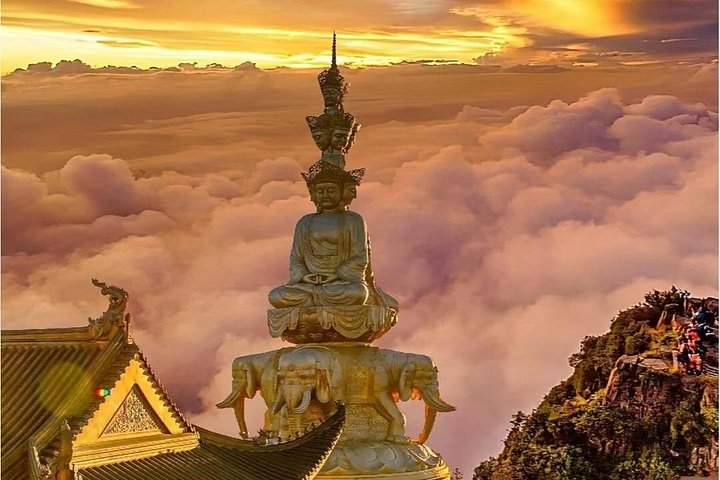
Mount Siguniang, whose name means Four Sisters, is the highest and most photographed mountain group in the Qionglai range, and it makes a rewarding step up from the standard Chengdu day trips. Four snow-capped peaks rise above forested valleys, grassland and Tibetan villages, and the main visitor valleys are reachable by road in a long day from Chengdu. A two-day tour is the realistic way to see it without rushing, with an overnight stay near the mountains and a visit to the panda area at Wolong on the route. The scenery is dramatically different from the lowland city: thin air, clear light, prayer flags and wide meadows. If you have already seen the pandas, Leshan and Dujiangyan and want one trip that feels properly like the mountains of western China, this is a strong candidate.
What the trip involves
The route heads west from Chengdu, climbing through the Wolong area, where you can stop for the pandas, and continuing to the Siguniang valleys. Changping Valley is the gentlest and most popular, with broad meadows, streams and a flat walking path beneath the peaks. Haizi Gou and Shuangqiao Valley are longer and more varied, and the trip you choose determines how much walking you do. Many tours include a stay in a guesthouse in the small town at the mountain’s foot.
Altitude
The area sits at considerable height, and the road passes over a high pass, so some visitors feel breathless, headachy or tired. Take it easy on the first day, drink plenty of water, avoid alcohol and heavy meals, and tell your guide if you feel unwell. If you have a heart or respiratory condition, check with a doctor before you go. Weather can change fast, so layers and a waterproof are essential.
Seasons
Late spring to autumn is the main visiting season, with the clearest views in autumn, when the larch and aspen turn colour and the skies are crisp. Winter brings snow and may close some roads and trails, so check conditions before booking. Summer is green and lush but can be wet.
Culture
The area is home to Tibetan and Qiang communities, and you will see white stupas, prayer flags and traditional houses. Be respectful in villages, ask before photographing people, and walk around stupas clockwise.
Practical points
Bring sturdy shoes, sun protection, a hat, gloves in cool months and a small daypack. Mobile coverage can be patchy in the valleys, so download offline maps. Check what is included, such as park entry, shuttle buses, meals and accommodation.
Who it suits
Active travellers, photographers, couples who like the outdoors and anyone who can spare two days beyond the usual city sights. It is not ideal for those with mobility issues or serious altitude concerns.
Making the most of it
Choose a guide who is relaxed about pace, and be willing to turn back if the weather or your body says so. Keep your valuables light, carry some cash for small purchases in the villages, and bring snacks, since options can be limited. A good headlamp or torch helps in guesthouses where lighting is basic, and a warm layer is welcome at night even in summer.
What to expect
The experience
A two-day guided trip west from Chengdu, with valley walks beneath the peaks, an overnight stay and a panda stop on the way.
Best time
Autumn for the clearest views; late spring and summer are green; winter may limit access.
How long
Two days with long drives on each.
Tips
Take altitude seriously, pack layers and waterproofs, and confirm what entry and shuttle fees are covered.
Quick picks
- Best for
- Active travellers and photographers who want real mountain scenery.
- Families
- Best for older children who can handle altitude and long drives.
- Couples
- Quiet meadows and big views make a memorable shared trip.
- Pair with
- A hot pot dinner on your return to Chengdu.
- Time needed
- Two days.
Good questions
How long does it take to reach Mount Siguniang?+
The drive from Chengdu takes several hours each way, which is why most visitors take a two-day trip with an overnight stay.
Is altitude a problem?+
It can be. The valleys and the pass on the road are high, so some people feel breathless or get headaches. Go slowly, drink water and tell your guide if you feel unwell.
When is the best time to go?+
Autumn offers clear skies and colour, spring and summer are green, and winter may restrict access to roads and trails.
Do I need to be fit?+
The valley walks are mostly gentle, but the altitude makes them tiring. Longer trails need more fitness and time.
Can I combine it with the pandas?+
Many two-day tours stop at the Wolong panda area on the way, so it is a convenient pairing.