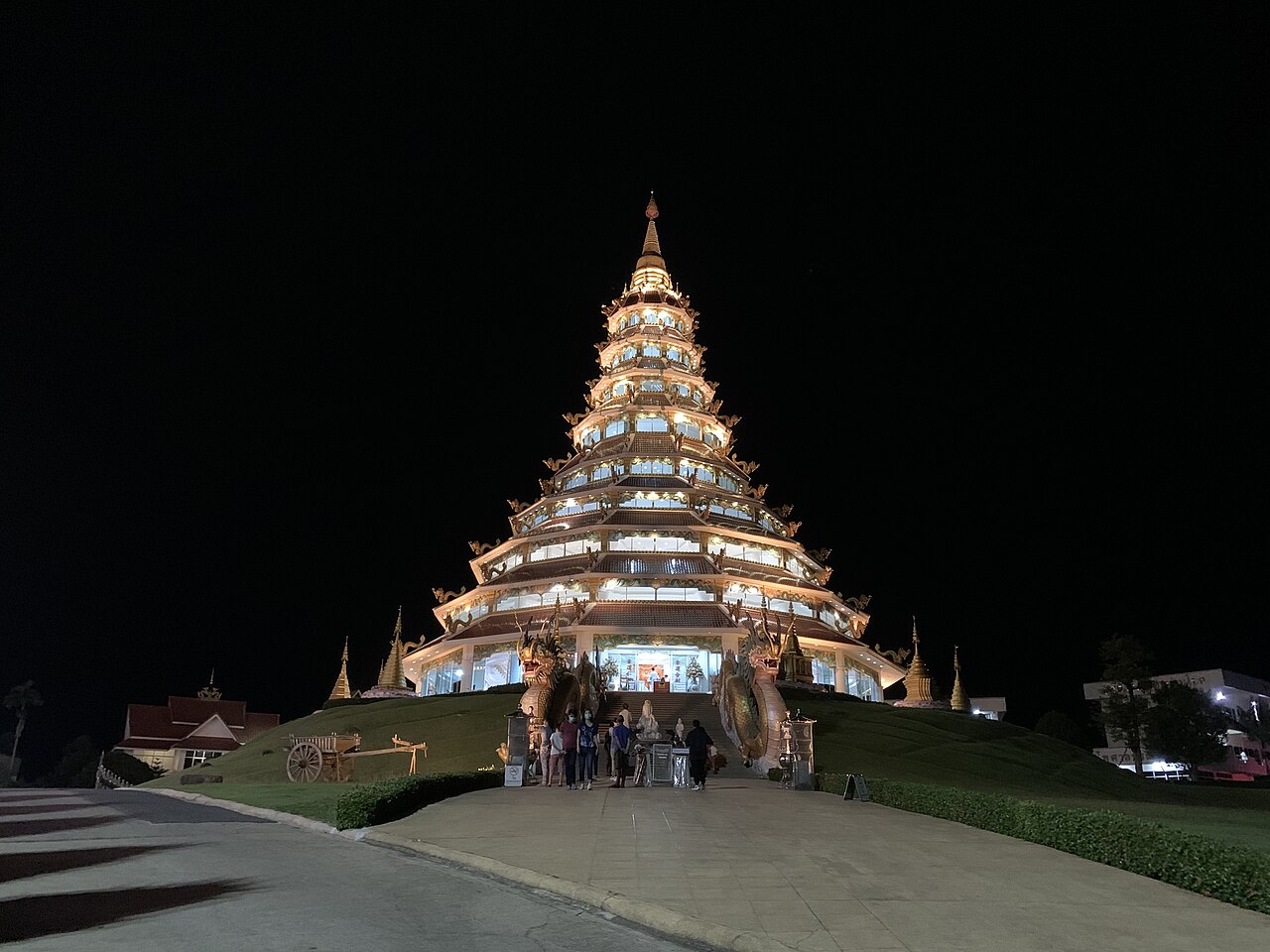
Wat Huai Pla Kang is the temple to add when you have seen the famous artistic landmarks and want something that feels like living Thai Buddhism. Thailand's tourism authority describes it as a temple that became widely known after the monk Phra Achan Phop Chok arrived in 2005 to practise Dharma there, with visitors coming because his foretelling is said to have come true. The stupa is the centrepiece. A carved wooden Guan Yin statue stands on its first floor, and each floor has its own designated Buddha image, so visiting is a gentle climb through a series of shrines rather than a single viewpoint. The mood is devotional rather than touristy: people come to make merit, light incense and sit quietly, and visitors are welcome to join in respectfully.
The best way to see the temple is to treat it as a short pilgrimage. Start at the base of the stupa, take your shoes off where signs ask, and work upward floor by floor, pausing at each Buddha image. The wooden Guan Yin on the first floor is the detail most people remember, and it is a reminder that Thai temples often blend Theravada and Chinese traditions.
Take your time on each level; there is no timed route and no need to rush. If you are not sure about etiquette, watch what the worshippers do and follow quietly.
Dress and behaviour matter. Cover your shoulders and knees, keep your voice low, never point your feet at an image and do not touch or climb on statues. Photography is generally tolerated in the grounds, but be discreet near anyone praying, and ask before photographing monks. The tourism authority does not state a fee or opening hours in the source we used, and temple schedules can change on Buddhist holy days, so ask your driver or hotel to check before you set off.
Bring a small donation if you would like to contribute; it is customary but never demanded.
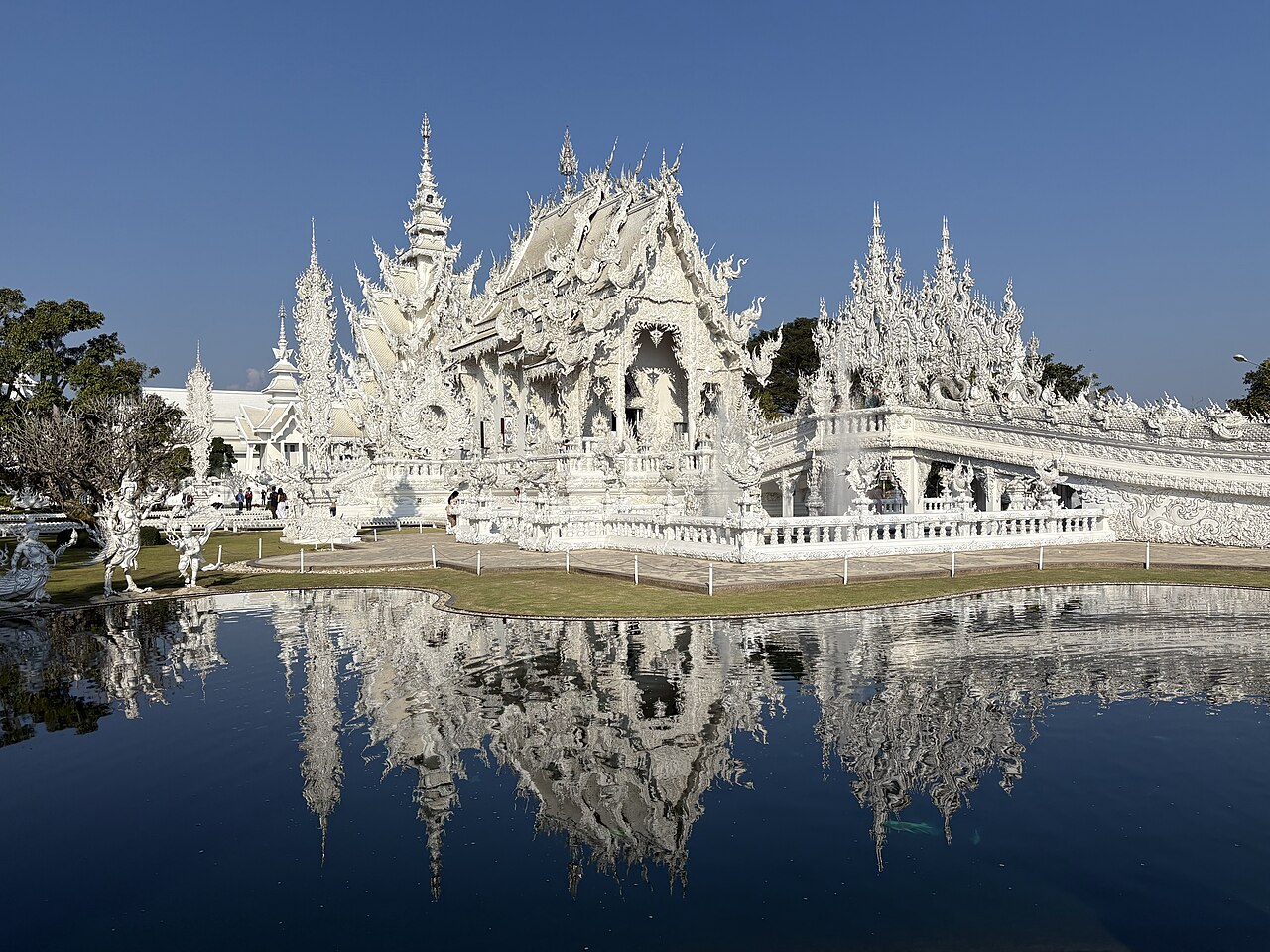
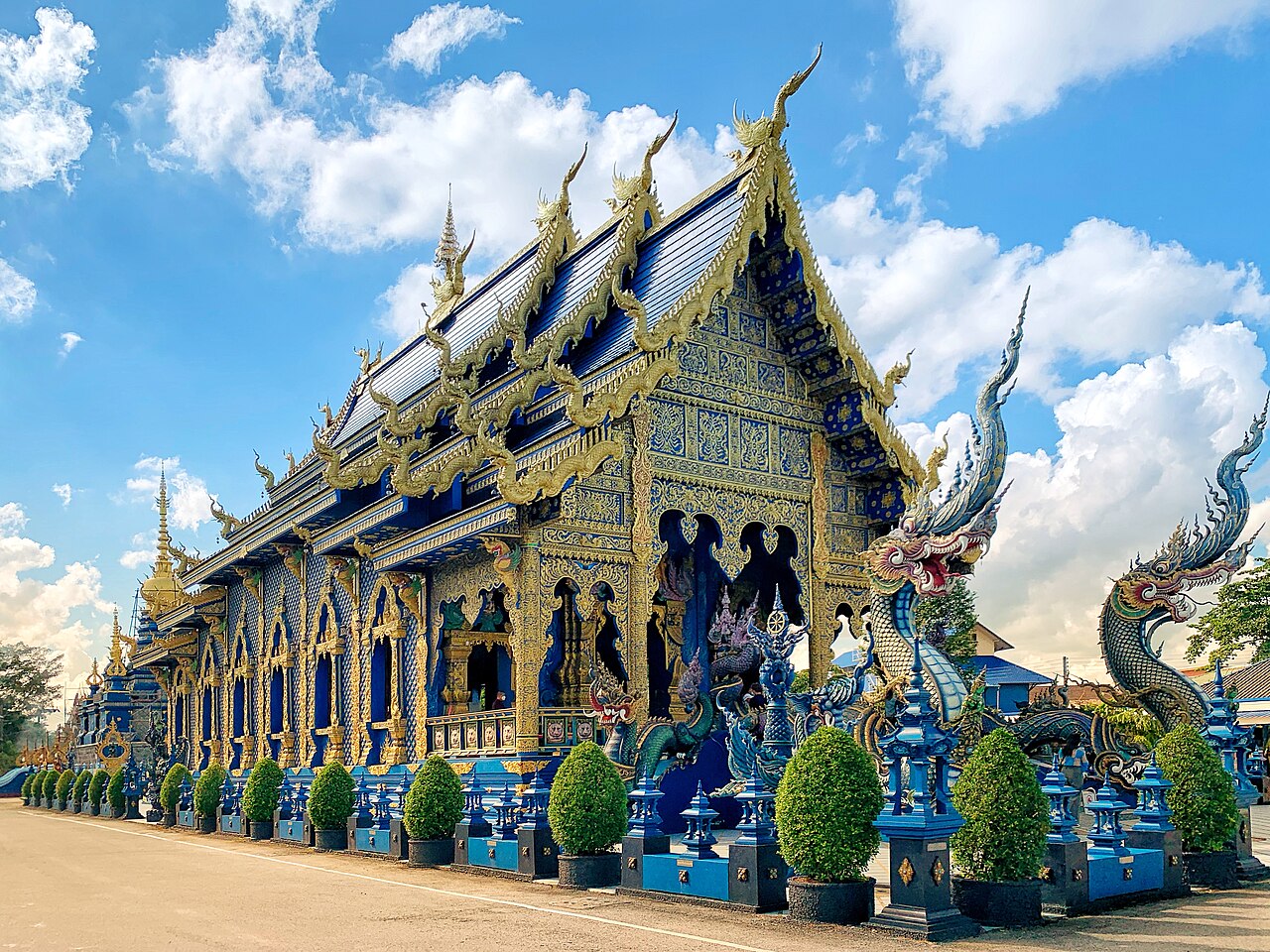
Getting there takes a little planning. The temple is outside the centre, so most visitors reach it by hired driver, taxi or their own scooter or car rather than on foot. It sits happily in a loop with other sights: go to the Blue Temple first thing in the morning, add this temple mid-morning, and finish with the White Temple in the late afternoon when the tour buses thin out.
Carry water and sun protection, because there is not much shade on the steps and terraces, and the heat builds by late morning in the hot season.
Compared with the three artistic landmarks, this is a calmer stop, and it rewards people who like temples for their atmosphere rather than their architecture alone. Allow forty-five minutes to an hour, longer if you want to sit and take in the surroundings. It suits couples and curious first-timers, and older children who can manage the steps and the quiet. If you would like context, ask your driver or guide to explain the meaning of the images on each floor; the stories behind them make the climb much more interesting than a quick photograph.
If you have time, ask about the temple's daily rhythm. Early morning is when monks collect alms in many Thai communities and when the grounds are at their stillest, so arriving soon after the gates open often gives the most atmospheric visit. Whatever the hour, leave your expectations of a polished attraction at the gate and let the place set the pace. A short, respectful stop here often turns out to be the part of a Chiang Rai trip people remember most fondly.
What to expect
The experience
A self-paced visit to a temple complex, climbing the stupa floor by floor past a Buddha image on each level.
Best time
Morning, before the day heats up and while the grounds are quiet.
How long
About 45 minutes to an hour, longer if you want to sit and observe.
Tips
Cover shoulders and knees, remove shoes where asked, keep quiet and check hours with your driver beforehand.
Quick picks
- Best for
- Travellers who enjoy the atmosphere of a working temple and want a quieter counterpart to the White Temple.
- Families
- Fine for children who can manage steps and a quiet setting; explain the etiquette first.
- Couples
- A calm, reflective stop between the bigger sights.
- Pair with
- Pair it with the Blue Temple and the White Temple in one temple day.
- Time needed
- Forty-five minutes to an hour.
Good questions
What is special about Wat Huai Pla Kang?+
Thailand's tourism authority notes that the temple became well known after Phra Achan Phop Chok arrived in 2005, and that its stupa holds a carved wooden Guan Yin statue on the first floor with a Buddha image on every floor.
Is there an entry fee?+
The tourism authority does not state a fee. Temples like this are usually open to visitors with optional donations, but confirm locally before you go.
What should I wear?+
Cover your shoulders and knees, and be ready to remove your shoes before entering shrines.
How do I get there?+
It lies outside the city centre, so a hired driver, taxi or your own vehicle is the easiest way. It combines well with other temples in a half-day.
Can I take photographs?+
Usually in the grounds, but be discreet around worshippers and ask before photographing monks or anyone praying.