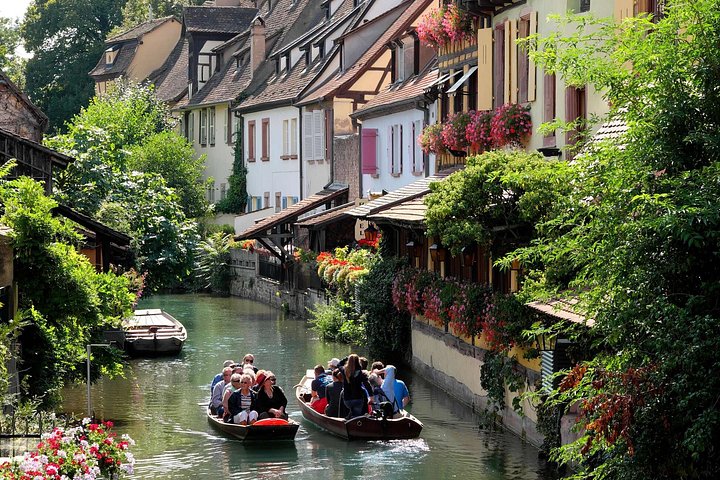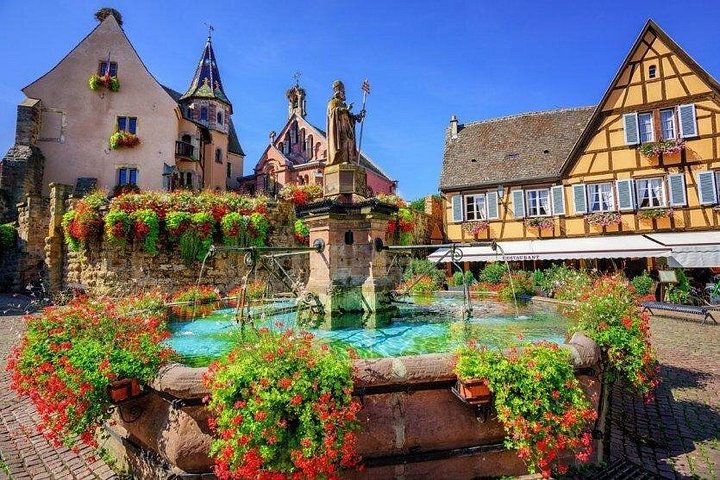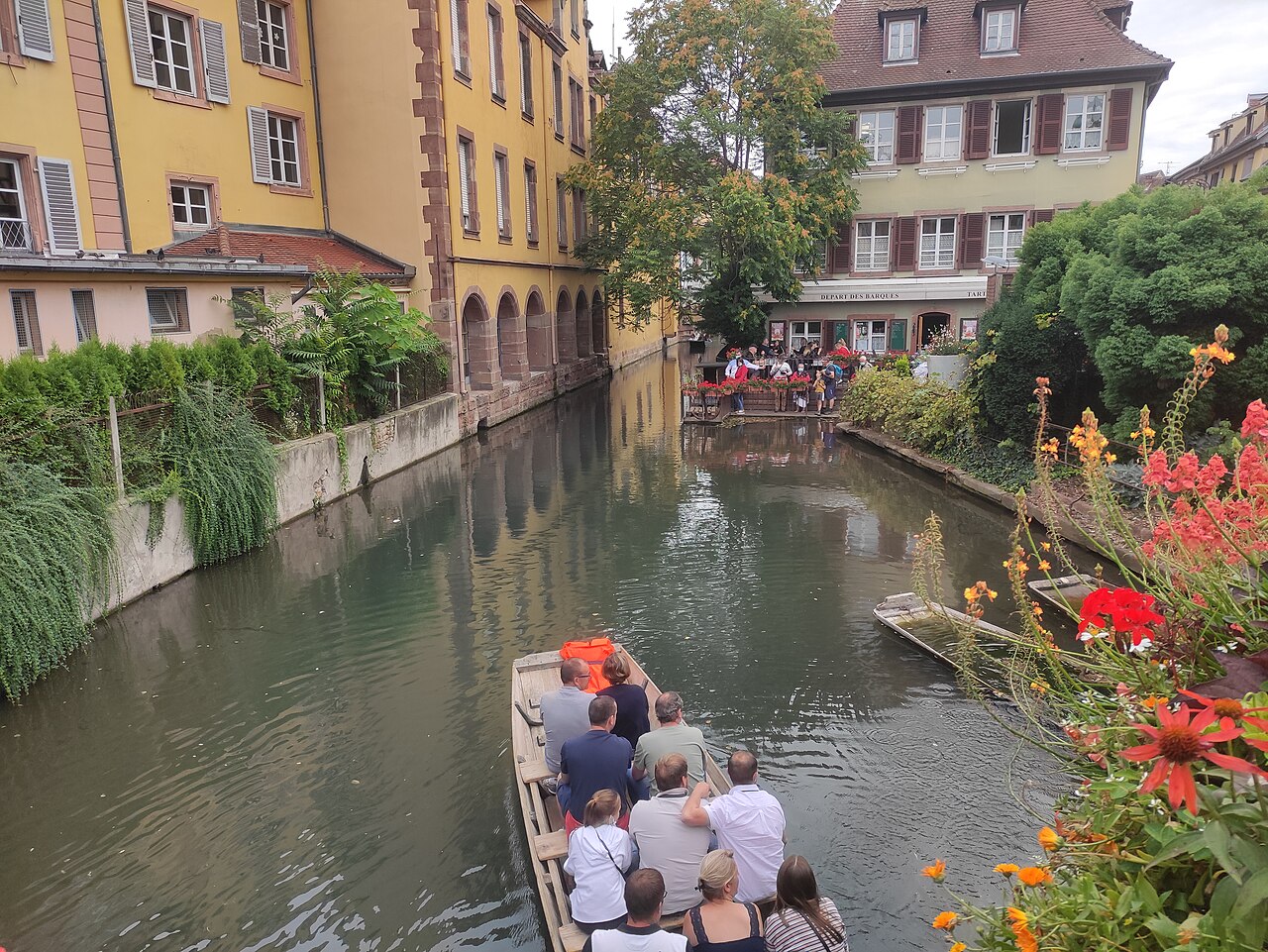
Petite Venise is the name given to the stretch of the Lauch river that runs through the south-east of Colmar, starting behind the old customs house, the Koïfhus, and passing the fishmongers' quarter before reaching the Turenne and Saint-Pierre bridges. The name comes from the lines of houses that face each other across the water, their balconies and window boxes spilling over the river, their colours ranging from salmon pink to duck-egg blue. The district sits at the start of the Krutenau, a quarter whose name recalls the market gardens that once lay outside the walls and whose first residents were winemakers, market gardeners and boatmen. Today it is where every visitor heads first, and it rewards the habit. The old town around it is compact and entirely walkable: the Quai de la Poissonnerie, the Koïfhus, the Pfister House with its painted oriel, the Maison des Têtes with its hundreds of carved faces, and the Gothic collegiate church of Saint-Martin all sit within a few minutes of each other. Everything here is free to look at, and the whole area is pedestrian, so you simply wander. Go early, before the day-trip coaches arrive, or in the evening when the lamps come on and the water doubles every light.
How to see it
Start at the Quai de la Poissonnerie, where the fishmongers' houses stand shoulder to shoulder along the water, then follow the river toward the Pont Saint-Pierre and loop back through the Krutenau streets. Pause on the bridges, since each one frames the canal differently, and look for the small details that make Colmar feel lived in: shutters in strong Alsatian greens and blues, painted signs, flower boxes watered every morning.
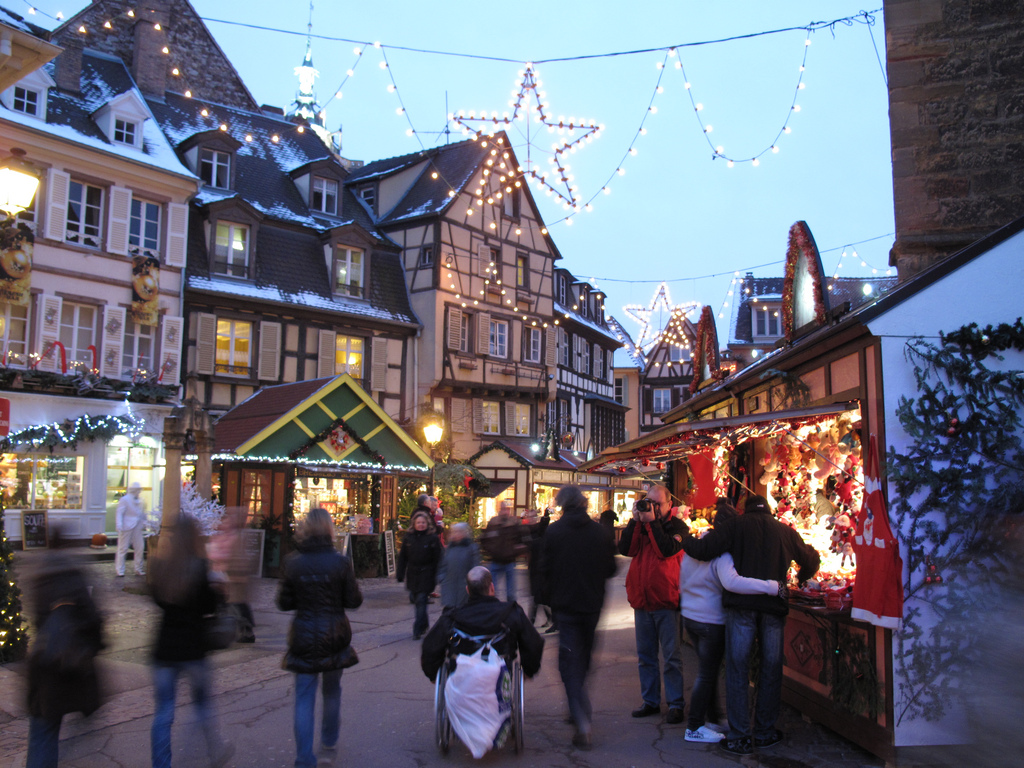
From there, walk into the old town proper, where Rue des Marchands and Grand Rue lead past the Maison des Têtes and the Pfister House, a sixteenth-century merchant's house with a wooden gallery and an oriel decorated with frescoes. The Koïfhus, the old customs house, is the oldest public building in the town and now hosts events and, in winter, one of the Christmas markets.
Timing and crowds
Petite Venise is at its calmest in the first hour after sunrise and busiest from late morning to late afternoon, particularly in July, August and December. Staying in the old town gives you the streets before and after the crowds, which is a real advantage. Shoes with grip help on the old cobbles and wet quays. Photographers should know that the best light on the canal is usually early or in the last hour of daylight, and that restaurant terraces along the water fill quickly at lunch.
Making it a day
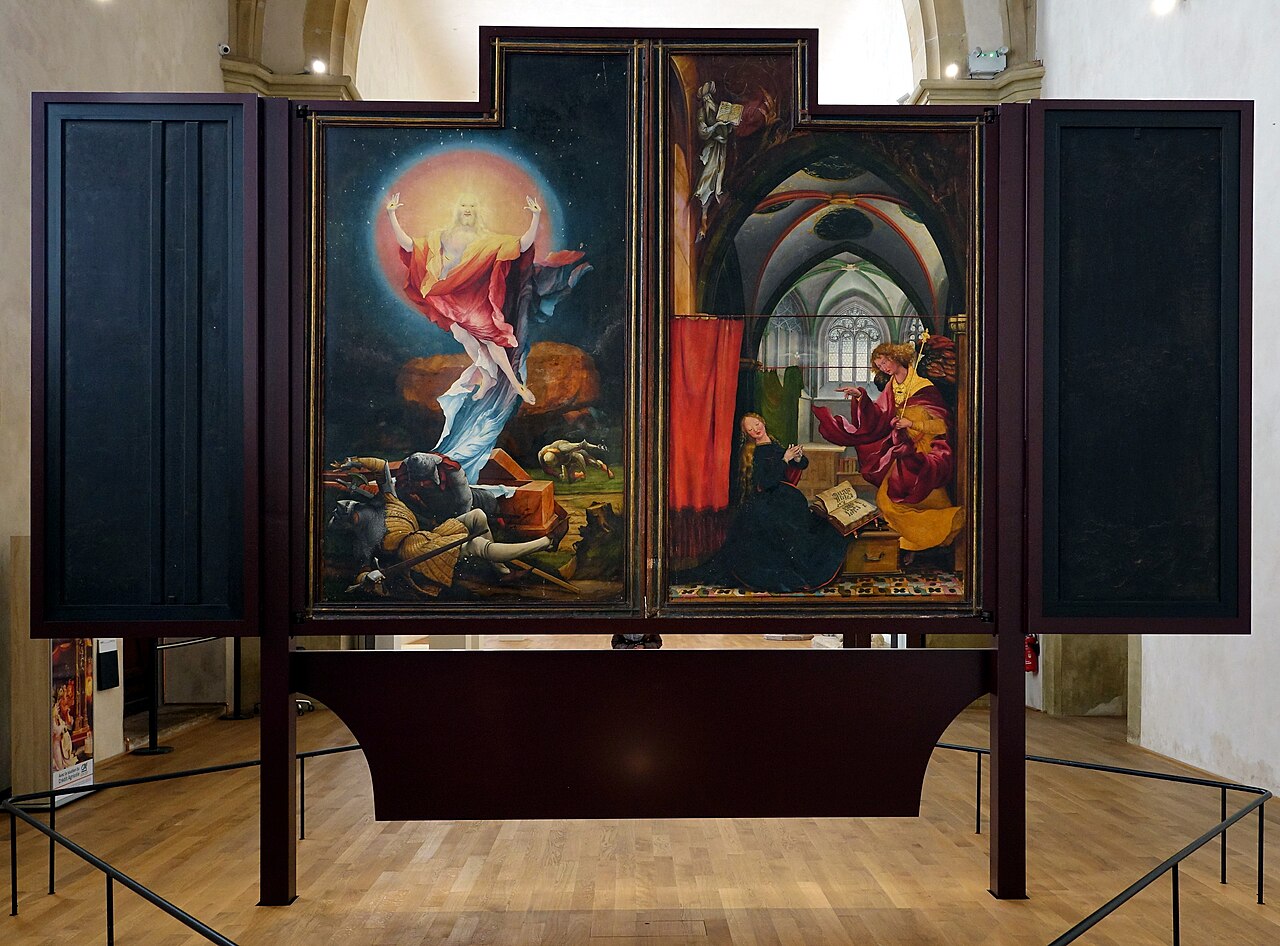
Pair the walk with a boat ride on the Lauch, a museum such as Unterlinden when rain arrives, and a long Alsatian lunch a street or two back from the water, where prices are friendlier. Because the old town is so small, it combines easily with a half-day trip to the nearest wine villages, and it is the natural place to finish a day after a drive along the Wine Route.
What to expect
The experience
A self-guided stroll along the Lauch river through Petite Venise, the Quai de la Poissonnerie and the pedestrian streets of the old town.
Best time
Early morning for empty quays and soft light, or the evening when the houses are lit; avoid the middle of summer days and December weekends if you dislike crowds.
How long
Two to three hours of unhurried walking, longer with a boat ride, a museum or a lunch stop.
Tips
Wear shoes with grip for the cobbles, eat a street away from the water for better value, and walk the loop once by day and again at night.
Quick picks
- Best for
- Every first-timer: this is the Colmar of the photographs and it costs nothing.
- Families
- Easy and flat, with boats to watch and plenty of squares; keep a hand on small children near the unfenced quays.
- Couples
- Walk the canal at dusk, then dinner a few streets back, and a boat ride the next morning.
- Pair with
- A boat ride on the Lauch, Unterlinden Museum, and the Pfister House and Maison des Têtes a few minutes away.
- Time needed
- A relaxed morning, or an hour in the evening if you only have a night.
Good questions
Is Petite Venise free to visit?+
Yes. The canal quarter and the pedestrian old town are public streets with no entry charge. Only the boat ride, museums and tastings cost money.
When is the best time to visit Petite Venise?+
Early in the morning or in the evening, when day-trip crowds are gone and the light is softer. In December the lights make evenings especially good.
How long do I need in the old town?+
Two to three hours covers the canal quarter and the main merchants' houses. Add time for a boat ride, a museum or a long lunch.
Is the old town accessible?+
It is flat but cobbled, which can be rough for wheelchairs and pushchairs. The quays are mostly unfenced, so take care with small children.
Where should I eat nearby?+
Terraces on the water are scenic but priced for the view. Walk a street or two back for traditional Alsatian dishes such as tarte flambée and choucroute at better value.