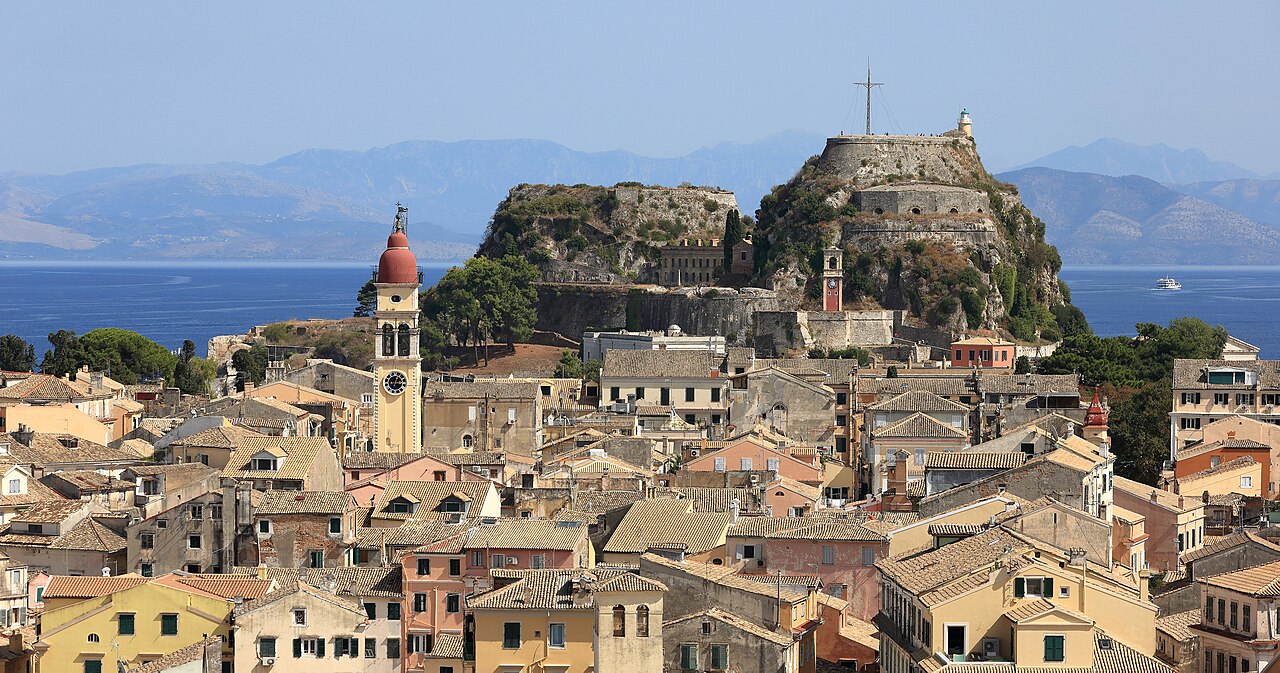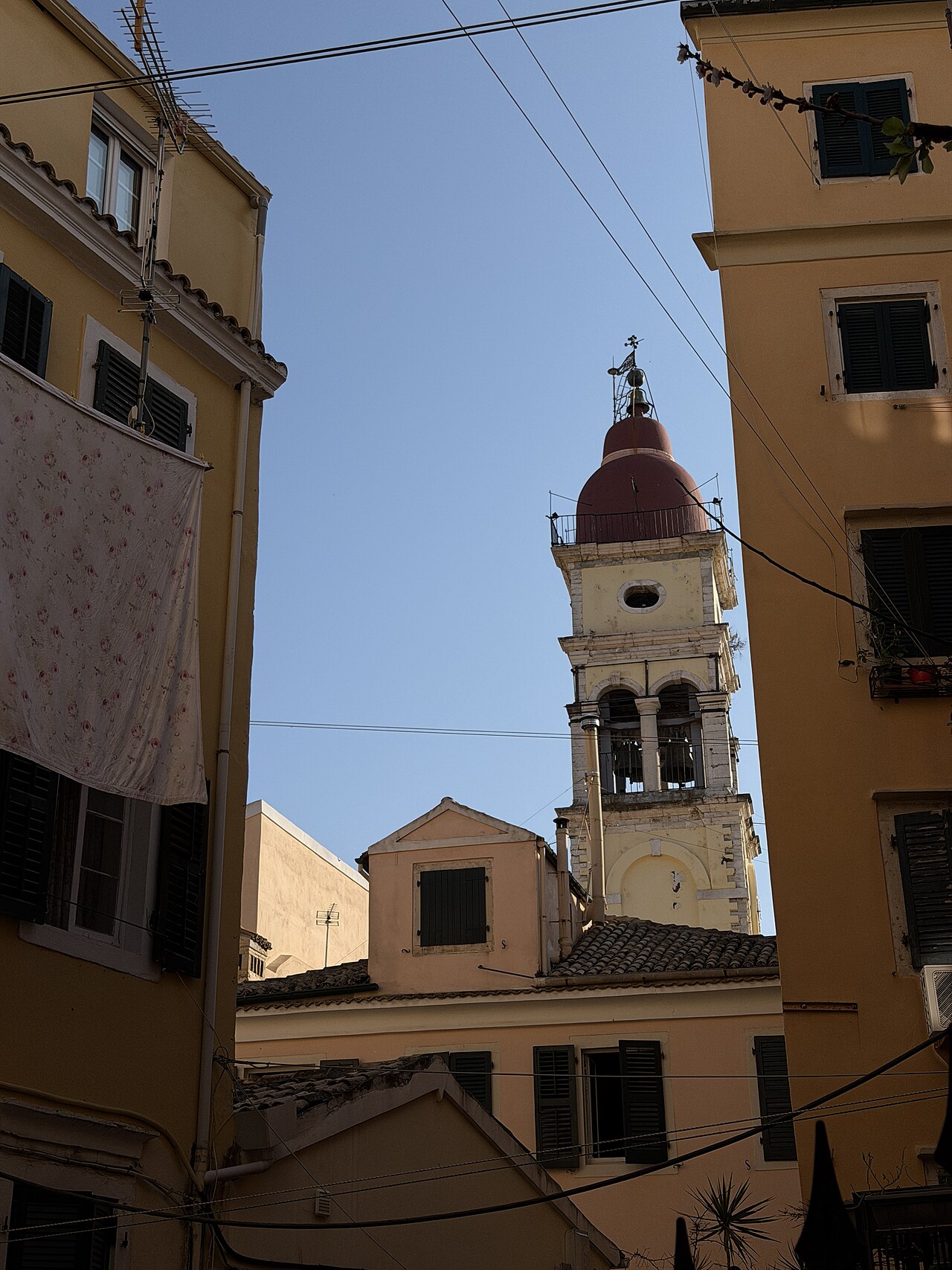
No building says more about Corfu than the Church of Saint Spyridon. It stands in the heart of the old town, built in 1589, and holds the relics of the island's patron saint, whom Corfiots credit with protecting the town through plague, famine and siege. The regional tourism site describes it as a centre of the island's religious life and one of its most important post-Byzantine monuments, a single-aisled basilica with a wooden-beamed roof in the Ionian style. Its bell tower is the landmark you will spot from many lanes, and the site notes that it closely resembles the tower of San Giorgio dei Greci in Venice, a reminder of the island's Venetian links. The relic is kept in a nineteenth-century silver reliquary to the right of the sanctuary, in an area that has practically become a side chapel, and the church holds valuable votive offerings and treasures. Entry is free, and the church is a working place of worship where locals come to pray and to light candles, so the atmosphere is devout rather than touristy.
How it works
There is nothing to book. You walk in through the door from the lane, and the church is open to visitors outside services, although opening hours are not fixed on the tourism site, so treat them as variable and visit when the doors are open. Dress modestly, with covered shoulders and knees, and speak quietly. During services, move through the church respectfully or return later, and do not photograph worshippers or the reliquary unless clearly allowed.
What to expect
A dim, richly decorated interior with painted ceilings, icons, hanging lamps and a steady line of locals approaching the reliquary. The relics of Saint Spyridon are carried through the town in processions several times a year, and these processions are among the most distinctive public events in Corfu, tied to episodes in which the island believed the saint had saved it.
If your visit coincides with a feast day, expect crowds, music and a procession that fills the streets of the old town. On an ordinary day the church is calm, and a visit of fifteen to thirty minutes is enough.
Making the most of it
Combine the church with a walking tour of the old town, since it is a keystone of the quarter's story, and with the Liston and the Spianada, which are a few minutes' walk away. The bell tower is a useful landmark when you are lost in the lanes, and the small squares around the church have cafes where you can sit and watch the town go by. Visit in the morning for quiet and good light, and bring a scarf if you did not pack modest clothes.
It is free to enter, but a small donation or a candle is a customary gesture of respect. If you are interested in the traditions behind the church, ask a guide or a local about the processions, in which the saint's relics are carried through the streets with bands and clergy. They are tied to the island's history and to the sense that Saint Spyridon watches over Corfu, and seeing one, if your dates allow, is one of the most memorable cultural experiences available on the island and entirely free to watch from the street.
What to expect
The experience
A free visit to the working church that holds the relics of Corfu's patron saint, in the heart of the old town.
Best time
Mornings, outside services, for quiet and good light.
How long
Fifteen to thirty minutes.
Tips
Cover shoulders and knees, keep voices low, avoid photographing worshippers and visit outside services; opening times vary.
Quick picks
- Best for
- Anyone who wants to understand how deeply the island's identity is tied to its saint.
- Families
- A short, quiet visit that suits older children, with the bell tower as a fun landmark.
- Couples
- A calm, atmospheric stop between lanes and cafes.
- Pair with
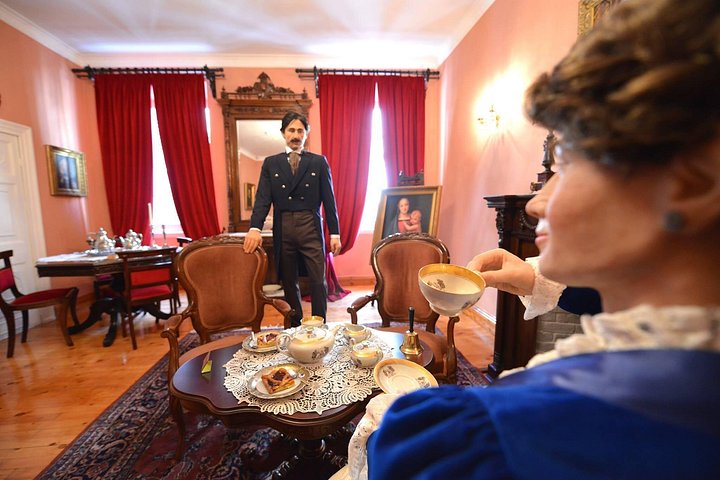
- A walking tour of the old town, the Liston and Spianada, and Casa Parlante.
- Time needed
- Up to half an hour.
Good questions
Who is Saint Spyridon?+
He is the patron saint of Corfu, whose relics are kept in the church and who Corfiots believe protected the island in times of plague and siege.
When was the church built?+
The tourism site gives 1589, making it one of the most important post-Byzantine monuments on the island.
Is entry free?+
Yes, entry is free. A small donation or candle is a customary way to show respect.
What should I wear?+
Cover shoulders and knees and dress modestly, because it is a working church.
Can I see the relics?+
The relic is kept in a silver reliquary to the right of the sanctuary and is visible as part of the church visit, though be respectful of worshippers.