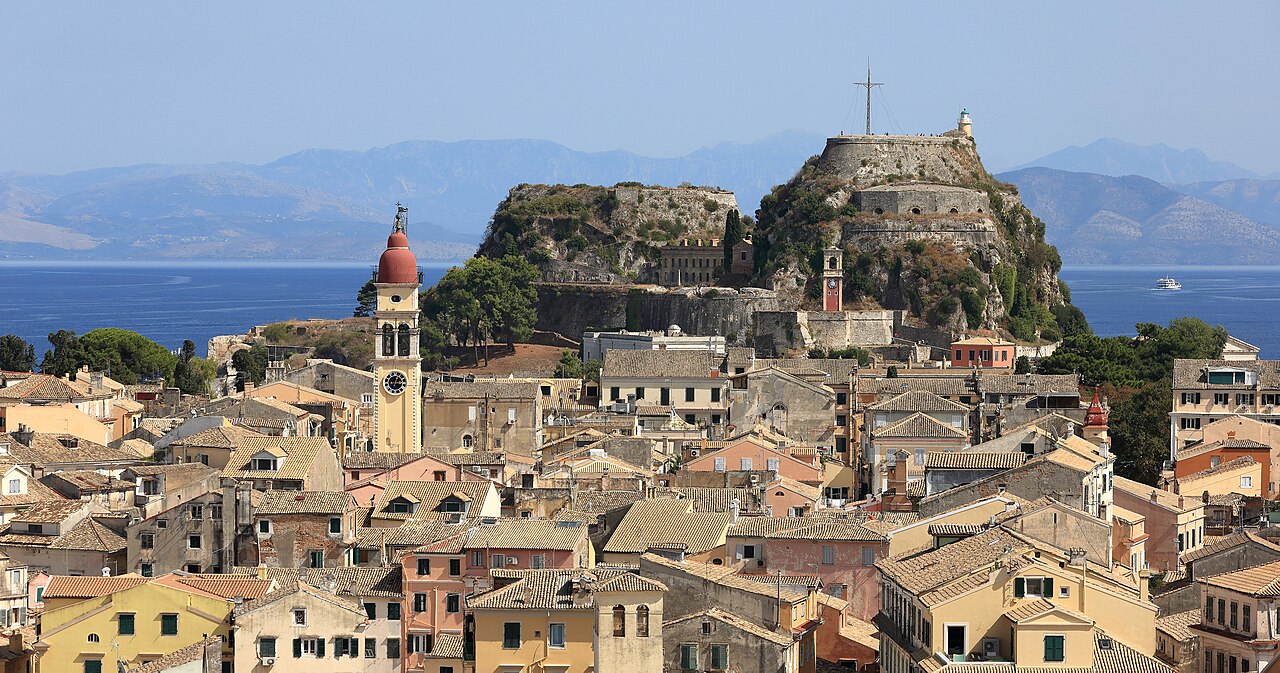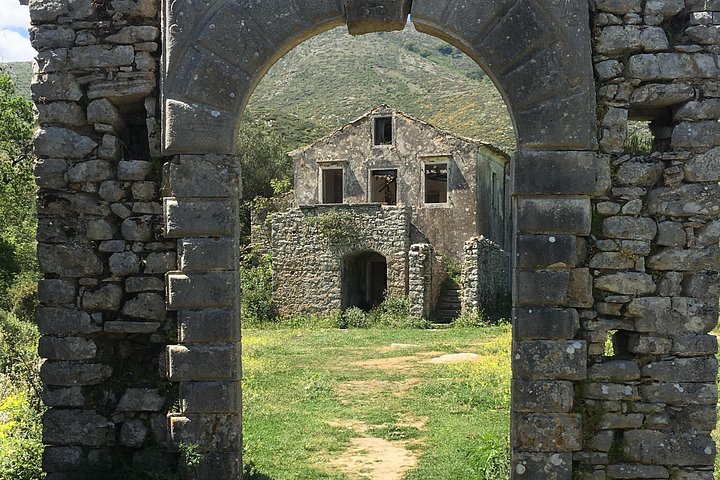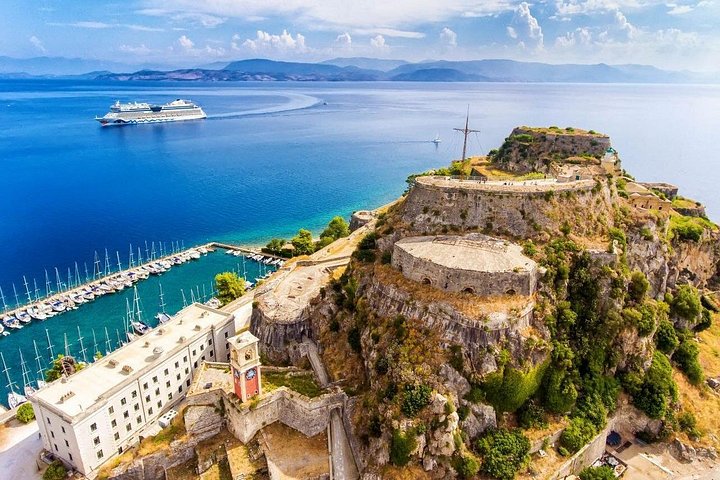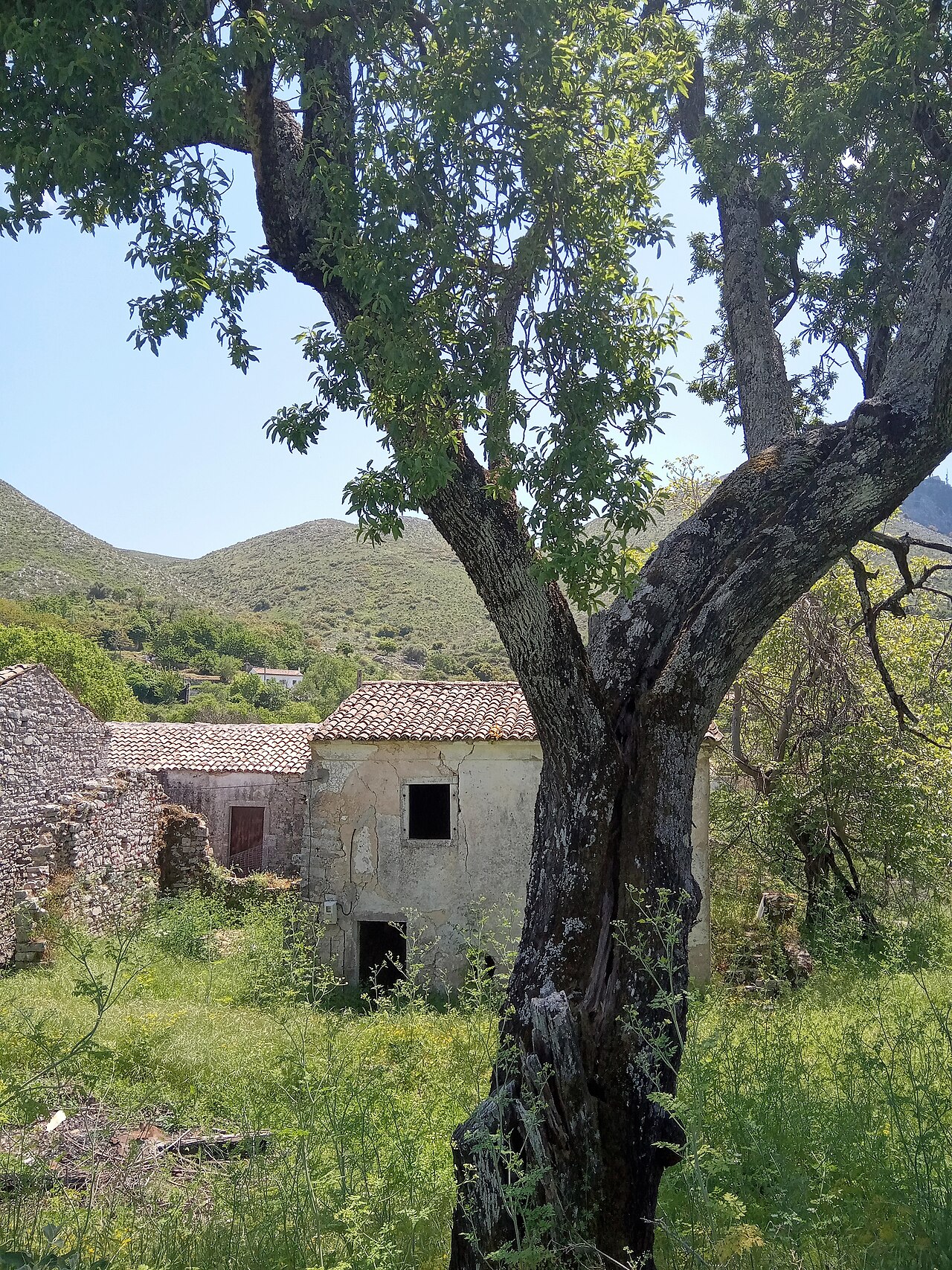
Old Perithia is the island's ghost village, set at roughly four hundred metres in the north, about forty kilometres north-west of Corfu Town. The regional tourism site explains that in the early thirteenth century pirate raids drove local people to settle at this safer, inland site, and that the village was gradually abandoned in the 1970s as people moved to the coast. Today it is quiet and nearly empty, with only two permanent residents, overgrown lanes lined with stone houses and some houses still bearing coats of arms. The Church of Agios Iakovos greets visitors at the entrance with its pink bell tower, and the village sits beneath the bulk of Mount Pantokrator, the island's highest summit. It is a place for slow walking and photography rather than ticketed sights, and it feels like stepping into the past. There are five traditional small tavernas, and the village comes to life at weekends, when Corfiots and visitors arrive for long lunches. Entry to the village is free.
How it works
You need a car, a taxi or a tour, because there is no public transport that makes a convenient visit. The road climbs through the north of the island and the last stretch is narrow, so drive carefully. There is no entry fee. Because the tavernas set their own hours and several close in the off-season, check before you rely on lunch there, and consider bringing a snack and water for a winter walk.
What to expect
A village frozen between abandonment and revival. Some houses are restored and others are ruins, with trees growing through walls, and churches and old stone paths hold the story together. Because the village is high and open, it is cooler than the coast and can be windy and cloudy in winter, so bring a jacket. On a clear day you get long views toward the sea and the mountains. Respect the privacy of the few people who live or work here, and keep to paths rather than climbing on ruins.
Making the most of it
Combine Old Perithia with the north-east coast, including Kalami and the small coves, and with Mount Pantokrator for the view from the island's highest point. The Land Rover safari in this guide covers the north-west, so you may prefer to do one or the other if time is short. A weekend visit has more atmosphere because of the open tavernas, while a weekday gives you the empty village.
In the off-season, a quiet weekday walk is unforgettable on a dry day, but check the weather before you drive up the mountain road. A thoughtful visit means walking slowly, reading the village as you go, and noticing the details that tell its history, such as carved lintels, bread ovens, old wells and the doors of the churches.
If you are in a group, the quiet lanes carry sound, so keep voices low, and if you are a photographer, early or late light brings out the colour in the stone. Because only two people live here permanently, supporting the tavernas with a meal is a good way to contribute to the village's revival. Remember that the weather up here can change faster than on the coast, so check the forecast before you set out and carry a waterproof layer.
What to expect
The experience
A free visit to a nearly abandoned stone village high in the north of Corfu, with old churches, ruined houses and a few tavernas.
Best time
Clear days; weekends for open tavernas, weekdays for an empty village.
How long
Two to three hours.
Tips
You need a car, taxi or tour, the tavernas keep their own hours so check before relying on lunch, and bring a jacket since the village is high and breezy.
Quick picks
- Best for
- Photographers, history lovers and anyone who enjoys a quiet, atmospheric place.
- Families
- Older children enjoy exploring the lanes, but the road is narrow and winding.
- Couples
- A romantic, peaceful stop with a long lunch at a village taverna.
- Pair with
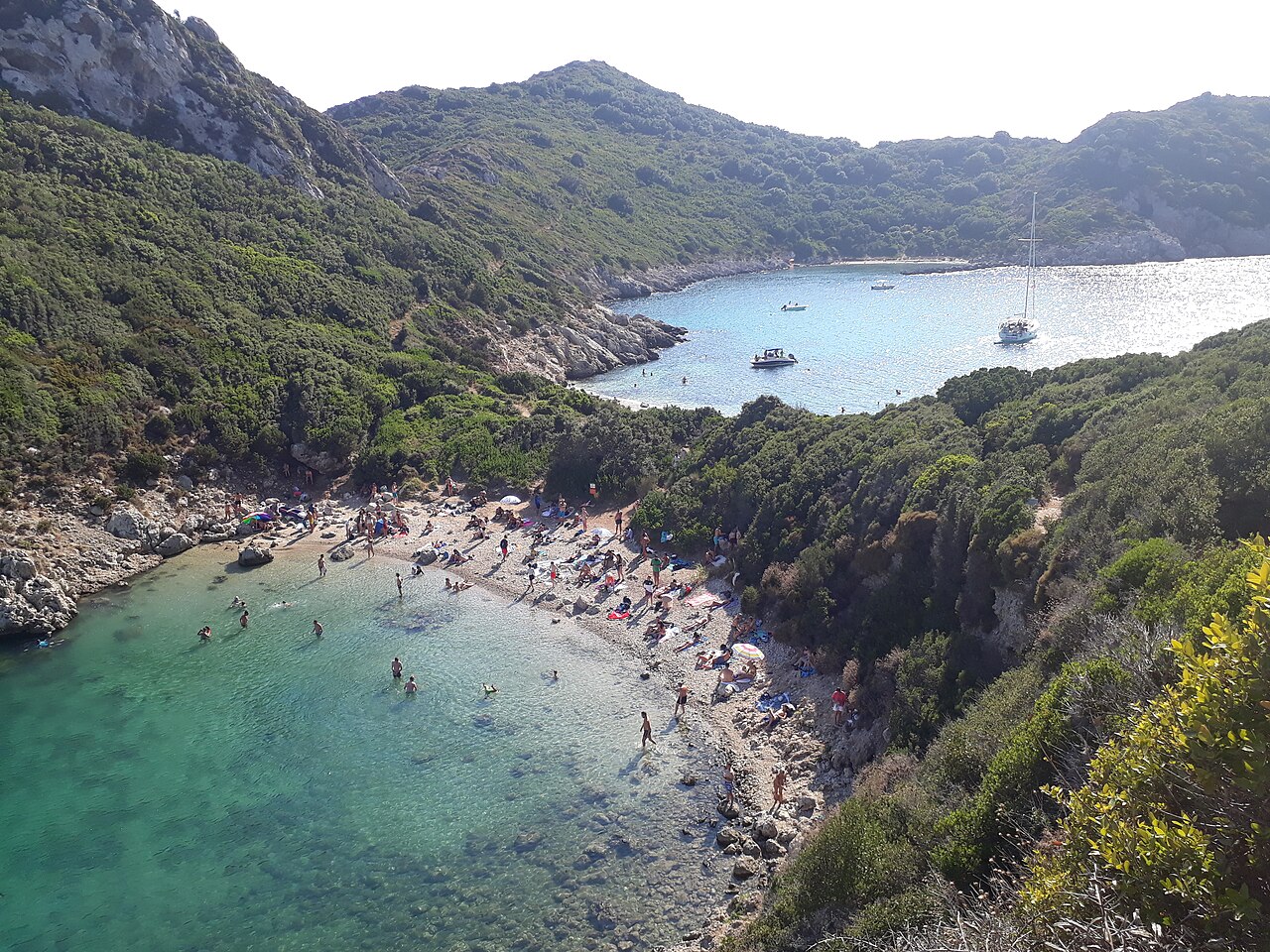
- Mount Pantokrator, the north-east coast and Porto Timoni on another day.
- Time needed
- Two to three hours plus the drive.
Good questions
Where is Old Perithia?+
About forty kilometres north-west of Corfu Town, at an altitude of roughly 400 metres, beneath Mount Pantokrator.
Why was it abandoned?+
The tourism site says people moved away gradually from the 1970s, and the village had been founded in the thirteenth century as a refuge from pirate raids.
Is there anywhere to eat?+
There are five traditional small tavernas, which are busiest at weekends; hours vary, so check in the off-season.
Is there an entry fee?+
No, the village is free to visit.
How do I get there?+
You need a car, a taxi or a tour; the last part of the road is narrow.