Costa Rica is one of the easiest countries in the world in which to see tropical wildlife, but easy is not the same as guaranteed. Animals are shy, camouflaged and often active at times when tourists are not, so a little planning makes the difference between a trip that feels like a nature documentary and one that feels like a long walk in the green. This guide explains where to look from San José and La Fortuna, what to expect and how to behave once you find something.
Hire a guide, at least once
A naturalist guide finds three times as many animals as a visitor on their own. They know where sloths sleep, can identify a bird from a single call and carry spotting scopes that turn a distant branch into a close-up. For a first encounter, a short guided walk is the best value you can buy. In La Fortuna, the Bogarín Trail sloth walk and a dawn birdwatching walk are the most reliable options, and the Arenal volcano hike adds coatis, monkeys and birds to its views.
Sloths
Sloths are the star animal of the trip, and the surest way to see one is on a guided walk where the guide already knows where the animals are. Two-toed and three-toed sloths live around La Fortuna, usually high in the cecropia trees and tangled forest edges. Look for a grey-green ball in a fork of branches, and be patient: they move very little. Never touch a sloth, never use flash and never accept an offer to hold one. If an operator offers close contact with a wild animal, choose another operator.
Monkeys and other mammals
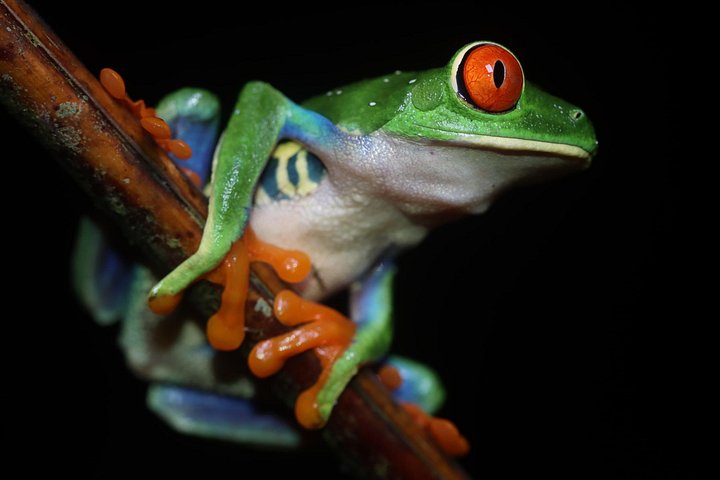
Howler monkeys are usually heard before they are seen, with a deep roar that carries across the forest at dawn. White-faced capuchins and spider monkeys are more active and curious, and you may spot them on the hanging bridges, on forest trails and along the river on a Peñas Blancas safari float. Coatis, agoutis and peccaries appear on the ground, and the night walk in La Fortuna reveals a different cast of tree frogs, snakes, kinkajous and insects that daytime visitors never meet.
Birds
Costa Rica has over nine hundred recorded bird species, and around La Fortuna you can see toucans, motmots, tanagers, trogons, oropendolas and hummingbirds in a single morning. The hours after sunrise are the most productive, and many guides run early walks for this reason. If you are serious about birds, the highlight of the central region is the resplendent quetzal, which lives in cloud forest at altitude. The valley of San Gerardo de Dota, a long day trip from San José, is one of the best places to look for it, especially in the breeding season from roughly February to May.
Caimans, turtles and the Caribbean side
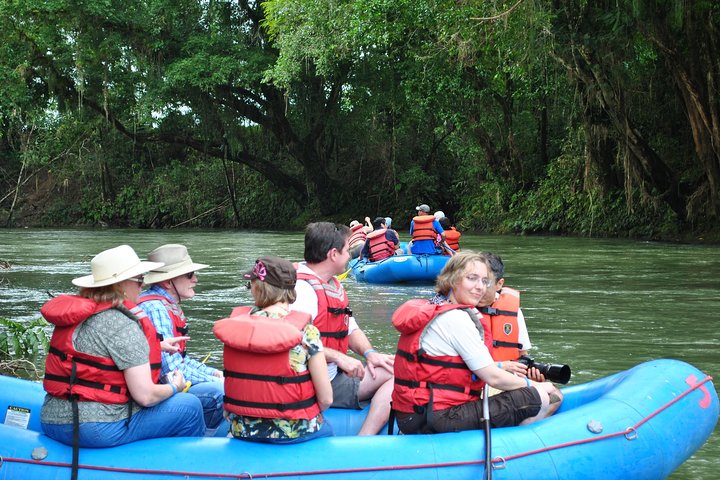
The canals of Tortuguero on the Caribbean coast offer a different habitat altogether, with caimans, iguanas, basilisk lizards, river turtles and many water birds. The two-day trip from San José is the simplest way to see it, and sea turtles nest on the beach in season, although night walks are regulated and not always part of the ticket. On the Arenal side, the Peñas Blancas river float gives a calm, low-effort view of riverbank wildlife, and Lake Arenal is good for herons, kingfishers and the occasional turtle.
Hummingbirds, frogs and butterflies
Not every sighting needs a long trip. Gardens with feeders, such as those at La Paz Waterfall Gardens, offer close views of hummingbirds, and the wildlife refuge there shows big cats, monkeys, frogs and butterflies in a place where you can see them safely. These are excellent options for families with young children, who may lose patience on a quiet forest walk.
Timing
Wildlife is most active in the early morning and in the hour before dusk. The middle of the day is hot, and many animals rest. In the dry season, from roughly December to April, animals gather near water and are easier to see, while the green season brings lush forest, nesting birds and fewer crowds. Rain does not stop wildlife, and a drizzly morning can be good for frogs and insects. Plan your most important wildlife outing for an early start, and keep the afternoon for hot springs and rest.
What to bring
Neutral clothes help, as do closed shoes with grip, a rain jacket, insect repellent and a hat. Binoculars make a big difference, and a phone adapter for a scope can improve photographs. Keep a small notebook or a bird app for tracking species, and carry water and snacks. A camera with a zoom lens is useful, although many of the best moments are easier to enjoy with your eyes than through a screen.
How to behave
Keep your distance and your voice low. Do not feed animals, since it harms their health and changes their behaviour. Stay on the trail, avoid picking plants and take your rubbish with you. Choose operators who put the animals first, with small groups, no flash and no handling of wild creatures. Sightings are never guaranteed, and part of the pleasure is that the forest is wild. On a good day you may see ten species before breakfast; on a quiet one you will still enjoy the sounds, the smells and the scenery.